


About the Cover:
Letters
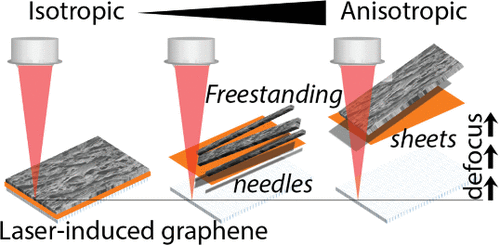
Defocused Laser-Induced Anisotropic Freestanding Graphene Architectures
Chetan Prakash Sharma - ,
Kefan Zhang - ,
Sumesh Sadhujan - ,
Sherina Harilal - ,
Laila Abu Madegam - ,
Aeid Igbaria - ,
Muhammad Y. Bashouti *- , and
Christopher J. Arnusch *

This publication is Open Access under the license indicated. Learn More
We report the intrinsic structural anisotropy in freestanding laser-induced graphene (FLIG) sheets produced through controlled laser defocusing of a CO2 pulse laser on polyimide. Defocusing enlarges the laser spots, enabling uniform carbonization and spontaneous substrate detachment without postprocessing, resulting in 3D-FLIG structures (∼29 μm thick) and over 90% carbon content. Angle-resolved Raman spectroscopy shows significant in-plane anisotropy in FLIG sheets and LIG needles (p < 0.0001), contrasting with isotropic embedded LIG, due to strain-induced symmetry breaking and preferred lattice alignment. Laser defocusing offers a scalable way to engineer microlevel directional anisotropy in freestanding graphene for potential electronic and thermal devices.
Articles

Comparative Functionalization of Seaweed-Derived Polysaccharides: Esterified Agar–Phenylalanine as a Promising Candidate for Bio-Based Packaging
Paramabhorn Tosuwan - ,
Hannah S. Leese - , and
Christopher J. Chuck *
This publication is Open Access under the license indicated. Learn More
Plastic pollution has become a critical global issue, driving the demand for biodegradable alternatives. Seaweed-derived carbohydrates, such as agar and κ-carrageenan, are renewable, biodegradable materials with potential for biobased packaging applications. In this work, these polysaccharides were chemically modified with phenylalanine amino acids through amidation and esterification reactions to improve their hydrophobicity. Agar was successfully modified using both amidation or esterification methods. However, amidation required multiple steps and was a more complex functionalization process, resulting in a lower degree of substitution compared to esterification. An agar–phenylalanine derivative was synthesized via esterification and subsequently processed into films. These films were evaluated for their physical, mechanical, and barrier properties. Results showed that increasing the polymer concentration in agar–phenylalanine films improved tensile strength, stiffness, and flexibility. In contrast, higher glycerol content, introduced as a plasticizer, reduced strength and stiffness but increased polymer film flexibility, as indicated by greater elongation at break. The agar–phenylalanine films exhibited mechanical performance between flexible and rigid plastics, outperforming common flexible plastics such as HDPE and LDPE but below more rigid ones like PET, demonstrating their practical potential. The films were clear and suitable for packaging, and when applied as a coating on paper, they provided excellent water resistance. Coated paper showed strong liquid resistance against substances such as ketchup, vinegar, milk, hot coffee, water, and cola. These findings highlight the potential of esterified agar derivatives as promising candidates for eco-friendly packaging applications.
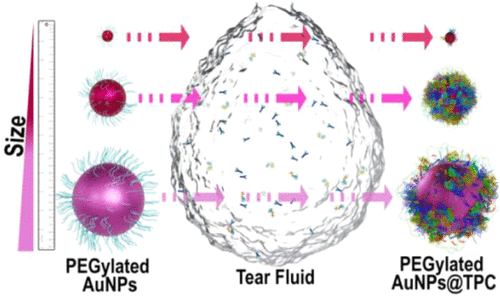
Particle Dimension-Induced Modulation of Human Tear Protein Corona Signatures of PEGylated Gold Nanoparticles
Sneha Asok - ,
Veda V. Dasari - ,
Vengala Rao Yenuganti - ,
Chiranjeevi Korupalli - , and
Anil K. Suresh *
Ocular nanomedicine is emerging as a transformative nano–biomedicine interface, enabling precision therapeutics and targeted drug delivery for advanced ophthalmic care. Tear, a complex and rapidly renewing biological fluid, dynamically alters the protein corona of ocular nanomedicines, which is essential for reliable and sustained nanodrug delivery. Herein, we investigated the impact of various dimensions (∼15.5 ± 1, ∼50 ± 2, and ∼100 ± 5 nm) of polyethylene glycol-coated gold nanoparticles (AuNPs) in modulating the human tear protein corona. Following incubation with tears, the AuNPs@TPC complexes were purified and characterized using advanced physicochemical characterizations and electrophoresis to confirm their stability, alterations in surface charge, hydrodynamic diameter, and integrity. Further, corona compositions were profiled using LC–MS/MS proteomics and bioinformatics to distinguish particle size-dependent protein enrichment patterns. Smallest AuNPs (∼15.5 ± 1 nm) showed selective enrichment of antimicrobial proteins such as lysozyme and lactotransferrin. Medium AuNPs (∼50 ± 2 nm) displayed preferential binding of antimicrobial proteins such as lysozyme and lactotransferrin, whereas the larger AuNPs (∼100 ± 5 nm) showed increased association with lipocalins, immunoglobulins, and structural keratins. Selected core tear proteins were consistently shared across all sizes tested, but quantitative differences (87 proteins on the ∼15.5 ± 1 nm, 142 proteins on the ∼50 ± 2 nm, and 118 proteins on the ∼100 ± 5 nm AuNPs) in binding affinities and pathway enrichment revealed that particle size significantly dictates ocular bioidentity. Among the tested dimensions, the ∼50 ± 2 nm AuNPs exhibited the highest protein diversity and strongest functional pathway enrichment, indicating an optimal balance between surface curvature and the available binding area that promotes cooperative protein adsorption. In contrast, the highly curved ∼15.5 nm particles restricted multivalent protein–protein interactions, while the ∼100 ± 5 nm particles demonstrated comparatively reduced adsorption efficiency per unit surface curvature. Network and pathway analyses further revealed that intermediate-sized nanoparticles supported enhanced antimicrobial and epithelial differentiation pathways, suggesting superior biological integration at the ocular interface. These findings provide a mechanistic understanding of how PEGylated AuNPs interface with the tear proteome and highlight the importance of size in designing stable, long-lasting nanocarriers for ophthalmic drug delivery. This study builds on our previous work by providing the first quantitative, size-resolved analysis of tear protein coronas, highlighting how nanoparticle dimensions dictate ocular bioidentity.
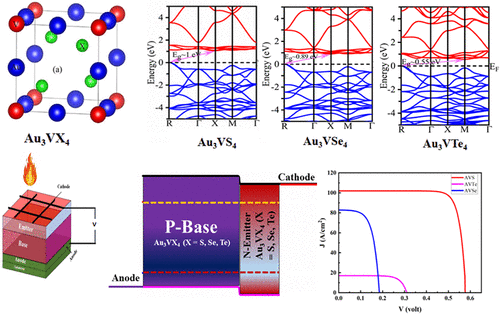
Comprehensive Investigations on the Electronic and Transport Properties of Au3VX4 (X = S, Se, Te) Compounds via DFT Study for Applications in TPV Cells
Istiwak Ahammed Rifat - ,
Ahnaf Tahmid Abir - ,
Md. Abdur Rashid - ,
Rakibul Hasan - ,
Md. Alamin Hossain Pappu - ,
Md. Mijanur Rahaman - , and
Jaker Hossain *
Narrow bandgap Au3VX4 (X = S, Se, Te) sulvanite materials have been revealed through first-principles calculations, and their thermophotovoltaic (TPV) applications have simultaneously been demonstrated. The cubic Au3VX4 (X = S, Se, Te) compounds exhibit thermodynamic, mechanical, and dynamical stability, as confirmed by the formation energy, stability criteria, and phonon dispersions, respectively. The studied Au3VS4, Au3VSe4, and Au3VTe4 compounds show indirect bandgaps of 1.0, 0.89, and 0.55 eV, respectively, which fall within the optimal range for thermophotovoltaic (TPV) applications. The optical properties, such as dielectric constants, refractive index, optical conductivity, reflectivity, loss function, and absorption coefficients, have been investigated to understand the optical response of these ternary semiconductors. The observed bandgap of the Au3VX4 is suitable for photon absorption in blackbody temperatures of 1625–2980 K. The single-junction TPV cells based on Au3VX4 (X = S, Se, Te) compounds have been computed by a device transport model. The devices show remarkable efficiency in the range 9.73–10.87% at room temperature. The efficiencies obtained in this study highlight the promising future application of Au3VX4 (X = S, Se, Te) compounds in the field of energy conversion.
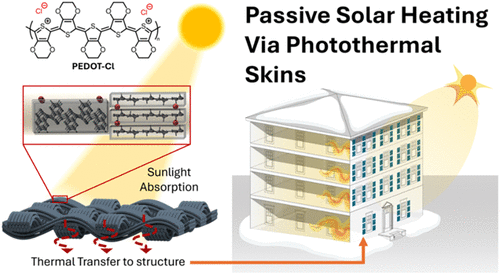
Passive Solar Heat Transfer via Photothermal Skins for Capability-Enhancing Building Retrofits
Evan D. Patamia - ,
Amiraslan Darvish - ,
Megan K. Yee - ,
Lauren Gonsalves - ,
L. Carl Fiocchi - ,
Trisha L. Andrew *- ,
Carolina Aragón *- , and
Ho-Sung Kim *
Rising energy costs in dwellings cause a significant negative social impact, creating energy insecurity. In the United States, over 33 million homes report forms of energy insecurity, with over 24 million residents, often renters, reporting reducing or foregoing food or reducing energy consumption to minimize energy costs. Here, we describe a straightforward yet underexplored method of heat generation and delivery, photothermal heating through walls, that can be adopted by individual tenants to improve the thermal conditions of their homes without compromising their health or housing security. We detail a lightweight fabric-based photoactive skin that is designed to be used as a removable additive layer over existing walls, and demonstrate its performance as capability enhancers that passively increase the temperature of indoor environments. Photons are leveraged as a free, widely distributed energy source, a light-absorbing polymer is used to convert the energy contained in photons into heat, and the heat thus generated is directly transported into building interiors through the building envelope. Outdoor tests with physical house models prove that a 4.8 °C increase in interior temperature can be realized over a single day-night cycle by loosely affixing a photoactive skin to one face of the overall building envelope. Building energy simulations reveal that the supplemental heat created by wall photothermal heating can lead to a 15% reduction in heating energy demand for a standard residential building, with a maximum reduction of 23% projected for a large 16-story residential structure in northern latitudes.

Smartphone-Assisted Electrochemical Sensor for On-Site Detection of Hazardous Metol in Industrial Samples Using Hexagonal Boron Nitride Decorated with Samarium-Doped SnS2 Nanocomposite
Jyoti Prajapati - ,
Jaya Joshi - , and
Ida Tiwari *
This work reports a rare-earth-modulated samarium-doped tin disulfide/boron nitride (SmSnS2@BN) heterostructure for the electrochemical sensing of metol (MTL), in which f-orbital-induced defect states and two-dimensional charge confinement synergistically enhance electrochemical transduction. The SmSnS2@BN nanocomposite was employed to modify a glassy carbon electrode and screen printed carbon electrode (SPCE), combining the catalytic activity of Sm-doped SnS2 with the large surface area and interfacial charge regulation of hexagonal boron nitride. The homogeneous structure and composition of the nanocomposite were confirmed by XRD, XPS, FT-IR, SEM, EDX, and TEM analyses. Electrochemical sensing platform was developed by using both a conventional Autolab potentiostat and a portable PalmSens device. The SmSnS2@BN/GCE exhibited enhanced electrocatalytic activity toward MTL oxidation, achieving a wide linear detection range of 0.05–4000 μM, a low limit of detection of (LOD)0.002 μM (S/N = 3), and a sensitivity of 0.773 μA μM–1 cm–2. The practical applicability of the sensor was validated through the accurate determination of MTL in real samples, including hair dyes, photographic solutions, and river water, with satisfactory repeatability and reproducibility. These results demonstrate the potential of rare-earth-engineered 2D heterostructures for portable and on-site electrochemical detection of dye-based contaminants.

Calcination Mass Synthesis and Excellent Anticorrosion Performance of X-SrZn2(PO4)2 (X = Mn, Fe, and Co) Magnetic Materials with Multilayer Lamellar Structures
Min Miao - ,
Xin-Yu Zhao - ,
Yi Lu - ,
Hui-Ping Sun - ,
Si-Rui Zhao - , and
Jin-Ku Liu *
Investigating magnetic metal doping in high-temperature anticorrosion materials is both crucial and complex. In this study, X-SrZn2(PO4)2(X-SZP) (X = Mn, Fe, Co) was synthesized via high-temperature mass calcination to create dilute magnetic materials with enhanced high-temperature resistance and stability. The doping of Mn, Fe, and Co elements introduces dilute magnetic properties that alter electron movement paths in corrosion reactions through the Lorentz force, thereby impeding charge transport and slowing the corrosion process. The electron conduction band of the doped X-SZP is significantly lower than the standard electrode potential of Fe2+/Fe, providing superior cathodic protection. Upon exposure to corrosive environments, X-SZP dissociates, releasing Zn2+, Sr2+, and Mn2+/Fe2+/Co2+ ions, which provide polycationic passivation. The combined effects of magnetically induced anodic electron deflection, electrochemical cathodic protection, multilayer lamellar structure shielding, and multication passivation significantly enhance the corrosion resistance of the X-SZP coatings. Electrochemical tests show that the corrosion resistance of Fe-SZP is 3.50 times higher than that of epoxy resin and 1.24 times higher than that of SZP shielding layers. This study presents an approach to designing efficient corrosion-resistant materials, offering broad prospects in corrosion inhibition.

Ignition, Combustion, and Curing Characteristics of Direct Ink Written Dual-Cure Electrically Controlled Solid Propellants
Nicholas Keddy - ,
Farideddin Bazzal - ,
Christopher Bryant Williams - , and
Gregory Young *
This publication is Open Access under the license indicated. Learn More
This study explored the direct ink writing of electrically controlled solid propellants using an ultraviolet and thermally curable binder based on poly(ethylene glycol) diacrylate. This work presents the first known fabrication of an electrically controlled solid propellant using additive manufacturing techniques, as well as the first example of an electrically ignited solid propellant with ammonium perchlorate as the sole oxidizer. Ammonium perchlorate and lithium perchlorate propellants with carbon black additive concentrations from 0 to 5 wt % were formulated and investigated to determine the influence of the additive on curing properties. Thermal decomposition, ignition delays, and burning rates were investigated for propellants containing 2.5 wt % carbon black. Cure depth results revealed diminishing cure depths with increasing carbon black concentrations due to UV absorption by carbon black. The cure depths of propellants ranged from 0.18 to 4.68 mm. Ignition delay experiments exhibited an inverse relationship between ignition delay and applied voltage for the lithium perchlorate propellant and no voltage dependence of the ignition delay for the ammonium perchlorate propellant. The ammonium perchlorate propellant showed considerably lower ignition delays compared to those of the lithium perchlorate-based propellant at all voltages. The lithium perchlorate propellant demonstrated significant ignition delay sensitivity with print orientation, while the ammonium perchlorate propellant did not. Pressurized combustion experiments demonstrated the capability to throttle the burning rate of lithium perchlorate propellant by changing the voltage magnitude and illustrated higher burning rate sensitivity to voltage rather than pressure.
Unveiling the Influence of Zeolite-Imidazole Framework Synthesis via the Precipitation Method on the Electrocatalytic Activity of Derived Carbon
Devi Renuka Kizhisseri *- ,
Prakash Subramani - ,
Deepak Kumar Prabhakaran - ,
Sreekuttan M. Unni *- , and
Santoshkumar D. Bhat *
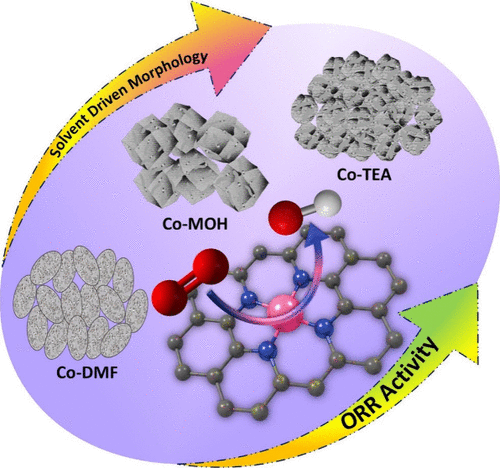
Carbon materials derived from zeolite imidazole frameworks (ZIFs) hold significant promise as electrocatalysts for various electrochemical reactions, including the oxygen reduction reaction (ORR). However, rapid and large-scale production of ZIFs is crucial for obtaining electrocatalytically active carbon materials for widespread applications. Modifications of the solvent composition are necessary to enable the bulk synthesis of ZIFs; however, the impact of these changes on the electrochemical properties of the resulting electrocatalysts is often overlooked. This study investigated the influence of the different solvents used in the precipitation synthesis of bimetallic (Co and Zn) ZIFs on the electrocatalytic properties of the resulting carbon materials. Specifically, ZIFs were synthesized by using methanol, a water-triethylamine (TEA) mixture, and a water-dimethylformamide (DMF) mixture. The results indicate that ZIFs synthesized in a water-TEA mixture yield carbon materials (Co-TEA) with superior electrochemical performance, characterized by a higher density of active reaction sites and enhanced electrochemical performance and stability for the ORR, compared to those produced from methanol (Co-MOH) and water-DMF mixtures (Co-DMF). The study underscores the critical role of solvent choice in determining the morphology, porosity, and catalytic properties of ZIF-derived carbon. The surface-doped nitrogen content and balanced Co3+ and Co2+ ions in Co-TEA, along with the high density of mesopores, increased the reaction site density of Co-TEA compared with those of Co-MOH and Co-DMF. Notably, the electrochemical stability of Co-TEA surpasses those of Co-MOH, Co-DMF, and commercial Pt/C. Co-TEA exhibited a negative shift of only 17 mV in E1/2 after 10,000 cycles between 0.6–1 V. These findings reveal that the electrochemical performance of the derived carbon is closely linked to the synthesis conditions, highlighting the potential of water-TEA-mediated ZIF synthesis as a promising strategy for developing nonprecious electrocatalysts for practical applications.

Using Electric Fields for in Situ Curing of Carbon Fiber/Phenolic Composites in Additive Manufacturing
Christian J. McGovern - ,
Kyle A. Oubre - ,
Ethan M. Harkin - ,
Sayyam S. Deshpande - ,
Ethan M. Walker - ,
Carolyn T. Long - ,
John D. Bernardin - , and
Micah J. Green *
This publication is Open Access under the license indicated. Learn More
In this paper, we demonstrate electrothermal heating and curing of carbon fiber (CF)/phenolic composites to enable successive deposition for additive manufacturing (aka 3D printing). Electric fields are capable of heating susceptor materials, which makes them a potential heat source for 3D printing thermoset composites, such as CF/Phenolic prepregs. We investigated the heating response of CF/phenolic prepregs when exposed to electric fields and found that our prepregs reached the target temperature of 210 °C when the electric field applicator was supplied with low power (8 W). We also show continuous heating and curing by translating prepregs through an electric field. Finally, we demonstrate additive manufacturing by manually depositing a layer or prepreg, using an electric field to perform in situ curing, and then repeating the process to create multilayer structures. This multilayer structure showed no macroscopic deformation in contrast to conventional methods and showed that additive manufacturing is possible.

Coating Architecture Enhances the Combustion and Thermal Behavior of GO–PVDF-Coated Aluminum Powders
Haoyuan Deng - ,
Ziyi Zhang - ,
Qingwen Shi - ,
Yuhan Wang - ,
Yi Sun *- ,
Guoqiang Luo - , and
Qiang Shen
To enhance the ignition sensitivity and combustion reactivity of micron-scale aluminum (Al) powder, two composite coating structures─graphene oxide/poly(vinylidene fluoride)/aluminum (GO/PVDF/Al) prepared via sequential deposition and a comixed graphene oxide–poly(vinylidene fluoride) aluminum composite (GO+PVDF/Al)─were fabricated using a spray-drying method. Their coating morphology, thermal behavior, combustion performance, and interfacial reaction mechanisms were systematically investigated. Thermal analysis and combustion testing show that both coating strategies markedly reduce ignition delay and enhance reaction intensity; however, GO+PVDF/Al exhibits the highest heat release, the fastest pressurization rate, and the strongest optical emission. Flame-evolution imaging further demonstrates that the comixed coating more readily promotes vigorous gas–solid coupled combustion. Molecular dynamics (MD) simulations reveal that the GO+PVDF/Al interface is more susceptible to high-temperature perturbations, leading to faster oxide-layer disruption and deeper penetration of oxygen and PVDF decomposition fragments into the Al core, resulting in rapid formation of Al–O and Al–F bonds. Taken together, the experimental and computational results show that the synergistic GO/PVDF coating significantly enhances the thermal reactivity of Al powder, while the GO+PVDF comixed structure achieves the most pronounced combustion enhancement. This work clarifies the combustion-enhancement mechanism of GO/PVDF coatings and provides essential guidance for designing high-activity aluminum-based energetic materials.
Simple Flexible-Rigid Compatible Interface Design Based on Waterborne Polyurethane and Its Mechanism in Carbon Fiber Composites
Quan Zhang - ,
Shuoyao Song - ,
Xiaodong Liu - ,
Chuanxiu Hu - ,
Hao Liu - ,
Yu-Jing Sheng - ,
Lei Liu - ,
Baolong Xue - ,
Jun Ran - ,
Yang Yu - ,
Jian Liu - , and
Ruliang Zhang *
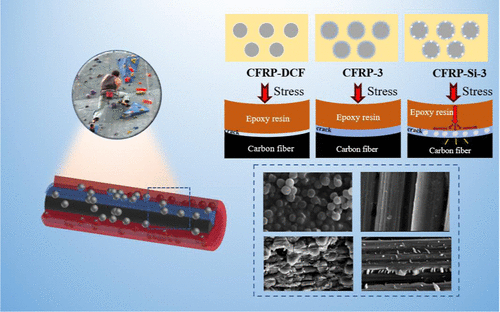
The interface is critical to the performance of carbon-fiber-reinforced polymer composites (CFRPs). This work presents a “rigid-flexible” hybrid sizing agent, where amino-functionalized silica (NH2–SiO2) microspheres are dispersed within a waterborne polyurethane (WPU) matrix, designed to enhance the fiber–matrix interface. The WPU ensures excellent compatibility and adhesion with the epoxy resin, while the NH2–SiO2 provides mechanical reinforcement and active sites for chemical bonding with the matrix. Treated fibers retained high single-filament strength (3.35 GPa). The interlaminar shear strength (ILSS) of the composite reached 84.61 MPa, representing a 23.5% improvement over the composite sized with neat WPU. Fractography revealed a transition from fiber-dominant pull-out to resin-rich failure, indicating a shift to a stronger interface. Based on these indirect observations, the enhancement mechanism is proposed to involve covalent/hydrogen bonding facilitated by the amino groups and a synergistic “rigid-particle-reinforcement/flexible-polymer-bridging” effect at the interface. This strategy offers a pathway to surpass the limits of conventional sizing for high-performance CFRPs.
Room Temperature NH3 Sensors with Enhanced Sensitivity Based on Ti3C2Tx MXene/ZnO Heterostructures
Chong Lu - ,
Yi Tan - ,
Jinxia Xu *- ,
Qiliang Li *- ,
Mingli Yin - ,
Yanze Zhang - ,
Jinxin Dai - ,
Lingyun Liu - , and
Xingjuan Song
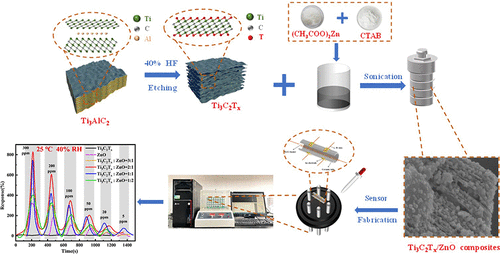
Developing highly sensitive, selective, fast response, and long-term stable room-temperature ammonia (NH3) sensors based on MXene materials remains a key challenge for their practical application. Here, Ti3C2Tx MXene/ZnO composites with varying mass ratios (3:1, 2:1, 1:1, and 1:2) were synthesized through a straightforward one-step hydrothermal route. Characterization using XRD, SEM, energy-dispersive X-ray spectroscopy (EDS), and X-ray photoelectron spectroscopy (XPS) confirmed the successful formation of the composites, revealing surface chemical bonding and electron transfer. Gas-sensing evaluations indicated that the Ti3C2Tx/ZnO composites at a 2:1 mass ratio exhibited the best performance at a relative humidity of 40% and room temperature, achieving a remarkable response of 828% for 300 ppm NH3. Moreover, it maintained a significant and detectable response of 32% even at a much lower concentration of 5 ppm NH3. Furthermore, the sensor exhibited quick response and recovery times of 26 and 11 s to 20 ppm NH3, respectively, significantly outperforming the pristine Ti3C2Tx MXene and ZnO sensors. Both experimental findings and density functional theory calculations verify that the improved performance stems from a synergistic effect: the accordion-like MXene structure provides an abundant adsorption site, while the incorporation of ZnO nanoparticles expands active surface areas and facilitates charge transfer through a p–n heterojunction. This work offers a prospective strategy for the targeted development of room-temperature-operating, high-sensitivity, and low-power gas sensors.
Predicting and Improving the Mechanical Strength of Outer-Skinned Hollow Fiber Membranes
Tjerk R. Watt - ,
Esra te Brinke - ,
Joris de Grooth - , and
Wiebe M. de Vos *
This publication is Open Access under the license indicated. Learn More
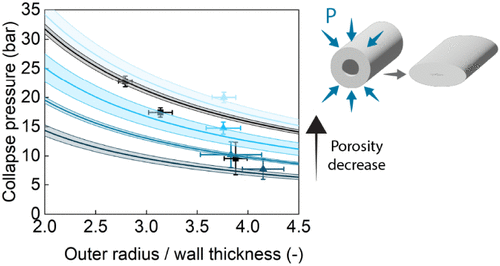
Pressure-driven hollow fiber (HF) membranes are often operated with the feed on the outside of the HF. In such a configuration, it is important to know the limits of the external pressure that can be applied to the membrane. Therefore, we investigated whether a model for predicting the collapse pressure of isotropic thin-walled cylinders was able to accurately predict the collapse pressure of outer-skinned HF membranes. Theoretical derivations showed that collapse can occur due to plastic or elastic failure, where, in the case of plastic failure, the collapse pressure should equal that of the burst pressure. Combining experimental results with our model revealed that for our membranes, plastic failure was the dominant failure mechanism. The model was able to accurately predict the influence of the membrane’s porosity on the collapse pressure. However, the model seemed to only partially predict the influence of different geometric dimensions of the HF on its collapse pressure. Interestingly, though, the results showed that, for 7 out of 8 HF membranes, the burst pressure was indeed similar to the collapse pressure, highlighting that the burst pressure can be used as an indicator for the collapse pressure of the outer-skinned HF membranes. This is an important finding for the field of HF membranes, as the burst pressure is much easier to experimentally determine than the collapse pressure. Additionally, the model provides a clear direction to further improve the collapse pressure.

Layer-Selective Polyelectrolyte Functionalization of Surgical Mask and HEPA Filters for Enhanced Filtration Efficiency and Broad-Spectrum Antimicrobial Protection
Surjith Kumaran - ,
Youngjin Kim - ,
Euna Oh - ,
Sumin Han - , and
Hyo-Jick Choi *
Polypropylene (PP) fabrics are widely used in personal protective equipment, including surgical masks, respirators, and High-Efficiency Particulate Air (HEPA) filters, due to their favorable mechanical properties and filtration performance. However, their intrinsic chemical inertness and lack of antimicrobial activity limit their ability to mitigate contact-based pathogen transmission and long-term surface contamination. In this study, a layer-selective antimicrobial functionalization strategy was developed for PP-based filtration media using permanent charge engineering while preserving filtration efficiency and breathability. Cationic imidazolium-based antimicrobial polymers were applied as conformal coatings on spunbond (SB) fabrics via rapid UV-initiated photopolymerization, whereas anionic poly(4-styrenesulfonate) (PSS) was selectively grafted onto the air-facing outermost surface of melt-blown (MB) filters through an interfacial grafting reaction. This surface-localized approach enabled antimicrobial functionality to be introduced without disrupting the pore structure or electret characteristics of the MB layer. Comprehensive morphological, chemical, and wettability analyses confirmed uniform and selective functionalization. Filtration testing using NaCl and DOP aerosols demonstrated up to approximately 12% enhancement in overall filtration efficiency, with particularly improved performance in the submicron and most penetrating particle size regimes, while the pressure drop increases were modest, tunable, and remained within relevant breathability standards. Antimicrobial evaluations showed that IMHC and PSS coatings achieved 2.2–4.0 log and 1.2–4.6 log reductions in pathogen viability within 10 min, respectively, with IMHC providing rapid contact-mediated bactericidal activity and PSS reducing microbial adhesion while enhancing viral capture and inactivation. Collectively, these results establish a charge- and wettability-gradient multilayer architecture that integrates antimicrobial functionality into mask and HEPA filter systems without compromising structural integrity or functional usability, offering a practical pathway for advanced respiratory protection technologies.
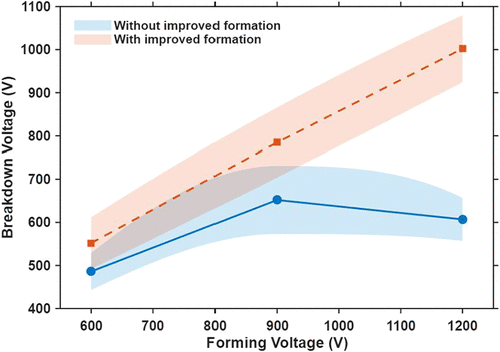
Step-Voltage Anodization with Intermediate Hydrations for Enhancing the Breakdown Voltage of Aluminum Solid Polymer Capacitors with Forming Voltages over 1000 V
Tim Kruse *- ,
David Quintero - ,
Luciana Tavares - ,
Thomas Ebel - , and
Hiroki Habazaki
State-of-the-art aluminum solid polymer electrolytic capacitors are superior to conventional liquid aluminum electrolytic capacitors in ways of lower equivalent series resistance (ESR), higher operational temperature, and higher reliability. In many low-voltage applications, solid polymer electrolytic capacitors are thus preferably used. However, this technology is not available for rated voltages higher than 200 V. One reason for that is the limited breakdown voltage of aluminum oxide in contact with the conducting polymer electrolyte and the limited knowledge about that interface. This study investigated the anodic oxide growth on aluminum at forming voltages up to 1200 V. It was shown that the oxide quality and breakdown voltage drastically decrease at voltages above 900 V. By the introduction of a step-voltage anodization with subsequent intermediate hydrations, the oxide quality was significantly enhanced, improving electrical properties and reaching average breakdown voltages of over 1000 V. With cross-section investigations, it was shown that by the intermediate hydration steps, the void structure within the oxide is changed, so that the voids are smaller and more homogeneously distributed. Additionally, the structure of the hydrated layer, formed by the hydrothermal process on top of the oxide, is changed, so that it is thicker and less porous with the additional hydrations. The polymer likely penetrates less into this changed hydrated layer, which lowers the amount of polymer in direct contact with the oxide. This introduces a more resistive layer between the oxide and the polymer, effectively keeping the polymer from possible breakdown points and defects in the oxide, which could potentially increase the breakdown voltage. This process of performing additional hydrations along the formation of the oxide could be a promising step in achieving the highest-voltage polymer solid electrolytic capacitors.

Engineering Isolated CoV–Nx Sites and CoV Nanoparticles on Graphene: A Synergistic Platform for Oxygen Reduction Catalysis
Varsha Singh - ,
Smita Singh - ,
Ananya Tiwari - , and
Vellaichamy Ganesan *
The oxygen reduction reaction (ORR) has attracted significant interest as a key cathode reaction in emerging energy technologies, such as fuel cells and metal–air batteries, aimed at improving the present energy landscape and advancing sustainable energy solutions. Metal–nitrogen–carbon (M–Nx–C) materials have been extensively investigated as potential alternatives to Pt-based catalysts due to their promising ORR activity. In this study, cobalt–vanadium isolated atoms/nanoparticles on nitrogen-doped graphene oxide (CVSA-NP/NG) were synthesized as an ORR catalyst. Different compositions of CVSA-NP/NG, besides the control samples, were prepared and analyzed by employing spectroscopy and electrochemical methods. Electrochemical results demonstrate that the best composition (CV(11)SA-NP/NG) exhibits high ORR catalytic performance, achieving an onset potential (Eonset) value of 0.92 and 0.79 V in 0.1 M KOH and 0.1 M HClO4, respectively. CV(11)SA-NP/NG catalyzes the ORR via a four-electron transfer process, converting O2 directly to OH– or H2O. The KSCN test confirms the presence of two types of active sites, namely CoV–Nx and CoV nanoparticles.

Rapid Preparation of Superamphiphobic Surfaces Featuring Re-Entry Characteristics on Magnesium Alloy
Shucheng Qi *- and
Jiyuan Zhu *
Developing a straightforward method for preparing superamphiphobic surfaces holds significant importance for both academia and industry. Despite considerable progress in superamphiphobic surface fabrication techniques, the time-consuming nature of the process and the difficulty in guaranteeing wettability performance mean that simple production of such surfaces remains a challenging task. This paper introduces a simple magnetron sputtering coupled with chemical deposition coating technique for constructing fractal floral structures on AZ91D magnesium alloy. These structures exhibit pronounced biomimetic characteristics and significantly enhance superamphiphobic property through expanded re-entry structures. Beyond demonstrating fostering chemical stability, this surface exhibits outstanding repellency toward rapeseed oil and ethylene glycol. The static contact angles of ethylene glycol, rapeseed oil, and n-hexane are 163.7°, 156.8°, and 152.5°, respectively. This approach for fabricating practical superamphiphobic surfaces offers distinct potential advantages through its low cost and high efficiency. Notably, the entire preparation process takes less than 30 min, presenting an alternative highly efficient approach for synthesizing superamphiphobic surfaces.

Biodegradable Protein Films Based on a Complex Coacervate of Gelatin and Sodium Caseinate for Dermal Application
Jadranka Fraj - ,
Mina Bosnić *- ,
Lidija Petrović - ,
Jelena Milinković Budinčić - ,
Sandra Bučko - ,
Ljiljana Spasojević - ,
Senka Popović - ,
Danijela Šuput - ,
Nejra Omerović - ,
Jaroslav Katona - ,
Jelena Ostojić - , and
Željana Radonić
Proteins offer specific functional properties for the development of biodegradable, biopolymer-based materials. Gelatin and sodium caseinate can electrostatically interact in solution and form a complex coacervate, which was used to produce films with enhanced properties intended for dermal application in the cosmetic industry. Complex coacervate based films showed improved physical, mechanical, and barrier properties owing to their intermolecular interactions. Their thermal properties and chemical composition remained unchanged due to the intermolecular interactions being predominantly electrostatic. As sufficient elasticity of films is necessary for their production and use in the cosmetic industry, the optimal type and concentration of plasticizers were determined. Films containing 30% glycerol exhibited the highest improvement in mechanical properties, with balanced barrier and physical properties. The presence of glycerol and its interaction with protein side groups was detected in the FTIR spectra of films. SEM micrographs revealed morphological improvements on the surface and in the cross-sections of films plasticized with glycerol. Overall, the produced films demonstrated satisfactory properties for cosmetic applications and represent a potential replacement for nonsustainable synthetic materials currently in use.
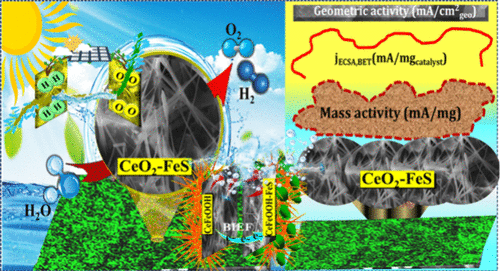
Sulfur and Oxygen Dual Vacancy Synergy Engineering into Interfacial Lewis Acid–Base Pairs in Ce 4f–O–Fe 3d–S Heterostructure to Boost Kinetics for Green Hydrogen Production
Mayakrishnan Raj Kumar - ,
Krishnan Umapathy - ,
Singaravel Ramaiyan - ,
Jayabharathi Jayaraman *- , and
Manoharan Padmavathy
Searching for an efficient electrocatalyst is a massive challenge for hydrogen production in large-scale applications of water decomposition until now. The reported CeO2–FeS catalyst required small overpotentials of 271 and 155 mV at 10 mA cm–2 for OER and HER, respectively. The interfacial Lewis acid–base pair (LABP; Ce···S) in CeO2–FeS improved the activity. The remarkable synergistic effect of CeO2 with FeS increased the active surface area to expose abundant active sites, porosity, and skin-tight contact between CeO2–FeS and NF to regulate the electronic redistribution of Fe sites for remarkable activity. Benefiting from sulfur and oxygen vacancies in CeO2–FeS, the electronic structure of the electrocatalyst can be effectively regulated, and the intrinsic activity of the active site can be enhanced. Notably, benefiting from the sulfur and oxygen vacancies in CeO2–FeS, the electronic structure of the electrocatalyst can be effectively regulated and the intrinsic activity of the active site can be enhanced. Thus, sulfur vacancy and oxygen vacancy are outstanding active sites for HER and OER. The kinetics of CeO2–FeS electrolysis was examined via in situ EIS, demanding very small activation energy to complete the reaction after Ce-coupling, as supported by the Arrhenius plot. The higher rate constant extracted from the Trumpet curve inferred rapid formation of the O2 bubbles. Mechanistic examinations inferred that the built-in electric field (BIEF) at the Schottky interface narrowed the band gap of CeO2–FeS for fast carrier transport and tuned the adsorption ability of intermediates on surface reaction sites. The enhanced *OH adsorption on CeO2–FeS was further verified by Laviron analysis. The alkaline-/solar-driven electrolyzer of CeO2–FeS(+,−) required 1.60 V to get 10 mA cm–2, indicating promising prospects for industrial applications. The Ce4f valence electronic configuration in CeO2–FeS endowed Fe sites with distinguished directive toward HER and OER via Ce4f–Fe3d orbital coupling. The CeO2–FeS interface resulted in balanced adsorption–desorption strength of HER intermediates and optimized the OER reaction pathway by weakening the adsorption capacity of the OOH intermediate. These electronic modulations collectively contribute to the superior catalytic performance.

Green Synthesis of CuO/CQD Nanocomposites for Electrochemical Glucose Sensing: From Drop-Casting to Microplotting
Ryal Atson - ,
Orlette Mkhari - , and
Mahabubur Rahman Chowdhury *
This publication is Open Access under the license indicated. Learn More
In this study, we report the first nonenzymatic glucose (NEG) sensor based on CuO/carbon quantum dot (CQD) nanocomposites synthesized via a green hydrothermal method using Aloe arborescens extract as the reducing agent and carbon source. The use of this phytochemical source and the application of microplotting for fabricating green-synthesized nanomaterial-based NEG sensor electrodes have not been previously explored. Structural characterization (SEM, EDS, TEM/SAED, FT-IR, Raman, XRD, XPS, and TGA/DTA) confirmed the formation of quasi-spherical CuO nanostructures decorated with CQDs. Electrochemical characterization of pristine CuO and CuO/CQD films on fluorine-doped tin oxide (FTO) substrates revealed the superior performance of the CuO/CQD/FTO platform. A transition from drop-casting to precision microplotting was implemented to improve film uniformity and electrode reproducibility. Comparative evaluation showed that microplotting produced CuO/CQD electrodes with more application-relevant electrochemical behavior. Accordingly, CuO/CQD ink was microplotted onto screen-printed gold electrodes (SPGEs) and evaluated for glucose detection in 0.1 M NaOH. The resulting CuO/CQD/SPGE platform exhibited a wide linear range of 0.9–17.1 mM (R2 ≥ 0.995), a detection limit of 0.33 mM, and sensitivities of 0.131–0.0826 mA·mM–1·cm–2, with a rapid steady-state response (<6 s). This linear range spans hypoglycemic to hyperglycemic states, confirming the clinical relevance of the platform. The CuO/CQD sensor also demonstrated excellent repeatability, reproducibility, stability, and selectivity under the influence of common interferents, chelating agents, and physiologically relevant chloride concentrations. Comparative benchmarking with other CuO-based NEG sensors indicates that electrode geometry, deposition precision, and material compatibility contribute to extending the linear range. Proof-of-concept testing in serum showed <6% deviation from a commercial glucose meter, affirming the clinical potential of the CuO/CQD/SPGE platform. These findings illustrate how green-synthesized nanomaterials and precision microfabrication can enable sustainable, high-performance glucose sensing platforms for clinical and point-of-care applications.
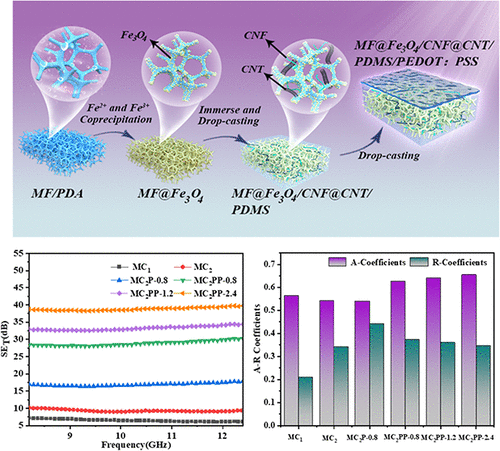
Asymmetric Three-Dimensional Porous-Planar Integrated Structure of Elastic Melamine Foam Composites with One Side Absorbing and One Side Reflecting Electromagnetic Shielding Properties
Ying Zhou *- ,
Lingjun Zeng - ,
Lan Xie *- ,
Bai Xue - , and
Qiang Zheng *
Asymmetric structural design and reduction of secondary contamination have been at the forefront of the development of electromagnetic shielding composites. Herein, the melamine foam@ferric oxide/cellulose nanofibers@carbon nanotube/polydimethylsiloxane/poly(3,4-ethylenedioxythiophene):poly(styrenesulfonate) (MF@Fe3O4/CNF@CNT/PDMS/PEDOT:PSS) (MC2PP) composites with an asymmetric three-dimensional porous-planar integrated structure are prepared by a solvothermal reaction, infiltration, and coating. A PDMS-encapsulated MF@Fe3O4/CNF@CNT porous composite is designed as an absorbing layer for absorbing electromagnetic waves (EMWs). The conductive polymer PEDOT:PSS, coated on the upper surface of the MF@Fe3O4/CNF@CNT/PDMS composite, is designed as a reflective layer. The MC2PP-2.4 composite obtains an average SET of 38.81 dB and an absorption coefficient (A) value of 0.654 at the X-band when the EMWs are incident from the MF@Fe3O4/CNF@CNT/PDMS side (M-side, porous absorber layer). When the EMWs are incident from the PEDOT:PSS side (P-side, planar reflecting layer), the MC2PP composite obtains an average SET of 39.00 dB and a reflection coefficient (R) of 0.964. The asymmetric structural design, along with conductive losses, magnetic losses, and interface polarization, contributes to the electromagnetic shielding performance that can be absorbed on one side and reflected on the other. More importantly, the elastic melamine foam composites are simple to prepare, reliable in process, stable in performance, and a unique scalable composite material, which have a broad application prospect in the field of electromagnetic interference shielding.

Polymerizable Acrylamide-Based Deep Eutectic Solvents for Flexible Thermoelectric Devices
Shadi A.S. Eldib - ,
Moustafa I.M. Abdelaziz - ,
Ghada E. Khedr - ,
Hossam N. Akl - , and
Nageh K. Allam *
Thermoelectric (TE) materials have emerged as a promising technology for waste heat recovery and sustainable energy conversion; however, most conventional TE materials are rigid, costly, and difficult to process. In this study, we report a scalable approach for synthesizing a flexible thermoelectric polymerizable deep eutectic solvent (PDES) by polymerizing choline chloride (ChCl) with acrylamide (AM) using potassium persulfate (KPS) as a free-radical initiator. Molecular dynamics simulations, combined with comprehensive experimental characterization, reveal that the chemical bonding and molecular interactions formed between ChCl and AM during polymerization play a decisive role in governing the thermoelectric performance of the resulting material. Energy-dispersive X-ray spectroscopy (EDX) confirms the homogeneous distribution of constituent elements, indicating efficient molecular incorporation and the formation of continuous ion-transport pathways essential for thermoelectric operation. Specifically, the ChCl–AC PDES exhibits an n-type ionic Seebeck coefficient ranging from −8.1 mV K–1 at 300 K to −12.06 mV K–1 at 362.8 K, along with an ionic conductivity of 0.65–1.29 mS cm–1. The material also demonstrates excellent thermal stability, as confirmed by DSC analysis, which shows no detectable phase transitions up to 125 °C. For clarity and proper benchmarking, we now directly compare our results with representative state-of-the-art systems. The obtained Seebeck coefficients exceed those typically reported for polymer-based ionic thermoelectric gels (≈0.1–8.8 mV K–1) and are comparable to values observed in flexible PEDOT:PSS-based thermoelectric materials (≈10–15 mV K–1). These findings demonstrate that ChCl–AM PDES is a low-cost, flexible, and efficient alternative to traditional inorganic thermoelectric materials, with strong potential for application in low-temperature waste heat recovery and flexible thermoelectric devices.
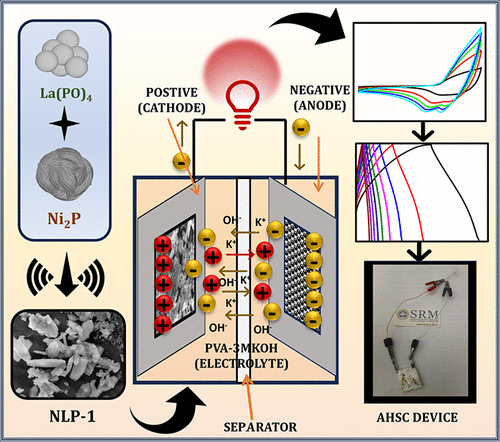
Interface Engineering of a Ni2P-LaPO4 Heterostructure for a High-Energy Asymmetric Hybrid Supercapacitor
Vetrivel Ramalingam - ,
Ganesan Shanmugam *- , and
Chandru Gunasekaran
Pioneering pathways to engineer advanced materials is a necessity for the development of robust energy storage devices. Herein, a soft-template hydrothermal approach was utilized for the preparation of Ni2P and LaPO4, followed by ultrasonication together to develop the NLP composite. The synergistic interaction, via the phosphide-phosphate interface, brings out the high redox property of Ni2P and the superior ionic stability of LaPO4 together in varying ratios to form NLP-1, NLP-2, and NLP-3. This results in intimate heterostructure contacts for faster reaction kinetics, resulting in enhanced electrochemical performance. NLP-1 composite exhibited superior performance among them, with a specific capacitance of 993 F/g at a current density of 1 A/g, retaining 93% of its initial capacitance after 10,000 cycles. NLP-1 was utilized as cathode material for the fabrication of a solid-state asymmetric supercapacitor device, with biomass-derived activated carbon as anode material. The fabricated device achieved a high energy density of 92.025 Wh/kg at a power density of 270 W/kg, retaining 90% performance after 10,000 consecutive cycles. The results confirm the robust nature of NLP composites, making them an ideal candidate for real-time device assembly.
Additions and Corrections
Correction to “Synergistic Combination of ZnCl2/Cu-BTC MOF for the Photocatalytic Oxidative Deamination of Benzylamines Using CO2 under Visible-Light Irradiation”
Amod Kumar - ,
Sakshi Bhatt - ,
Pragnya Paramita Samal - ,
Sailaja Krishnamurty - , and
Suman L. Jain *

This publication is free to access through this site. Learn More
Mastheads
Issue Editorial Masthead
This publication is free to access through this site. Learn More
Issue Publication Information
This publication is free to access through this site. Learn More