About the Cover:
Commentaries

Navigating the Chemical Multiverse: An Industrial Hygienist’s Insight on Uncertainty, Exposure, and the Precautionary Principle
Jenny Houlroyd *- and
Hilarie Warren *
This publication is Open Access under the license indicated. Learn More
Despite 350,000 registered chemicals, <1% have safety data; industrial hygienists must make decisions in the face of uncertainty. This paper reimagines the Hierarchy of Controls framework (elimination, substitution, engineering controls, administration controls, and personal protective equipment) and the established industrial hygiene framework for hazard anticipation, recognition, evaluation, control, and confirmation of hazard elimination to account for the multiple chemical spaces, both at work and in personal life, in which a worker may be exposed to chemicals across the chemical multiverse, defined as the multiple chemical spaces, each defined by a unique set of descriptors that workers encounter, and the uncertainty related to the potential health effects of these emerging chemicals and technologies. This requires the adaptation of previously developed tools, exposure assessment strategies, and frameworks to manage unknown chemical exposures, and it suggests that manufacturers developing new chemicals, materials, or emerging technologies should be more explicitly encouraged to adopt a precautionary principle approach, examining the entire life cycle of a chemical or material before introducing it into commerce, to reduce potential adverse exposures from downstream usage of the chemical or material, and developing exposure monitoring methods for occupational health professionals to use to monitor worker health. This is the first paper to systematically merge the chemical multiverse concept into occupational health frameworks, providing a new holistic lens for industrial hygienists to protect workers and consumers while at the same time reinforcing the importance of stakeholder engagement and a shift to an anticipatory risk management approach to the full life cycle of chemicals, materials, and products to promote prevention of occupational illness.

New Era of AI in Chemical Process Safety: Foundation Models
Haoyu Yang - ,
Tylee L. Kareck - , and
Qingsheng Wang *
This publication is Open Access under the license indicated. Learn More
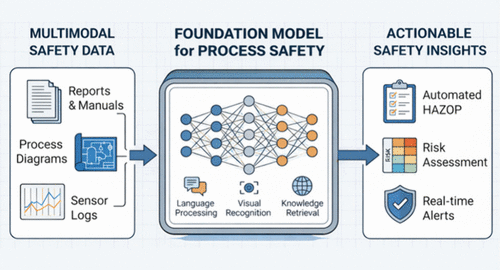
The chemical process safety community is entering a new era driven by foundation models, shifting from task-specific, label-intensive deep learning to adaptable pretrained reasoning frameworks. This Commentary surveys how large language models (LLMs) and vision foundation models (VFMs) can address persistent bottlenecks in process safety, including data scarcity, rare-event imbalance, and limited transferability across facilities. From a language perspective, retrieval-augmented generation (RAG) enables models to operationalize unstructured industrial “dark matter”, such as incident narratives, maintenance logs, management-of-change records, and standard operating procedures, into evidence-linked outputs that support auditable root cause analysis (RCA) and scalable, semiautomated hazard and operability study (HAZOP) workflows. From a vision perspective, promptable VFMs and multimodal systems advance safety monitoring beyond binary detection toward semantic segmentation and contextual discrimination, enabling interpretable, morphology-aware characterization of dynamic threats. Despite this promise, deployment in safety-critical environments demands rigorous scrutiny. We identify key barriers including hallucination risks, ontology drift, privacy, and governance constraints, as well as the inadequacy of generic benchmarks for engineering-grade requirements in reliability, traceability, and failure transparency. We also propose a roadmap centered on “data as infrastructure”, emphasizing expert-supervised synthetic supervision, domain-shaped evaluation and alignment protocols, and hybrid workflows that integrate physical knowledge and validation layers. Ultimately, foundation models should be conceptualized not as autonomous decision-makers but as transparent, context-aware reasoning layers that empower human experts to convert fragmented industrial data into actionable safety intelligence.

Chemical Security in a Fragmenting World: ASEAN as a Model for Science Diplomacy?
Fun Man Fung *- ,
Jamie Z. Y. Khoo - ,
Imee S. Martinez - , and
Hooi Ling Lee
This publication is Open Access under the license indicated. Learn More
The 2023 verification of the destruction of all declared chemical weapons stockpiles by the Organisation for the Prohibition of Chemical Weapons (OPCW) marks a historic, yet potentially misunderstood, success. This commentary argues that this milestone masks a paradigm shift in the primary threat: from the destruction of legacy stockpiles to the prevention of re-emergence, a challenge now defined as chemical security. In an era of geopolitical fragmentation and economic friction that disproportionately strains the scientific capacity of the Global South, traditional multilateral frameworks are eroding. This piece posits that the “ASEAN” way─a model of regional, consensus-driven diplomacy exemplified by the successful 2025 ASEAN Summit that offers a potent alternative framework. By leveraging ASEAN’s proven mechanisms for deep technical cooperation in nontraditional security threats, such as Disaster Risk Reduction (DRR), this model can be adapted to address the shared vulnerabilities of chemical security. It concludes with an urgent call for Science Diplomacy, mandating that the scientific and chemical communities actively engage policymakers, integrate resilience frameworks, and utilize existing regional collaborations to ensure that chemical security is embedded within this new, effective brand of regional multilateralism.
Reviews

Trichloroethylene─A Review of Its Safety Concerns and Environmental Hazard Levels
Yasin Sarpeleh - ,
Zahra Jamali - , and
Masoud Khajenoori *
This publication is Open Access under the license indicated. Learn More
This review study examines various aspects of trichloroethylene (TCE) from environmental, health, and safety perspectives. This study begins with a review of the history and industrial applications of TCE, including its role as a solvent and intermediate chemical. Then it delves into a scientific examination of its harmful effects on environmental components. In this context, the behavior of TCE in air, surface, groundwater, and soil has been analyzed, highlighting its persistence and mobility as the main environmental challenges. A significant portion of this study is dedicated to the detailed explanation of the toxic and carcinogenic effects of TCE on human health. Additionally, epidemiological evidence and the results of animal studies that associate TCE with an increased risk of various cancers (especially kidney, liver, and lymphatic system cancers), neurological disorders, and immune system damage are presented. Additionally, international and national standards and regulations developed by organizations such as IARC, EPA, WHO, and ACGIH for controlling exposure to this substance have been evaluated. Additionally, this study presents and analyzes various methods for the removal and remediation of TCE-related pollution. These methods include physical, chemical, and biological processes such as advanced oxidation, anaerobic biodegradation, soil vapor extraction, and the application of nanomaterials. Each technique has been discussed in terms of efficiency, limitations, and economic and environmental considerations. Ultimately, this study emphasizes the necessity of gradually reducing usage, implementing effective control policies, and sustainably replacing with alternative materials to ensure the achievement of sustainable development goals and the protection of public health by examining the current status and global outlook of TCE management.

Chemical Safety in Iranian Universities: Navigating Challenges and Opportunities in the Absence of Dedicated Regulations and Designing a Pathway toward Cultural Safety
Sayed Vahid Esmaeili - ,
Zahrasadat Mousavifard - , and
Mostafa Pouyakian *
This publication is Open Access under the license indicated. Learn More
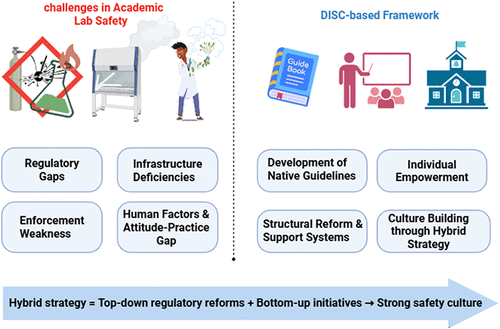
Laboratory safety in academic settings, particularly in developing countries, is of paramount importance due to major infrastructural challenges and the emergence of new technologies. This systematic review was conducted following the systematic reviews and meta-analyses (PRISMA) preferred reporting standard and incorporated gray literature using the snowballing technique. A total of 14 articles were ultimately reviewed. A synthesis of the literature review findings and an examination of Iran’s domestic regulations were employed to develop a proposed framework for advancing chemical safety in academic laboratories. The analysis revealed that the absence of specific, mandatory regulations for small-scale academic chemical users, coupled with structural challenges such as fragmented responsibilities, weak enforcement, severe infrastructure deficiencies (e.g., 50% malfunctioning fume hoods), a profound attitude-practice gap (74% vs 24%), and the identification of human factors as the primary cause of incidents, poses a serious threat to safety. By identifying the challenges in academic laboratory safety, this study proposes a practical, multifaceted, and context-specific framework based on the DISC model, encompassing the development of native guidelines, individual empowerment, and the establishment of institutional support systems to strengthen the safety culture. The study’s final finding indicates that adopting a hybrid strategy, integrating both top-down regulatory reforms and bottom-up initiatives, can provide an effective pathway for entrenching a robust safety culture within this specific context.
Case Studies

Evaluation of a Novel Risk Assessment Tool for Hazardous Chemicals in Academic Laboratories: An Exploratory Study
Chun-Yip Hon *- ,
Kevin Hedges - ,
Krista Thompson - , and
Chris Bentley
This publication is Open Access under the license indicated. Learn More
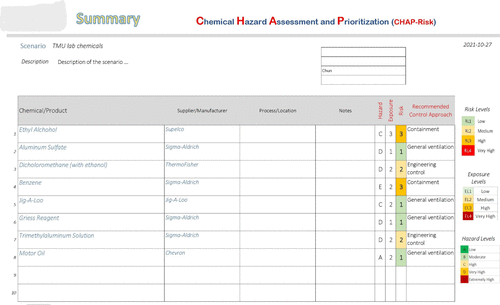
Chemical hazards are prevalent in many academic laboratories and are the reported cause of numerous health and safety incidents, including fatalities. The Chemical Hazard Assessment and Prioritization (CHAP) Risk tool is intended to raise awareness of chemical hazards by calculating a risk level and providing a recommended control. The CHAP-Risk tool was previously evaluated in small and medium enterprises with some success but has not been examined in academic laboratories. This exploratory study seeks to assess the utility of the CHAP-Risk tool in academic laboratories. Eight chemical safety data sheets (SDSs) were input into the CHAP-Risk tool by three test users. The tool’s output between test users was compared to ascertain its reproducibility as well as gaps in recommended controls vs existing control measures. The output between test users was the same for 50% of the SDSs and, for the remaining four chemicals, 2 of 3 test users had the same output, with a single parameter difference with the third and final test user. With respect to the gap analysis of control measures, the recommended control vs existing control aligned for six chemicals; however, the existing control for two chemicals was deemed insufficient relative to the recommended control. These results suggest that, for the most part, the tool is reproducible but additional upgrades to the tool might be needed in some instances. Overall, the CHAP-Risk tool appears to be effective in classifying the risk associated with chemicals and educating academic laboratory occupants about appropriate control measures to mitigate the risk.

The One Health Approach Applied to Chemistry Laboratories at the Federal University of Health Sciences of Porto Alegre, Brazil: A Case Study
Laíse Costa Borba *- ,
Felipe Grillo Pinheiro - ,
Nathália Magno Galdino - , and
Josias Merib
This publication is Open Access under the license indicated. Learn More
One Health emphasizes the relationships among human, animal, and environmental health. However, this concept is rarely used when assessing the impacts of academic laboratory activities. This case study evaluated some occupational and environmental risks in laboratories at the Federal University of Health Sciences of Porto Alegre (UFCSPA), state of Rio Grande do Sul, Brazil, focusing on noise from fume hoods and on hazardous waste segregation. Noise measurements in fume hoods revealed levels that exceeded the limits considered comfortable for human hearing; however, the results are in accordance with those allowed by national and international regulations. Waste segregation practices showed a predominance of biological waste over chemical waste, indicating possible inconsistencies in the employed classification criteria to segregate mixtures. The results highlight challenges in environmental education and laboratory-safety training at both undergraduate and graduate levels, as well as a need for updated regulations adapted to the academic context. Importantly, the UFCSPA has evolved in terms of biosafety with the creation of specific sectors to mitigate health and safety issues, also providing mandatory and elective courses for both undergraduate and graduate programs focusing on addressing specific institutional demands. In addition, the implementation of One Health principles in universities may strengthen sustainable practices, reduce occupational risks, and contribute to the achievement of global sustainable development goals.

Green and Sustainable Laboratory Practices in Organic Synthesis: Post-Earthquake Safety Enhancements at NDHU Chemistry
Sailam Sri Gogula - and
Che-Jen Lin *
This publication is Open Access under the license indicated. Learn More
The 2024 Hualien earthquake and subsequent chemical fire at the National Dong Hwa University highlighted the systemic vulnerabilities of laboratories located in seismically active regions. Drawing directly from this experience, we propose a unified framework for building green and resilient laboratories integrating three complementary pillars: green chemistry, resilient infrastructure, and institutional preparedness. Green chemistry reduces intrinsic hazards by adopting fewer solvents, employing energy-efficient synthesis, and implementing waste minimization strategies, thereby lessening both environmental impacts and disaster risks. Resilient infrastructure─including compartmentalized storage, seismic- and fire-resistant construction, and real-time monitoring─confines incidents to manageable scales, enabling safer evacuation and recovery. Institutional preparedness, strengthened through chemical map sharing, joint training with fire departments, and embedded emergency drills, ensures coordinated response capacity. Building on the NDHU case, we argue that future laboratories should further advance along three converging trajectories: AI-driven digital safety monitoring, integration of renewable and circular resource systems, and global standardization of laboratory safety practices. Together, these measures transform hard-learned lessons into a roadmap for laboratories that safeguards innovation while protecting people, society, and the environment.
Articles

Profile of Anabolic Steroids Seized by the Federal Police in the Tri-Border Region: Brazil, Paraguay, and Argentina
Viviane da S. Leandro Tymus - ,
Fabíola Zat Schuviecerski - ,
Julia Fukuro Birkheuer - ,
Maria Luiza R. Silva - ,
Ala Baghdadi - ,
Mayara Ali Dahrouj - ,
Rafaella Costa Bonugli-Santos - ,
Francisney Pinto do Nascimento - ,
Jonathan Luiz Wöhlke - ,
Fernando Augusto de Freitas - , and
Aline Theodoro Toci *
This publication is Open Access under the license indicated. Learn More
The use of anabolic-androgenic steroids (AAS) has been increasing worldwide. These substances are synthetic derivatives of testosterone, popularly known for their anabolic and androgenic effects. They are primarily used by individuals engaging in physical activities who seek aesthetic enhancement and muscle mass gain. However, due to the prohibition of AAS for aesthetic purposes, the clandestine market has become an alternative for such consumers, even though it is well recognized that these products are largely noncompliant and pose serious health risks. In this study, a method was validated using gas chromatography coupled with mass spectrometry (GC-MS) for the simultaneous quantification of various esters of testosterone, drostanolone, boldenone, nandrolone, and trenbolone. The samples of anabolic steroids seized by the Federal Police of Foz do Iguaçu (Paraná, Brazil) in the tri-border region (Brazil, Paraguay, and Argentina) between the periods of 2019 to 2022 and 2024 to 2025 were analyzed. The results revealed that 100% of the samples showed some form of irregularity in composition, substance concentration, or labeling. The majority of the samples, 42 (68.85%), originated from Paraguay, highlighting that the border region between Foz do Iguaçu (Brazil) and Ciudad del Este (Paraguay) is a major gateway for the entry of irregular pharmaceutical products into Brazil. The study underscores the weakness of sanitary control over these substances and reinforces the risks associated with the acquisition and use of illicit anabolic steroids.

Safety Climate and Risk Awareness as Predictors of Laboratory Accidents in Mexican Higher Education Institutions
Maria Alfonsina Salazar-Escoboza *- ,
Jesus Francisco Laborin Alvarez - ,
Clara Rosalia Alvarez-Chavez - , and
James Kaufman
This publication is Open Access under the license indicated. Learn More
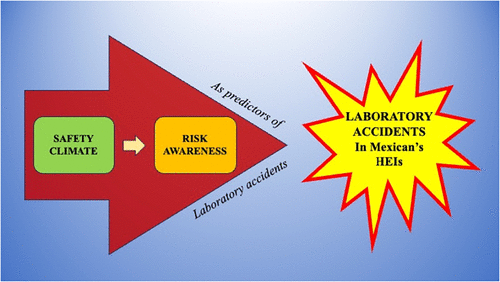
This study examines the influence of safety climate and risk perception on laboratory accidents among students in Mexican higher education institutions (HEIs). Data collected from 438 students across three public HEIs using validated questionnaires reveal that a positive safety climate─characterized by adherence to safety protocols, institutional commitment, and proper equipment use─is associated with lower risk perception and reduced accident rates. Conversely, inadequate safety practices, insufficient training, and weak institutional leadership contribute to heightened risk perception and increased laboratory incidents. A significant finding is the prevalent invulnerability mindset among students, which, combined with underreporting of accidents due to fear of reputational or institutional consequences, undermines effective safety management. These challenges underscore the urgent need to enhance safety culture through targeted interventions, comprehensive training programs, and the establishment of formal reporting mechanisms that are tailored to academic laboratories. While the study is limited by its reliance on localized data and potential underreporting, it highlights critical areas for improvement in laboratory safety within Mexican HEIs. Future research should replicate this study across diverse institutions and regions to strengthen the generalizability. Overall, fostering a robust safety climate and addressing risk perception are essential to reducing laboratory accidents, protecting students and staff, and promoting sustainable safety practices in academic environments.

Estimating the Benefits of Sustainable Aviation Fuel Usage at Chicago O’Hare International Airport on Ultrafine Particle Exposure and Mortalities Reductions
Melissa Sui-hui Louie - ,
Elena Austin - ,
Magali N. Blanco - ,
Chang Gyo Jung - ,
Yeonseung Cheong - ,
Anthe George - , and
Shruti Khadka Mishra *
This publication is Open Access under the license indicated. Learn More
The expanding commercial aviation sector necessitates diverse energy sources, and sustainable aviation fuels (SAFs) have emerged as a promising option. Widespread SAF adoption can help meet transportation fuel demand and offer health benefits for people residing near airports or along airport landing and takeoff (LTO) pathways, where elevated levels of aircraft-derived air pollution often exist. Blending SAF with traditional jet fuels can reduce ultrafine particle (UFP) emissions, which may improve health of near airport population. We analyzed a population of about 8 million people in 1925 census tracts around the Chicago O’Hare International Airport (ORD). We conducted a risk assessment to estimate anticipated UFP reductions for three adoption scenarios using blends of traditional jet fuels with 5, 25, and 50% SAF across all flights landing and taking off from ORD. We calculated baseline estimates of UFP emissions using ORD flight data, a dispersion model, and a calibration function derived from mobile monitoring data. We used this baseline UFP emission profile across the study area to estimate population-weighted UFP, as well as the attributable case reductions (ACRs) and attributable mortality rate reductions (AMRRs) across the demographic distribution around the airport, based on the SAF blending scenarios. We found a positive association of SAF blending with UFP reductions, particularly near the airport and along LTO flight pathways. Our study showed that the population-weighted UFP across different demographics was similar. ACRs were largely dependent on individual demographic populations, while AMRRs for all populations were relatively similar, with an estimated 0.3 (95% range: 0.2–0.3), 1.1 (0.9–1.4), and 1.8 (1.5–2.2) fewer mortalities per 100,000 people per year expected with the adoption of 5, 25, and 50% SAF blends, respectively. This study indicates that communities near ORD, across a range of demographics, may benefit similarly from SAF adoption, thus highlighting how SAF adoption may offer an opportunity to improve health outcomes like aviation UFP-related mortalities around airports.

DNA Methylation Alterations in Benzene-Exposed Gasoline Station Workers: Insights from Singleplex MethyLight Analysis
Safia A. Messaoudi - ,
Norah K. Bin Abdulwahed - ,
Saranya Rameshbabu - ,
Abrar Alsaleh - ,
Khaled Ouanes - ,
Hedia Zitouni - ,
Rasha F. Alharthi - ,
Hussam S. Al-Harthi - ,
Mourad Assidi - , and
Sachil Kumar *
This publication is Open Access under the license indicated. Learn More
Background & Objective: Alterations in global DNA methylation levels and repetitive elements are commonly observed in various cancers and in response to environmental pollutants, particularly petroleum products such as benzene. Long-term benzene exposure is harmful to human health and is associated with an increased risk of hematological malignancies. This study aimed to investigate the association between chronic occupational exposure to benzene and DNA methylation status in TGFβ2, MAGE-A1, and LINE-1 repetitive elements among gasoline station workers. Material and Methods: This case–control study included 30 male gasoline station workers and 30 male controls. Genomic DNA was extracted from peripheral blood samples using the QIAamp DNA Mini Kit (QIAGEN) and treated with sodium bisulfite via the EpiTect Fast DNA Bisulfite Kit. Singleplex MethyLight PCR was performed to assess methylation status of MAGE-A1, TGFβ2, and LINE-1. Results: Significant differences were observed in working hours (p = 0.004) and direct benzene exposure (p < 0.0001) between workers and controls. Percent MethyLight Reference (PMR) values were significantly different between the two groups for LINE-1 (p < 0.0001), TGFβ2 (p = 0.0194), and MAGE-A1 (p < 0.0001). Conclusion: Chronic benzene exposure is associated with altered DNA methylation patterns. Singleplex MethyLight analysis revealed significant PMR differences for MAGE-A1, LINE-1, and TGFβ2 between benzene-exposed workers and controls, highlighting the potential of DNA methylation profiling in occupational health risk assessment.

Occupational Exposure to Environmental Aerosols from Heated Tobacco Products in Japanese Catering Venues: a Pilot Study
Maya I. Mitova *- ,
Maria Gomez Lueso - ,
Samuel Kleinhans - ,
Catherine Goujon-Ginglinger - ,
Sachie Yamaji - , and
Yvonne S. K. Khoo
This publication is Open Access under the license indicated. Learn More
A study was conducted in six Tokyo venues, each with separate nonsmoking and heated tobacco product (HTP)-use areas. Additionally, three of the venues had a smoking booth within the HTP-use area. Airborne nicotine was used as a specific marker to assess the occupational exposure of waitstaff in these venues. In nonsmoking areas, area monitoring generally demonstrated airborne nicotine levels below the detection limit or marginally exceeded it, except for one venue (maximum 0.278 μg/m3). In HTP-use areas, nicotine levels ranged from 0.237 to 2.16 μg/m3 (minimum–maximum range, median 0.681 μg/m3). For personal exposure in nonsmoking areas, 15 out of 19 8 h time-weighted averages were below the limit of quantification (LOQ). In cigarette smoking booth-equipped venues, most personal exposure measurements of the waitstaff entering HTP-use areas were quantifiable at low levels. Whereas the venues without cigarette smoking booths showed lower exposure levels, with 58% of samples below LOQ. All parameters for working environment control class assessment defined by the Japan Society of Occupational Health were below 1% of the threshold limit value for nicotine (TLV, 500 μg/m3). Area monitoring data were used to statistically model the predictive nicotine distribution, indicating a 0.7% probability of exceeding 5 μg/m3. The findings of this study support that separated nonsmoking and HTP-use areas, active mechanical ventilation, and negative pressure in HTP-use areas to direct airflow help to reduce waitstaff’s occupational exposure to nicotine (used as proxy for HTP environmental emissions) below 1% TLV as well as help prevent HTP aerosols from entering nonsmoking areas.

Safety Climate and Risk Management Practices among Laboratory Teachers in High Schools: A Comparative Study between Public and Private Sectors
C. R. Alvarez Chávez *- ,
L. S. Marín - ,
A. G. Germán-López - ,
A. A. Flores-Soto - , and
F. O. Muñoz-Osuna
This publication is Open Access under the license indicated. Learn More
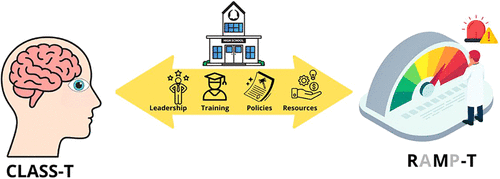
Despite laboratory accidents in high schools, safety culture at this educational level remains understudied, particularly in Latin America where regulatory frameworks are weak or undeveloped. This study evaluated the association between Safety Climate (CLASS-T) and Risk Management Practices (RAMP-T) in private and public high schools (state and federal) in Sonora, Mexico using self-reported data from 148 laboratory teachers from 60 schools. Overall, a positive safety climate (M = 2.71 ± 0.48 on a 1 to 4 scale) and moderate participation in risk management practices (M = 3.13 ± 0.54 on a 1 to 4 scale) were observed across participating schools. Teachers showed highest involvement in recognition of hazards and minimization of risks, and lowest involvement in assessment of risks and preparation for emergencies. A positive moderate correlation was found between CLASS-T and RAMP-T (r = 0.503, p < 0.01) for all high schools. Differences were identified between sectors, with private schools showing the strongest relationship (R2 = 0.428), followed by state schools (R2 = 0.244) and the lowest in federal schools (R2 = 0.117). Although a positive safety climate is associated with better preventive practices, the variability observed in public sector high schools and low involvement in technical risk management practices suggest that positive perception alone does not ensure comprehensive action. These findings underscore the need for institutional action, including ongoing risk management training, and adequate resources allocation within appropriate regulatory framework regarding laboratory supplies including chemicals approved for use with youth, to ensure that positive safety climate perceptions translate into comprehensive and sustainable safety practices.

Geospatial and Health Risk Modeling of Lead Contamination in Traditional Kohl from Algeria
Seifeddine Sellami *- ,
Ahmed Tedjani - ,
Omar Tebboub - ,
Said Lifa - ,
Ali Hadjela - ,
Lotfi Benmekhbi - , and
Ouahida Zeghouan
This publication is Open Access under the license indicated. Learn More
Traditional kohl cosmetics remain widely used in Algeria for cultural and medicinal purposes, yet their composition often includes lead (Pb), a toxic heavy metal associated with severe neurological and developmental effects. This study provides the first integrated geospatial and quantitative health risk assessment of Pb contamination in kohl products marketed across 15 Algerian cities. Lead concentrations, determined by Flame Atomic Absorption Spectrometry (FAAS), ranged from 1.25 to 326 mg·kg–1, with a mean of 90.4 mg·kg–1 substantially exceeding the international cosmetic safety limit of 20 mg·kg–1. Spatial analysis revealed that lead contamination is primarily concentrated in major northern urban centers (Annaba, Algiers, Tizi-Ouzou), which function as commercial distribution hubs, while southern regions displayed lower and more heterogeneous contamination levels. Hazard Quotient (HQ) modeling was applied for adults, children, and infants under multiple exposure scenarios. Under conservative assumptions (1% absorption, 50 mg·day–1 application), HQ values remained below unity, indicating low immediate dermal risk. However, sensitivity analyses revealed that increased absorption (up to 10%) or higher usage frequency can elevate HQ values near or above 1, particularly for infants and young children, highlighting a potential chronic exposure risk. Correlation and cluster analyses confirmed strong positive associations between Pb concentration and HQ indices (r > 0.95), validating the dose–response behavior of the model and the internal consistency of analytical data. Comparison with regional and international studies shows that Algerian kohl products remain significantly contaminated relative to those from countries with strict regulatory frameworks. The findings emphasize persistent public health vulnerabilities linked to informal markets and insufficient product surveillance. This work demonstrates the value of coupling chemical analytics, spatial statistics, and toxicological modeling to generate actionable evidence for cosmetic safety policy. Strengthened regulatory enforcement, consumer education, and laboratory monitoring are urgently recommended to mitigate lead exposure from traditional cosmetics in Algeria and similar regions.

Study on the Risk and Early Warning of Modified Double-Base Propellant Catastrophic Combustion at Different Process Temperatures
Le Wang - ,
Yuhang Bao - ,
Huiming Sun - ,
Ruiyu Chen - ,
Renming Pan *- , and
Xia Zhou *
This publication is Open Access under the license indicated. Learn More
To better understand accidental combustion during MDB propellant production, we studied the combustion behavior at different process temperatures using point-source ignition. The ignition delay, flame morphology, temperature evolution, thermal radiation, and spectral characteristics were analyzed. At 120 °C, the ignition delay was shortened by approximately 110 ms compared to that at 30 °C and approximately 50 ms compared to that at 80 °C. The flame area and radiation intensity increased, with peak values advancing by 42.5 and 21.5%, respectively. The extinguishing time decreased, while the maximum temperature remained at approximately 1130 °C. Flames were consistently detected above 600 °C. Distinct spectral bands were observed, including Na D (588.9 nm), K (766.4, 770.0 nm), and IR bands at 861.5 and 1991.3 nm. At 120 °C, detectable signals at 588.9 and 766.4 nm appeared within 10 ms and reached 65 082 au in 40 ms, providing reliable flame indicators. Higher process temperatures significantly increase the combustion hazard by shortening the ignition delay, enlarging the flame area, accelerating the burning rate, and intensifying the thermal radiation. The ∼600 °C threshold, IR spectral bands, and temperature serve as early warning signals, while visible wavelengths offer key flame-detection indicators. These findings establish a scientific basis for accident prevention and combustion control strategies in MDB propellant production.

Real-Time Monitoring of Hydrocarbon Dew Points in Natural Gas Streams Using a PT100-Based Resistance Temperature Detector Sensor System
Kombaiah Poolaiah - ,
Gajendra Kumar Gupta - , and
Raghasudha Mucherla *
This publication is Open Access under the license indicated. Learn More
Precise determination and continuous monitoring of the Hydrocarbon Dew Point (HCDP) are essential in natural gas operations to ensure pipeline reliability, efficiency, and safety, as highlighted in ISO/TR 11150:2007. Due to natural gas compositional variations, HCDP can shift widely, with complex behaviors such as retrograde condensation making measurement particularly difficult. Conventional methods, including the Chilled Mirror Technique (CMT) and Gas Chromatography-Equation of State (GC-EOS) calculations, are associated with few drawbacks. CMT depends heavily on operator judgment and cannot deliver continuous data, while GC-EOS relies on accurate sampling and modeling, limiting its real-time applicability. This work introduces a Resistance Temperature Detector (RTD) PT100-based sensing system capable of continuous, in situ monitoring of HCDP. The sensor was tested under varied process conditions, different compositions, pressures, and flow rates before and after gas treatment. Comparative analysis with CMT and GC-EOS demonstrates that the RTD PT100 provides consistent and accurate readings with mean deviations often within ±0.21 °C for treated gas and excellent agreement with GC-EOS predictions. For untreated streams, the system showed a lower variability than spot-measurement approaches. Furthermore, black particles in pig residue were considerably reduced by RTD PT100 compared to existing methods, indicating improved process cleanliness and gas quality stability. These findings establish the RTD PT100 as a dependable solution for real-time HCDP monitoring, enabling proactive process adjustments, enhanced safety margins, and compliance with industry requirements for “measurable hydrocarbon dew point”.

Developing a Risk-Oriented MOC Program for Effective Resources Allocation and Efficient Management
Tong Tong - ,
Na Chong - ,
Yang Gao - ,
Liqiang Meng - ,
Edward Liu - ,
Houde Su - ,
Zhanwei Dang - , and
Yuan Lu *
This publication is Open Access under the license indicated. Learn More
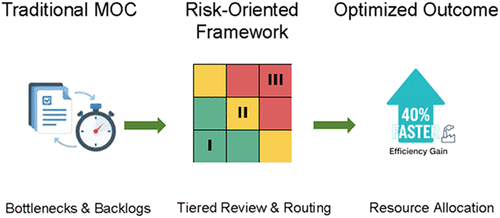
Management of Change (MOC) is a critical element of Process Safety Management (PSM), yet conventional programs often struggle with high review workloads, limited resources, and slow approval cycles. The prevailing “apply-all” approach can create backlogs, dilute attention to high-risk modifications, and gradually erode confidence in the program’s safety value. This paper proposes a risk-based MOC framework to screen, prioritize, and route changes toward appropriate levels of technical review for petrochemical operations that improves efficiency while maintaining program integrity. The approach introduces an exemption review mechanism and a risk-based classification system to allocate resources toward high-consequence changes, supported by key performance indicators to enable monitoring and continuous improvement. The method is demonstrated through three industrial case studies, and a statistical analysis of historical records quantifies tangible benefits. After implementation, average MOC processing time was reduced by 40%, without compromising process safety. The results illustrate how structured screening, prioritization, and performance tracking can strengthen chemical safety outcomes while enhancing operational efficiency.
Mastheads
Issue Editorial Masthead
This publication is free to access through this site. Learn More
Issue Publication Information
This publication is free to access through this site. Learn More