• Free to Read
  • Editors Choice
Surfaces, Interfaces, and Applications

Building a Foundation SERS Model for Lipids through Fatty Acid Pretraining for Annotation across Chemical Spaces
Click to copy article linkArticle link copied!

  • Rui Han
    Rui Han
    Key Laboratory of Synthetic and Biological Colloids, Ministry of Education, International Joint Research Laboratory for Nano Energy Composites, School of Chemical and Material Engineering, Jiangnan University, Wuxi, P. R. China 214122
    More by Rui Han
  • Emily Xi Tan*
    Emily Xi Tan
    Key Laboratory of Synthetic and Biological Colloids, Ministry of Education, International Joint Research Laboratory for Nano Energy Composites, School of Chemical and Material Engineering, Jiangnan University, Wuxi, P. R. China 214122
    School of Chemistry, Chemical Engineering and Biotechnology, Nanyang Technological University, 21 Nanyang Link, Singapore 637371
    Institute for Digital Molecular Analytics and Science (IDMxS), Nanyang Technological University, 59 Nanyang Drive, Singapore 636921
    *[email protected]
    More by Emily Xi Tan
  • Yangcenzi Xie
    Yangcenzi Xie
    School of Chemistry, Chemical Engineering and Biotechnology, Nanyang Technological University, 21 Nanyang Link, Singapore 637371
  • Hong Sheng Cheng
    Hong Sheng Cheng
    Lee Kong Chian School of Medicine, Nanyang Technological University, 59 Nanyang Drive, Singapore 636921
  • Nguan Soon Tan
    Nguan Soon Tan
    Lee Kong Chian School of Medicine, Nanyang Technological University, 59 Nanyang Drive, Singapore 636921
    School of Biological Sciences, Nanyang Technological University, Singapore 637551
  • Yan Lv
    Yan Lv
    Key Laboratory of Synthetic and Biological Colloids, Ministry of Education, International Joint Research Laboratory for Nano Energy Composites, School of Chemical and Material Engineering, Jiangnan University, Wuxi, P. R. China 214122
    More by Yan Lv
  • In Yee Phang*
    In Yee Phang
    Key Laboratory of Synthetic and Biological Colloids, Ministry of Education, International Joint Research Laboratory for Nano Energy Composites, School of Chemical and Material Engineering, Jiangnan University, Wuxi, P. R. China 214122
    *[email protected]
    More by In Yee Phang
  • Xing Yi Ling*
    Xing Yi Ling
    Key Laboratory of Synthetic and Biological Colloids, Ministry of Education, International Joint Research Laboratory for Nano Energy Composites, School of Chemical and Material Engineering, Jiangnan University, Wuxi, P. R. China 214122
    School of Chemistry, Chemical Engineering and Biotechnology, Nanyang Technological University, 21 Nanyang Link, Singapore 637371
    Institute for Digital Molecular Analytics and Science (IDMxS), Nanyang Technological University, 59 Nanyang Drive, Singapore 636921
    School of Biological Sciences, Nanyang Technological University, Singapore 637551
    *[email protected]
    More by Xing Yi Ling
Open PDFSupporting Information (1)

ACS Applied Materials & Interfaces

Cite this: ACS Appl. Mater. Interfaces 2026, 18, 11, 17168–17179
Click to copy citationCitation copied!
https://doi.org/10.1021/acsami.6c00759
Published March 12, 2026

Copyright © 2026 American Chemical Society. This publication is licensed under these Terms of Use.

Abstract

Click to copy section linkSection link copied!

Machine learning analysis of vibrational spectra is often closed-set, performing well for known molecular classes but degrading sharply when test molecules fall outside the training library. Herein, we introduce a SERS-based domain-informed foundation model for fatty acid-derived lipids that replaces categorical assignments with vector matching. The model is trained exclusively on primitive single-chain free fatty acids, with each structural attribute encoded by five orthogonal molecular vectors in a multidimensional space: (1) carbon number, (2) number of C═C bonds, (3) C═C position, (4) C═C geometry, and (5) number of carbon chains. This modular ensemble enables zero-shot prediction of all five vectors in parallel from previously unseen spectra, allowing untargeted molecular reconstruction by proximity in this space rather than by class labels. Despite being trained only on free fatty acids, the model generalizes to complex, multichain lipids absent from the training set, achieving accuracies of 91.7% for withheld free fatty acids, 85.5% for fatty acid esters of hydroxy fatty acids, and 80.0% for triglycerides. To enhance interpretability, we utilize density functional theory to provide a mechanistic basis for the spectral features underlying each prediction. We further demonstrate matrix-tolerant multiplex quantitation in artificial sweat and urine, recovering mixture ratios with 2–9% error across broad composition ranges. Collectively, this strategy enables extrapolative, interpretable spectral-to-structure prediction from SERS across adjacent chemical spaces.

This publication is licensed for personal use by The American Chemical Society.

Copyright © 2026 American Chemical Society

Introduction

Click to copy section linkSection link copied!

Surface-enhanced Raman scattering (SERS) spectroscopy integrated with machine learning (ML) has emerged as a transformative tool for automated interpretation, classification, and feature extraction of complex vibrational spectra. (1−3) However, the current ML-driven SERS approaches face a fundamental “generalizability” bottleneck. (4−11) Most existing models are designed for closed-set interpolation, optimized to recognize specific fingerprints within a defined library rather than learning transferable structure–spectrum relationships. (4−10) While these task-specific models, such as our previous work on hierarchical chemical taxonomy used to differentiate epimeric cerebrosides, achieve high accuracy within their trained domains, they often struggle to generalize when presented with “unidentified” molecules that reside outside the training chemical space. (4−10) This closed-set dependence restricts SERS from realizing its potential as a universal molecular sensor. We hypothesize that to move beyond these interpolation limits, SERS must transition toward a generalized SERS foundation model. Unlike traditional classifiers, a SERS foundation model learns universal spectral–structural representations that allow it to adapt to “out-of-distribution” data, enabling zero-shot prediction of structural attributes across adjacent chemical spaces without retraining or fine-tuning.
We validate the extrapolative power of the SERS foundation model using lipids as a model system, a biomolecular class that represents a significant “stress test” for structural identification. Unlike proteins, lipids lack a universal code linking structure to function, making them among the most diverse and challenging biomolecules to analyze. (5,12) Their biological activity is governed by subtle variations, including chain length, degree of unsaturation, double-bond positions, and cis–trans geometries that create a vast combinatorial chemical space. (5,12) While mass spectrometry and nuclear magnetic resonance are the gold standard for high-throughput discovery, they often struggle with the exact localization of C═C bonds or resolving stereoisomerism (cis/trans) without laborious chemical derivatization. (13−15) SERS provides a powerful “orthogonal” validation of stereoisomers and positional isomers that are often isobaric or generate identical fragmentation patterns in mass spectrometry. (2−7,11) Leveraging characteristic Raman fingerprints, the domain-informed foundation model for fatty-acid-derived lipids identifies subtle geometric and positional variations, such as double-bond location and stereochemistry, that govern biological function but are difficult to resolve by using traditional methods. This vast structural complexity makes lipids an ideal proving ground for a model capable of both resolving lipid isomerism and performing extrapolative annotation across adjacent chemical spaces.
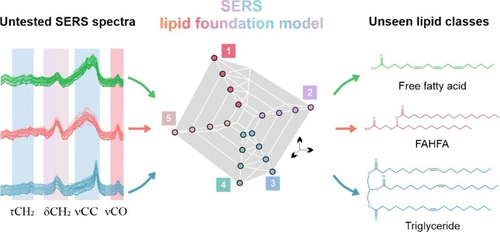
Herein, we introduce a domain-informed SERS foundation model for fatty-acid-derived lipids designed to overcome the fundamental limits of spectral interpolation, enabling untargeted structural annotation of complex lipids across untrained adjacent chemical spaces. Using lipids as a model system, we train the foundation model exclusively on single-chain free fatty acids (FFAs) to learn shared and transferable relationships between SERS vibrational signatures and the underlying molecular structure. Despite this restricted training, our model successfully generalizes to resolve complex, multichain lipids entirely absent from its training data, including fatty acid esters of hydroxy fatty acids (FAHFAs) and triglycerides (Figure 1). Within this five-dimensional chemical space, the training data set sufficiently captures structural diversity, enabling stable held-out and cross-subclass generalization. Central to this capability is our shift from traditional label-based classification (identifying decision boundaries of a class) to multidimensional vectorization, mapping spectra into a continuous latent space where distance corresponds to specific structural variations. We encode lipid architecture as a set of five molecular vectors: (1) number of carbon atoms, (2) number of C═C bonds, (3) positions of C═C bonds, (4) geometry of C═C, and (5) number of carbon chains (Figure 1). By transforming lipid identification from a heuristic pattern-matching task into a precise “molecular vector-matching” problem, the model resolves known FFAs with >97% accuracy and extrapolates to uncharacterized FFAs, FAHFAs, and triglycerides with ∼80–93% accuracy. These results, supported by density functional theory (DFT) validation, establish a predictive strategy for molecular phenotyping where stereochemistry and positional isomerism become tractable from untrained vibrational data. Beyond structural annotation, the model maintains high fidelity in complex environments, achieving low multiplex quantification errors in sweat (6–9%) and urine (2–6%), even at biologically relevant concentrations (10–4 M). Collectively, we underscore a SERS foundation model for fatty acid-derived lipids that enables predictive molecular interpretation across chemical space. By demonstrating how shared spectral and structure characteristics can support generalizable structure annotation beyond a single molecular family, this work repositions SERS as a scalable, untargeted strategy for molecular phenotyping in clinical and metabolic research.

Figure 1

Figure 1. SERS foundation model for fatty-acid-derived lipids enables extrapolative lipid structure elucidation across related chemical spaces. The foundation model is trained on free fatty acids and tested on chemically adjacent but unseen lipid classes, including untested free fatty acids, FAHFAs, and triglycerides. Untested SERS spectra from different lipid classes exhibit conserved vibrational features (τCH2, δCH2, νCC, and νCO) that reflect shared molecular substructures rather than lipid class identity. The SERS lipid foundation model learns quantitative relationships between these spectral features and molecular vectors: (1) number of carbon atoms, (2) number of C═C bonds, positions of C═C bonds, cis/trans geometry of C═C, and total number of carbon chains corresponding directly to standard lipid structural notation. By inferring molecular vector values from untested spectra, the model predicts complete lipid structures outside the training set, exemplified by the fatty acid γ-linolenic acid, the FAHFA 5-SAHSA, and the triglyceride triolein.

Results and Discussion

Click to copy section linkSection link copied!

Creating a Free Fatty Acid Benchmark Data Set

To establish a domain-informed foundation model for fatty-acid-derived lipids for generalized learning, we curate a benchmark data set of intrinsic SERS spectra from free fatty acids (FFAs). These molecules represent the most elemental lipid substructure, i.e. a single hydrocarbon chain terminated by a carboxyl headgroup (Figure S1–2). (12) The panel spans saturated and unsaturated FFAs from C12 to C22, encompassing mono-, di-, and polyunsaturated species as well as positional and cis/trans geometric isomers (Figure S3). We design this data set to systematically vary four molecular vectors, namely (1) number of carbons, (2) number of C═C bonds, (3) positions of C═C bonds, and (4) cis/trans geometry, while fixing the fifth vector, (5) total number of carbon chains at one (Figure 2A). By restricting training to single-chain lipids, we force the model to learn transferable lipid backbone vibrational rules rather than lipid-class-specific motifs. This creates a baseline for subsequent generalization to complex multichain architectures.

Figure 2

Figure 2. SERS fingerprints encode lipid molecular vectors governing chain length, unsaturation, and isomerism. (A) Lipid structures are encoded using five chemically interpretable molecular vectors: (1) number of carbon atoms, (2) number of C═C bonds, (3) positions of C═C bonds, (4) cis–trans geometry of C═C, and (5) total number of carbon chains. (B) A curated data set of various free fatty acids is shown alongside molecular structures and corresponding SERS spectra. Systematic and reproducible changes in vibrational features accompany variation of individual molecular vectors, indicating that SERS directly encodes lipid structural chemistry. (C) Increasing carbon number (C12–C22) yields a monotonic increase in the δCH2/νCO intensity ratio. (D) Increasing the number of C═C bonds (0–3) systematically modulates the νCC/νCH2 intensity ratio with increasing unsaturation. (E) Positional isomers exhibit correlated shifts in τCH2 and δCH2 modes as a function of C═C bond location, enabling discrimination of double-bond position. (F) Cis–trans geometry of C═C is resolved by a characteristic blue shift of the νCC. Symbols: ν, stretching vibration; δ, deformation (bending) vibration; τ, twisting vibration; ω, wagging vibration (out-of-plane bending).

We initiate our study by collecting the intrinsic SERS spectra of the FFAs benchmark library using Ag nanocube substrates optimized for 532 nm laser absorption and surface-treated to maximize lipid adsorption. (16) These resulting spectra reveal high-fidelity vibrational features across the 600–1800 cm–1 window that are critical for structural decoding (Figure 2B). Key features include methylene deformation (δCH2, ∼1460–1470 cm–1; centered near 1465 cm–1) and twisting modes (τCH2, ∼1295–1310 cm–1; near 1300 cm–1), backbone C–C stretching vibrations (νC–C, 1050–1150 cm–1), and carbonyl stretching (νC═O, 1680–1720 cm–1; near 1700 cm–1). (17) Alkene-associated modes, including νC═C (1650–1670 cm–1) and CH bending (δCH, 1300–1450 cm–1), provide direct evidence of the degree and nature of unsaturation. (17) We observe that these shared spectral characteristics persist across the entire data set, regardless of the specific lipid identity. By perturbing individual molecular vectors such as chain length or double-bond geometry, we can track systematic shifts in intensity and frequency that enable precise molecular-vector matching (Figure 2B). The SERS fingerprints are sufficiently sensitive to quantify how one-bond shifts in the C═C position or cis/trans inversion reshape the vibrational response, providing a granular mapping between chemical structure and spectral output (Figure 2B).
To establish the mechanistic origin of the spectral shifts observed in the benchmark data set, we quantitatively corroborate experimental SERS with density functional theory (DFT) calculations. (18,19) This validation ensures that the foundation model’s predictions are grounded in chemically meaningful vibrational modes rather than statistical artifacts. We utilize an optimized tilted adsorption geometry model for the DFT simulations, where the carboxylate headgroup anchors to the silver surface, while the alkyl chain projects outward, strengthening the coupling of chain-proximal modes (Figure S4). This tilted geometry strengthens headgroup–surface coupling and amplifies chain-proximal modes, explaining why small backbone edits generate systematic spectral responses for quantitative inference.
As the saturated FFAs chain length increases from C12 (lauric acid) to C22 (behenic acid), we observe a monotonic strengthening of the δCH2 methylene deformation band near 1465 cm–1 relative to the νCO stretching at 1700 cm–1 (Figure 2C, Figure S4). (9,17) DFT confirms that this trend is a direct result of an increased methylene density, providing a quantitative coordinate for chain-length elucidation (Figure 2C, Figure S4). Next, increasing degree of unsaturation systematically enhances the experimental νCC mode at 1455 cm–1 relative to the δCH bending modes at 1670 cm–1, increasing νCC/νCH2 intensity ratios (Figure 2D). (11,17,20) DFT accurately reproduces this increase, which is attributed to vibrational coupling and electron-density redistribution introduced by adjacent double bonds (Figure 2D, Figure S4). (11,17,20)
We ascertain that double-bond position yields reproducible blue shifts in experimental bands corresponding to τCH2 twisting and δCH bending modes, moving from 1300 cm–1 for PsA (position 6) to 1304 cm–1 for OA (position 9) and 1305 cm–1 for VA (position 11) (Figure 2E). (11,17,20) DFT produces comparable peak shifts, confirming that C═C π-electrons positioned closer to the carboxyl headgroup perturb the electronics and couple more strongly to carboxyl vibrations (Figure 2E, Figure S4). (11,17,20) Finally, we note that geometric isomerism produces distinctive spectroscopic peak shifts (Figure 2F). Cis isomers such as oleic acid exhibit broader, red-shifted νCC peaks at 1652 cm–1, consistent with bent-chain conformations that reduce packing density, while trans isomers, including elaidic acid, show sharper, blue-shifted νCC bands near 1667 cm–1 (Figure 2F). (11,17,20) DFT corroborates these stereochemical differences (cis: 1652 cm–1 vs trans: 1667 cm–1), attributed to greater chain linearity and enhanced π-delocalization in the trans configuration (Figure 2F, Figure S4).
By pairing these simulations with experimental data, we establish that the four molecular vectors encode distinct, interpretable vibrational signatures in elemental FFAs that are the building blocks in complex two- and three-chain lipids. This mechanistic alignment ensures that the SERS foundation model for fatty acid-derived lipids captures the same discriminative features that a human spectroscopist would use to resolve complex lipid structures.

Creating a Foundation Model for SERS Lipid Annotation

To translate mechanistic spectral assignments into an untargeted predictive system, we designed a SERS foundation model for fatty-acid-derived lipids with a modular and interpretable ML architecture (Figure 3A). The ensemble is modular, comprising five parallel models, each specialized to predict a distinct molecular vector from SERS spectra. By combining these five individual vectors, the model reconstructs the full molecular structure of fatty-acid-derived lipids. While traditional classifiers can only assign discrete labels within predefined classes, our vector-based framework enables zero-shot spectra-to-structure inference of previously unseen molecules, predicting continuous molecular attributes such as carbon number, C═C count, position, geometry, and chain count. We also leverage feature-importance analysis to provide mechanistic transparency, revealing which spectral features drive each decision and how the model reconstructs molecular structure.

Figure 3

Figure 3. Architecture and interpretability of the SERS lipid foundation model for fatty-acid-derived lipids. (A) The foundation model comprises an ensemble of parallel regressors and classifiers trained exclusively on free fatty acid SERS spectra to predict five lipid molecular vectors independently. (B) Feature-importance analysis for each model reveals distinctive vibrational modes (δCH2, νCC, and νCO) associated with each molecular vector, showing that the models learn physically meaningful spectral–structure relationships from SERS spectra for robust lipid structure elucidation. Symbols: ν, stretching vibration; δ, deformation (bending) vibration; τ, twisting vibration; ω, wagging vibration (out-of-plane bending).

In terms of model architecture, the foundation model employs an ensemble of four random-forest (RF) classifiers and one support vector machine (SVM) regressor, each trained to infer a molecular vector directly from the SERS spectra of previously unseen lipids (Figure 3A). Unlike a single “black-box” classifier, this parallel design preserves interpretability and minimizes error propagation during multi-attribute inference of the various molecular vectors. (4−6,9,21) We select the RF and SVM from five candidate ML models because RF captures nonlinear spectral–structure relationships and provides informative feature-importance maps. (22) The SVM regression is specifically utilized for predicting continuous molecular vectors, such as the number of carbon atoms, and offers strong generalization for high-dimensional spectra (Figure S5–6). (23) The ensemble collectively predicts the five lipid molecular vectors, including (1) the number of carbon atoms, (2) the number of C═C bonds, (3) the positions of C═C bonds, (4) the geometry of C═C (cis/trans), and (5) the number of carbon chains (Figure 3A).
To ensure that the model relies on chemically relevant data, we interrogate its decision logic by computing feature importance across the SERS spectrum. The results show that each model prioritizes distinct vibrational regions that align with the specific molecular vector it predicts (Figure 3B). First, the carbon-number regressor relies primarily on methylene δCH2 near 1465 cm–1 whose intensity scales with methylene density, and secondarily on the carbonyl region near ∼1700 cm–1 that reflects chain packing (Figure 3B). (9,11,17,20) Next, the C═C-number classifier emphasizes νC═C features from 1650–1670 cm–1 and leverages δCH2 mode from 1300–1400 cm–1, consistent with systematic modulation with increasing C═C content (Figure 3B). (9,11,17,20)
Subsequently, the C═C position classifier focuses on fingerprint regions near 1300–1350 cm–1 and 1410–1420 cm–1, where τCH2 twisting and ωCH2 wagging modes shift systematically with the distance of the double bond from the carboxyl headgroup (Figure 3B). (9,11,17,20) Moreover, the C═C geometry classifier highlights characteristic νC═C frequency shifts, with cis isomers producing broader, red-shifted bands near 1652 to 1655 cm–1 and trans isomers yielding sharper, blue-shifted peaks near 1667 cm–1 (Figure 3B). (9,11,17,20) Finally, the classifier distinguishing the number of carbon chains leverages spectral information from δCH2 deformation near 1465 cm–1 and νCC bands in the 1650 to 1670 cm–1 region, to resolve chain multiplicity in single-chain FFAs, two-chain FAHFAs, and three-chain triglycerides (Figure 3B). (9,11,17,20,24)
This alignment between ML feature importance and DFT-grounded mechanistic analysis confirms that the SERS-based foundation model for fatty acid-derived lipids learns physically meaningful spectral–structure relationships rather than spurious correlations. Such mechanistic transparency positions the model as a reliable tool for high-throughput lipid elucidation.

Foundation Model Extrapolation to Complex Lipids

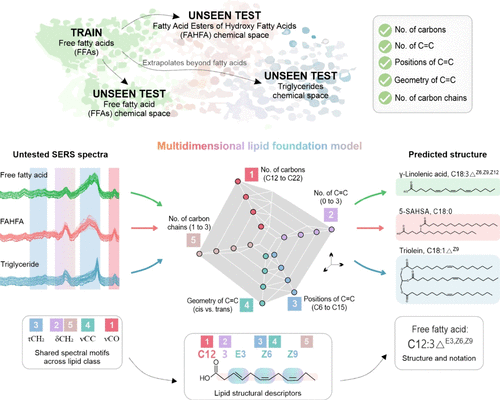
Following the establishment of mechanistic spectral-structure relationships, we evaluate the foundation model’s ability to generalize beyond the training data set and sample chemical space using blind-test lipid spectra (Figure 4A). This transition shifts the paradigm of lipid identification from a label-based classification problem to a multidimensional vector inference task. Specifically, rather than relying on heuristic spectral pattern matching, our approach utilizes explicit molecular vectorization to enable systematic and quantitative annotation of SERS spectra. Each lipid is represented as a vector embedded within a multidimensional chemical space, defined by five orthogonal structural coordinates: (1) number of carbon atoms, (2) number of C═C bonds, (3) positions of C═C bonds, (4) cis or trans geometry of C═C, and (5) number of carbon chains (Figure 4A). The foundation model for fatty acid-derived lipids predicts these five molecular vectors in parallel from a single spectral input. This transforms spectral interpretation using the model into a quantitative ″vector-matching″ process within chemical space, allowing for principled extrapolation to previously unseen molecules (Figure 4A).

Figure 4

Figure 4. SERS foundation model for vector-based lipid structure elucidation and cross-class generalization. (A) Schematics of the prediction workflow in which feature-matching highlights informative regions in an unknown SERS spectrum, an ensemble infers five molecular vectors, and the vector set is assembled to reconstruct the complete lipid structure. (B) Cross-class spectral comparison showing conserved fatty acid-derived bands alongside added contributions in complex lipids; FAHFAs and triglycerides exhibit broadened CH2 fingerprints, ester features, and glycerol signatures superimposed on fatty-acid modes. (C) Blind-test results across lipid classes demonstrate stable prediction beyond the single-chain FFA training chemical space, achieving overall elucidation accuracies of 91.7% (FFAs), 85.5% (FAHFAs), and 80.0% (triglycerides), with representative reconstructed structures shown for each class. Symbols: ν, stretching vibration; δ, deformation (bending) vibration; τ, twisting vibration; ω, wagging vibration (out-of-plane bending).

For a representative unknown spectrum, the model concurrently resolves the carbon number from methylene-associated modes and carbonyl features. The degree of unsaturation is determined by evaluating alkene-associated νCC contributions relative to methylene vibrations (Figure 4A). In parallel, it also assigns C═C geometry via νCC frequency shifts and determines the double-bond position using the τCH2 and δCH2 modes. The number of carbon chains is identified using backbone and methylene vibrations to discriminate among single-chain FFAs, two-chain FAHFAs, and three-chain triglycerides (Figure 4A). These independently decoded molecular vectors are integrated to reconstruct a chemically consistent lipid structure without invoking lipid-class labels or prior molecular identity (Figure 4A).
We rationalize the basis for extrapolative cross-class generalization by analyzing shared spectral foundations across lipid subclasses (Figure 4B). Spectra across subclasses, including free fatty acids (FFAs), FAHFAs, and triglycerides, retain shared fatty-acid features at τCH2 (1295–1310 cm–1), δCH2 (1460–1470 cm–1), νCC (1650–1670 cm–1), and acid νCO (1680–1720 cm–1) that facilitate universal vector matching (Figure 4B). (9,11,17,20) Complex lipids such as two-chain FAHFAs introduce additional signatures, such as ester νC–O (1100–1250 cm–1) and νCO (1735–1755 cm–1) band at higher wavenumber in FAHFAs, or glycerol νC–O–C modes (1000–1120 cm–1) in triglycerides. (9,11,17,20) These additional acyl chains also result in broadened CH2–rich fingerprints (1300–1500 cm–1) consistent with branching-induced congestion (Figure 4B).
By resolving structure through vector matching rather than categorical assignment, the model exploits shared spectral–structure relationships to perform untargeted structural elucidation across adjacent chemical spaces (Figure 4C). For unknown FFAs excluded from training, the model achieves an overall elucidation accuracy of 91.7%, resolving structures such as trans-oleic acid (92.5%), oleic acid (95.0%), and γ-linolenic acid (87.5%) (Figure 4C, Tables S1–3). We then tested lipid subclasses absent from training using the foundation model without retraining and adding a carbon-chain-count decision layer to distinguish one-, two-, and three-chain lipids (Figure 4C). The model achieves 85.5% overall accuracy for FAHFAs, correctly reconstructing 5-(stearic acid)-hydroxy-stearic acid (5-SAHSA, 90.0%), 14-(stearic acid)-hydroxy-stearic acid (14-SAHSA, 83.3%), and 16-(stearic acid)-hydroxy-stearic acid (16-SAHSA, 83.3%) (Figure 4C, Tables S4). For triglycerides, the model reaches 80.0% overall accuracy, correctly identifying glyceryl tripetroselinate (76.7%), trilauridin (83.3%), and triolein (80.0%) (Figure 4C, Tables S5–7).
A systematic study of the error distribution for categorical vectors shows that observed accuracy reduction for FAHFAs and triglycerides is not uniform: degradation is concentrated primarily in the C═C position and geometry, whereas the carbon number remains comparatively robust. Importantly, the error modes are chemically interpretable rather than random, indicating a controlled degradation with increasing structural complexity. We attribute the modest accuracy drop relative to that of FFAs to spectral congestion. For instance, FAHFA branching broadens CH2–rich fingerprints (∼1300–1500 cm–1), and triglycerides add overlapping ester and glycerol bands (νCO at 1735–1755 cm–1; νC–O at ∼1100–1250 cm–1; νCOC at 1000–1120 cm–1) that partially obscure chain-specific signals (Figures 4B-C). We note that misclassifications are confined to closely related acyl compositions differing by small structural changes, indicating localized ambiguity rather than a failure of the molecular-vector matching logic. Collectively, these results underscore that the foundation model for fatty acid-derived lipids bridges single-chain FFAs to structurally complex lipids through shared vibrational features, enabling generalized structure elucidation across lipid chemical spaces (Figure 4C). Overall, this foundation modeling approach leveraging shared spectral-structural characteristics provides a generalizable route for reconstructing lipid molecular architecture directly from SERS data, serving as a scalable complement to mass spectrometry for identifying stereochemistry and positional isomerism.

Multiplex Quantitation of Lipid Mixtures in Biomatrices

Beyond structural annotation, we evaluated the real-world applicability of the foundation model by performing multiplex quantitation of lipid mixtures in complex biological environments, including artificial sweat and artificial urine (Figure 5). The selected lipid pairs reflect biologically relevant fatty acids that commonly co-occur in physiological fluids and metabolic pathways. (25,26) To assess performance in noninvasive diagnostic settings, we evaluated binary mixtures of free fatty acids (FFAs) in artificial sweat. These mixtures, comprising species like oleic acid (OA), vaccenic acid (VA), and α-linolenic acid (α-LA), represent significant biomarkers for lipid metabolism and inflammatory states. (25,26) Quantifying such mixtures is challenging because these lipids share similar chain lengths and exhibit overlapping vibrational features, creating stringent and physiologically motivated test cases in such noninvasive biofluids.

Figure 5

Figure 5. Multiplex quantitative lipid detection in complex biofluids. SERS combined with the support vector machine regressor (SVM-R) enables multiplex quantification of three different binary lipid mixtures in (A) artificial sweat and (B) artificial urine. The blind-test-predicted concentrations closely match experimental values across multiple lipid pairs with high coefficients of determination and low prediction errors, demonstrating matrix-tolerant multiplex analysis in biologically relevant environments and applicability in real-life scenarios.

In artificial sweat, calibration curves demonstrate a strong linear agreement between predicted and experimental concentrations across multiple lipid pairs, and blind predictions retain high accuracy across the full compositional range (Figure 5A). For PsA−α-LA mixtures, calibration yields R2 = 0.92 with RMSEP = 0.71 mM, while blind prediction yields R2 = 0.89 with RMSEP = 0.91 mM (Figure 5A, Tables S8–10). Next, for OA-α-LA mixtures, the model shows similarly robust performance, with calibration R2 = 0.94 and RMSEP = 1.15 mM, and blind prediction R2 = 0.90 with RMSEP = 0.59 mM (Figure 5A, Tables S11–13). Finally, VA-α-LA mixtures achieve calibration R2 = 0.95 with RMSEP = 0.84 mM and blind prediction R2 = 0.88 with RMSEP = 0.92 mM (Figure 5A, Tables S14–16). Even under extreme compositional imbalance, the model recovers component ratios with low error, typically within 5% and frequently below 2% for highly skewed mixtures. These results confirm that SERS-based foundation modeling provides sufficient resolution to quantify lipids with highly overlapping vibrational features and similar chain lengths.
We further challenge the model with artificial urine, which introduces a greater background variability and matrix complexity compared to sweat (Figure 5B). Despite the increased matrix interference, the model maintains high predictive performance. The VA–LA mixtures yield calibration R2 = 0.96 with RMSEP = 0.84 mM and blind prediction R2 = 0.94 with RMSEP = 0.16 mM, while the OA−α-LA and OA–LA mixtures retain RMSEP below 0.6 mM (Figure 5B, Tables S17–25). These results showcase stable performance across diverse FFA combinations.
Overall, the successful quantification in complex biomatrices establishes several key advancements for the SERS foundation model for fatty-acid-derived lipids. The framework effectively filters out background signals from complex biofluids, allowing direct analysis without extensive sample purification. The model also achieves these results at concentrations of 1 × 10⁻⁴ M, which aligns with biologically relevant levels found in clinical samples. By bridging structural annotation with precise multiplex quantitation, this approach repositions SERS as a scalable, untargeted strategy for molecular phenotyping in clinical, nutritional, and metabolic research. Finally, the implementation of a rapid analysis pipeline (<10 min) ensures the model is suitable for high-throughput screening, where the gold standard liquid chromatography–tandem mass spectrometry (LC-MS/MS) for lipidomics may be limited by speed or stereochemical ambiguity. We note that LC-MS/MS and SERS should be viewed as complementary analytical tools rather than competing replacements, and their combined use can strengthen molecular analysis. This is because LC-MS/MS workflows typically require extensive sample preparation (e.g., protein removal, lipid extraction, and use of internal standards) and hour-long chromatographic separations before MS/MS acquisition. In contrast, our SERS-ML approach offers a rapid, lower-complexity alternative for untargeted analysis. SERS requires minimal sample preparation and enables near real-time spectral acquisition and ML-based prediction. Operationally, SERS instrumentation and premeasurement processing are comparatively cost-effective and demand less technical expertise and maintenance. In terms of accuracy, our method demonstrated quantitative agreement in controlled artificial sweat and urine through calibration and blind-test mixture predictions. We therefore position SERS-ML not as a replacement for LC-MS/MS, but as a complementary tool that is particularly suitable for rapid, targeted analysis where high-throughput or near real-time decision-making is prioritized.

Conclusions

Click to copy section linkSection link copied!

In conclusion, we establish a SERS foundation model for fatty-acid-derived lipids that marks a significant leap from categorical “label-matching” to generalized structural inference. By shifting the paradigm to multidimensional vectorization, we enabled the untargeted annotation of lipids across adjacent chemical spaces without needing extensive retraining. The model concurrently infers the carbon number, C═C number, C═C geometry, C═C position, and chain multiplicity to reconstruct complete lipid architectures. Trained exclusively on single-chain FFAs, the model achieves ∼80–93% accuracy in blind-test elucidation of multichain FAHFAs and triglycerides. Beyond structural prediction, the framework supports multiplex analysis in complex biofluids (sweat and urine) with errors as low as 2–6%. Furthermore, the current study serves as a controlled validation within artificial matrices. In real sweat and urine, additional matrix effects may arise, including competition for lipid binding, reduced hotspot accessibility, and increased spectral background variability, which may influence signal intensity and quantitative analysis. However, these effects are unlikely to fundamentally alter the underlying vibrational assignments that define the structural vector representation. For translation to real samples, established sample preparation strategies, such as protein depletion using ZipTip-based solid-phase extraction, as reported in prior SERS biofluid studies, can mitigate protein interference and improve substrate accessibility. All spectral assignments are grounded in DFT simulations, ensuring that the model captures physically meaningful vibrational signatures. Together, these results reposition SERS from qualitative fingerprinting toward a predictive strategy for molecular phenotyping, where resolving stereochemistry and positional isomerism becomes tractable from untrained vibrational data. Moving forward, we envision several pathways to further advance ML and SERS-driven lipid analysis. Future iterations will include additional subclasses (e.g., phospholipids, sphingolipids, and sterol esters) to increase the model’s chemical breadth, as we anticipate extending the approach to more structurally divergent lipid families would require expanded training coverage and potentially additional structural vectors. Incorporating the 2800–3100 cm–1 region containing C–H stretching bands as an auxiliary feature space is a promising extension for future work, particularly as larger data sets with more complex chain branching become available. Integrating DFT-calculated spectra can help enrich underrepresented structural vectors and refine the model. (3,4) Combining this foundation model with microfluidic separation or on-chip enrichment platforms could enable direct, point-of-care lipid annotation with minimal sample preparation. (27) This strategy serves as a scalable complement to mass spectrometry, providing rapid, interpretable screening that links complex lipid stereochemistry directly to metabolic health and disease.

Experimental Section

Click to copy section linkSection link copied!

Chemicals

Ethanol (>99%), hexane (HPLC) and glyceryl tripetroselinate (GT, ≥99%) were purchased from Titan Scientific Co., Ltd. Silver nitrate (AgNO3, ≥99%), 1,5-pentanediol (PD; ≥97%), poly(vinylpyrrolidone) (PVP; average MW = 55,000), kalium iodide (KI, ≥99%), petroselinic acid (PsA; C18:1, ≥99%), oleic acid (OA; C18:1, ≥99%), vaccenic acid (VA; C18:1, ≥99%), linoleic acid (LA; C18:2, ≥98%), α-linolenic acid (α-LA; C18:3, ≥99%), γ-linolenic acid (γ-LA; C18:3, ≥99%), trans-petroselinic acid (trans-PsA; C18:1, ≥99%), trans-oleic acid (trans-OA, C18:1, ≥99%), trans-vaccenic acid (trans-VA, C18:1, ≥99%), lauric acid (C12:0, ≥99%), myristic acid (C14:0, ≥99%), palmitic acid (C16:0, ≥99%), stearic acid (C18:0, ≥98.5%), arachidic acid (C20:0, ≥99%), behenic acid (C22:0, ≥99%), (triolein (≥99%), trielaidin (≥99%) were purchased from Sigma-Aldrich. The deionized water (18 MΩ cm–1) was prepared by an ultrapure purification system (Aqua Solutions). All chemicals were used without further purification.

Synthesis and Purification of Fatty Acid Esters of Hydroxy Fatty Acids (FAHFA) Derivatives

FAHFA derivatives, including stearic acid ester of 5-hydroxystearic acid (5-SAHSA or 5-(stearoyloxy)stearic acid), stearic acid ester of 14-hydroxystearic acid (14-SAHSA or 14-(stearoyloxy)stearic acid), and stearic acid ester of 16-hydroxystearic acid (16-SAHSA or 16-(stearoyloxy)stearic acid) were synthesized via a modular strategy that involves a streamlined four-step sequence. (24) N-Hydroxy fatty acids were synthesized by dissolving the fatty precursor (Compound 1, 2.0 mmol, 1.0 equiv) in dry THF (20 mL) under a nitrogen atmosphere and cooling the solution to 0 °C. A Grignard reagent (6.0 mmol, 3.0 equiv) was added dropwise, and the reaction mixture was stirred at room temperature for 8 h. Upon completion, the reaction was quenched with saturated aqueous NH4Cl (20 mL). The mixture was extracted with dichloromethane (3 × 20 mL), and the combined organic layers were washed with brine (15 mL), dried over anhydrous Na2SO4, filtered, and concentrated. The crude product was purified by silica gel column chromatography using DCM/methanol to afford the N-hydroxy fatty acids. Methyl esters of the N-hydroxy fatty acids were prepared by dissolving the acids (1.5 mmol) in methanol (10 mL) and adding thionyl chloride (1.95 mmol, 1.3 equiv) dropwise. The reaction mixture was refluxed for 5 h and then concentrated to remove the solvent. The residue was diluted with ethyl acetate (30 mL), quenched with water (20 mL), and adjusted to pH 8–9 using saturated aqueous NaOH. The organic phase was separated, washed with water and brine, dried over Na2SO4, and concentrated under reduced pressure. Purification by silica gel chromatography (hexane/ethyl acetate) yielded methyl esters. FAHFA methyl esters were synthesized by dissolving the N-hydroxy fatty acid methyl ester (1.0 mmol, 1.0 equiv) in dry DCM (10 mL) and adding dry pyridine (5.0 mmol, 5.0 equiv) at 0 °C. After 15 min, a fatty acyl chloride (1.8 mmol, 1.8 equiv) was added, and the reaction was stirred at room temperature for 12 h. Excess reagents were quenched with 1.0 N HCl (10 mL), followed by extraction with DCM (3 × 10 mL). The combined organic layers were dried over Na2SO4, filtered, concentrated, and purified by silica gel chromatography (hexane/EtOAc) to afford FAHFA methyl esters. Final FAHFAs were obtained by hydrolysis of the methyl esters (0.5 mmol) using LiOH (3.25 mmol, 6.5 equiv) in THF/H2O (8 mL/8 mL). The reaction was stirred at room temperature for 24 h, neutralized with 1 N HCl, extracted with DCM (3 × 10 mL), and purified by silica gel chromatography (DCM/methanol) to yield the free FAHFAs.

Synthesis and Purification of Silver Nanocubes

Ag nanocubes were synthesized via a modified polyol method. (16,28) Two precursor solutions were first prepared. Precursor solution 1 consisted of silver nitrate (0.50 g) and copper(II) chloride (0.86 μg) dissolved in PD in a scintillation vial. Precursor solution B consisted of PVP (0.25 g) dissolved in PD. Twenty mL of PD was added to a 100 mL round-bottom flask and heated at 190 °C for 10 min in a temperature-controlled silicon oil bath. Subsequently, aliquots of PVP (250 μL) and silver nitrate (500 μL) precursor solutions were injected in alternation into the reaction flask at different rates, namely, 500 μL every min for silver nitrate and 250 μL every 30 s for the PVP solution, until the reaction mixture turned reddish-brown. The as-synthesized Ag nanocubes were purified via several rounds of centrifugation at 12,000 × g and sonication in acetone and ethanol, and then subsequently stored in ethanol. Ag nanocubes were further subjected to vacuum filtration using polyvinylidene fluoride filter membranes (Delvstlab) with pore sizes 5 μm, 0.65 μm, and 0.45 μm to remove impurities before use.

SEM and UV–Vis Characterization of Ag Nanocubes

The synthesized Ag nanocubes were subjected to scanning electron microscopy (SEM) using the HITACHI SU8600 at an accelerating voltage of 5 kV. Measurements were randomly taken at 5 different spots on the SEM substrate to get a representative group of images for each Ag nanocube sample. For each sample of Ag NCs, the size (edge length) of 100 randomly selected nanocubes was measured using ImageJ freeware. The UV–vis spectra were taken on an Agilent Technologies Cary 60 UV/visible spectrophotometer.

Preparation of SERS Substrates

SERS substrates were prepared using the Langmuir–Schaefer technique. (29) Ag nanocubes were dispersed in a volatile organic solvent mixture (ethanol and hexane in a 4:3 ratio) and gently spread onto the surface of ultrapure water in a clean Teflon trough. Upon solvent evaporation, the nanocubes self-assembled into a monolayer at the air–water interface. A hydrophobic substrate was horizontally brought into contact with the floating monolayer to transfer the film via the Langmuir–Schaefer technique and dried before its immediate use.

SERS Measurement of Lipids

SERS measurements were performed using the Renishaw inVia Qontor confocal Raman microscope (Renishaw plc, Gloucestershire, UK) with a 532 nm excitation laser (power = 2 mW). A 20× objective lens was used with 1 s acquisition time and 5 accumulations. The spectral window of 600–1800 cm–1 was used for data analysis. The spectra were preprocessed using baseline correction via the adaptive iteratively reweighted penalized least-squares (airPLS) algorithm and area normalization (1700–1800 cm–1) using a custom Python code. Representative SERS spectra were obtained by averaging 40 individual SERS spectra per analyte, and data analysis was completed using Origin 9.0 software (OriginLab Corporation, Northampton, MA, USA).

Density Functional Theory (DFT) Simulations

The calculations on the interaction of the Ag surface with fatty acids were carried out using the unrestricted B3LYP exchange correlation functional, as implemented in the Gaussian 09 computational chemistry package. The 6–31G (d,p) basis set was used for C, H, and O. The LANL2DZ basis set was employed for Ag. The Ag surface was modeled using a reported triangle consisting of 6 Ag atoms. (18,30) Structure optimization was carried out in 2 steps. All of the fatty acid geometries were initially optimized. A triangular Ag cluster was then optimized, and each fatty acid was subsequently placed at one of its vertices, followed by reoptimization of the entire system. We acknowledge that the Ag6 cluster may not fully capture extended surface facets, electromagnetic field gradients, or adsorption-site averaging. In this work, Ag6 serves as a chemically tractable and widely used local coordination model that enables interpretable adsorption–vibrational coupling analysis at reasonable computational cost. (3) Modeling extended slab surfaces with site averaging and explicit field effects would represent a valuable direction for future refinement but falls beyond the mechanistic scope required here for vibrational assignment and trend validation.

Chemometrics Analysis

Unsupervised principal component analysis (PCA) was performed using SOLO version 8.8 (Stand Alone Chemometrics Software, eigenvector Research, Inc.). The PCA model was cross-validated using Venetian blinds with 10 splits and a blind thickness of 1. Supervised Classification was performed in Orange Data Mining using five supervised learning models: Random Forest, Artificial Neural Network (ANN), Support Vector Machine (SVM), k-Nearest Neighbors (k-NN), and Naive Bayes. The data set was randomly divided into 80% training and 20% test sets, with the same split applied across all models. For the Random Forest classification model, 1000 decision trees were used, with bootstrap sampling enabled and a maximum tree depth of 10 to prevent overfitting. The Gini impurity criterion was applied for node splitting, and the number of features considered at each split was set to the square root of the total feature count. The Neural Network classification model was implemented as a multilayer perceptron with a single hidden layer comprising 100 neurons using the rectified linear unit (ReLU) activation function. Model training employed the Adam optimizer with a learning rate of 0.001, a maximum of 200 training epochs, and L2 regularization (α = 0.0001) to improve generalization. The Support Vector Machine classification model utilized a radial basis function (RBF) kernel, with the regularization parameter set to C = 1.0 and the kernel coefficient set to γ = 0.1, providing a balance between margin maximization and classification error. For the k-Nearest Neighbors (kNN) classification model, the number of neighbors was set to k = 5, with Euclidean distance used as the similarity metric, and uniform weighting applied to all neighbors. The Naive Bayes classification model was implemented by using a Gaussian likelihood model, with class-conditional feature distributions estimated directly from the training data without additional parameter tuning. Supervised support vector machine regression (SVM-R) was performed using SOLO version 8.8 (Stand Alone Chemometrics Software, eigenvector Research, Inc.). For the multiplex regression model, the full training data set comprising all concentration ratios (e.g., OA: α-LA = 0:100, 25:75, 50:50, 75:25, and 100:0) was randomly stratified into 80% for training and 20% for cross-validation. After model construction, performance was evaluated using three independent test sets (OA: α-LA = 15:85, 35:65, and 70:30) by calculating the coefficient of determination (R2) and the root-mean-square error of prediction (RMSEP).

Artificial Biofluid Preparation

The artificial sweat and urine formulations included representative salts and small metabolites to capture ionic-strength and small-molecule background effects, omitting proteins. Artificial sweat consisted of 50 mM NaCl, 15 mM lactic acid, and 15 mM urea (pH 5.5), approximating the ionic strength and small-molecule composition of human sweat. Artificial urine contained 200 mM urea, 90 mM NaCl, 25 mM KCl, 10 mM creatinine, and 5 mM NaH2PO4 (pH 6.5), approximating the ionic strength and low-molecular-weight metabolite composition of native urine. We note that while these formulations reproduce key physicochemical characteristics of biological fluids, real sweat and urine may introduce additional matrix effects arising from proteins and higher-molecular-weight constituents. Evaluating such effects will be an important direction for future validation in complex biological samples.
Sample calculation of spiked lipid concentration converting moles to mass:
The mass corresponding to 1 × 10⁻⁴ M lauric acid in 1 L of solution, where molarity = 1 × 10⁻⁴ M = 0.0001 mol/L, molecular weight of lauric acid (C12:0) ≈ 200.32 g/mol
Mass(g)=Molarity(mol/L)×Molecularweight(g/mol)Mass=0.0001×200.32=0.020032g/L×1000mg/g20.03mg/L

Supporting Information

Click to copy section linkSection link copied!

The Supporting Information is available free of charge at https://pubs.acs.org/doi/10.1021/acsami.6c00759.

  • Materials and methods, AgNC platform characterization, SERS measurements of lipids, density functional theory calculations, machine learning modeling (PDF)

Terms & Conditions

Most electronic Supporting Information files are available without a subscription to ACS Web Editions. Such files may be downloaded by article for research use (if there is a public use license linked to the relevant article, that license may permit other uses). Permission may be obtained from ACS for other uses through requests via the RightsLink permission system: http://pubs.acs.org/page/copyright/permissions.html.

Author Information

Click to copy section linkSection link copied!

  • Corresponding Authors
    • Emily Xi Tan - Key Laboratory of Synthetic and Biological Colloids, Ministry of Education, International Joint Research Laboratory for Nano Energy Composites, School of Chemical and Material Engineering, Jiangnan University, Wuxi, P. R. China 214122School of Chemistry, Chemical Engineering and Biotechnology, Nanyang Technological University, 21 Nanyang Link, Singapore 637371Institute for Digital Molecular Analytics and Science (IDMxS), Nanyang Technological University, 59 Nanyang Drive, Singapore 636921Orcidhttps://orcid.org/0000-0001-5643-974X Email: [email protected]
    • In Yee Phang - Key Laboratory of Synthetic and Biological Colloids, Ministry of Education, International Joint Research Laboratory for Nano Energy Composites, School of Chemical and Material Engineering, Jiangnan University, Wuxi, P. R. China 214122 Email: [email protected]
    • Xing Yi Ling - Key Laboratory of Synthetic and Biological Colloids, Ministry of Education, International Joint Research Laboratory for Nano Energy Composites, School of Chemical and Material Engineering, Jiangnan University, Wuxi, P. R. China 214122School of Chemistry, Chemical Engineering and Biotechnology, Nanyang Technological University, 21 Nanyang Link, Singapore 637371Institute for Digital Molecular Analytics and Science (IDMxS), Nanyang Technological University, 59 Nanyang Drive, Singapore 636921School of Biological Sciences, Nanyang Technological University, Singapore 637551Orcidhttps://orcid.org/0000-0001-5495-6428 Email: [email protected]
  • Authors
    • Rui Han - Key Laboratory of Synthetic and Biological Colloids, Ministry of Education, International Joint Research Laboratory for Nano Energy Composites, School of Chemical and Material Engineering, Jiangnan University, Wuxi, P. R. China 214122
    • Yangcenzi Xie - School of Chemistry, Chemical Engineering and Biotechnology, Nanyang Technological University, 21 Nanyang Link, Singapore 637371
    • Hong Sheng Cheng - Lee Kong Chian School of Medicine, Nanyang Technological University, 59 Nanyang Drive, Singapore 636921Orcidhttps://orcid.org/0000-0001-9745-7872
    • Nguan Soon Tan - Lee Kong Chian School of Medicine, Nanyang Technological University, 59 Nanyang Drive, Singapore 636921School of Biological Sciences, Nanyang Technological University, Singapore 637551Orcidhttps://orcid.org/0000-0003-0136-7341
    • Yan Lv - Key Laboratory of Synthetic and Biological Colloids, Ministry of Education, International Joint Research Laboratory for Nano Energy Composites, School of Chemical and Material Engineering, Jiangnan University, Wuxi, P. R. China 214122Orcidhttps://orcid.org/0009-0004-5758-653X
  • Author Contributions

    The manuscript was written through the contributions of all authors. All authors have given approval to the final version of the manuscript.

  • Funding

    The authors thank the support by National Natural Science Fund of China, Research Fund for International Senior Scientists (W2431015), Singapore National Research Foundation Investigatorship (NRF-NRFI08-2022-0011), Competitive Research Programme (NRF-CRP26-2021-0002), the Ministry of Education, Singapore, under its Research Centre of Excellence award to the Institute for Digital Molecular Analytics (IDMxS, grant: EDUN C-33-18-279-V12) and Tier 1 grant (RG93/24).

  • Notes
    The authors declare no competing financial interest.

Abbreviations

Click to copy section linkSection link copied!

Ag

Silver

DFT

Density Functional Theory

FFA

Free Fatty Acid

FAHFA

Fatty Acid Ester of Hydroxy Fatty Acid

LA

Linoleic Acid

ML

Machine Learning

NMR

Nuclear Magnetic Resonance

OA

Oleic Acid

PsA

Petroselinic Acid

RF

Random Forest

RMSEP

Root Mean Square Error of Prediction

SERS

Surface-Enhanced Raman Scattering

SVM

Support Vector Machine

VA

Vaccenic Acid

α-LA

α-Linolenic Acid

References

Click to copy section linkSection link copied!

This article references 30 other publications.

  1. 1
    Guo, H.; Zhi, S.; Zhao, Z.; Gao, T.; Ma, H.; Luo, S.-H.; Zhang, W.; Guo, P.; Ren, B.; Tian, Z.-Q. Rapid SERS Analysis: From Laboratory to Real Sample. ACS Appl. Mater. Interfaces 2025, 17, 33318,  DOI: 10.1021/acsami.5c05699
  2. 2
    Tan, E. X.; Zhong, Q.-Z.; Ting Chen, J. R.; Leong, Y. X.; Leon, G. K.; Tran, C. T.; Phang, I. Y.; Ling, X. Y. Surface-Enhanced Raman Scattering-Based Multimodal Techniques: Advances and Perspectives. ACS Nano 2024, 18 (47), 3231532334,  DOI: 10.1021/acsnano.4c12996
  3. 3
    Tan, E. X.; Nguyen, L. B. T.; Jin, Y.; Lv, Y.; Phang, I. Y.; Ling, X. Y. SERS Cheminformatics: Opportunities for Data-Driven Discovery and Applications. ACS Central Science 2025, 11 (11), 20342052,  DOI: 10.1021/acscentsci.5c00785
  4. 4
    Tan, E. X.; Leong, Y. X.; Lim, S. H.; Chng, M. W. K.; Phang, I. Y.; Ling, X. Y. Chemistry-informed recommender system to predict optimal molecular receptors in SERS nanosensors. Nat. Commun. 2025, 16 (1), 7095,  DOI: 10.1038/s41467-025-62519-x
  5. 5
    Tan, E. X.; Leong, S. X.; Liew, W. A.; Phang, I. Y.; Ng, J. Y.; Tan, N. S.; Lee, Y. H.; Ling, X. Y. Forward-predictive SERS-based chemical taxonomy for untargeted structural elucidation of epimeric cerebrosides. Nat. Commun. 2024, 15 (1), 2582,  DOI: 10.1038/s41467-024-46838-z
  6. 6
    Tan, E. X.; Chen, J. R. T.; Pang, D. W. C.; Tan, N. S.; Phang, I. Y.; Ling, X. Y. Transfer Learning-Assisted SERS: Predicting Molecular Identity and Concentration in Mixtures Using Pure Compound Spectra. Angew Chem Int Ed 2025, 64, e202508717  DOI: 10.1002/anie.202508717
  7. 7
    Nguyen, L. B. T.; Tan, E. X.; Leong, S. X.; Koh, C. S. L.; Madhumita, M.; Phang, I. Y.; Ling, X. Y. Harnessing Cooperative Multivalency in Thioguanine for Surface-Enhanced Raman Scattering (SERS)-Based Differentiation of Polyfunctional Analytes Differing by a Single Functional Group. Angew Chem Int Ed 2024, 63, e202410815  DOI: 10.1002/anie.202410815
  8. 8
    Simas, M. V.; Davis, G. A., Jr; Hati, S.; Pu, J.; Goodpaster, J. V.; Sardar, R. Anisotropically Shaped Plasmonic WO3–x Nanostructure-Driven Ultrasensitive SERS Detection and Machine Learning-Based Differentiation of Nitro-Explosives. ACS Appl. Mater. Interfaces 2025, 17 (7), 1130911324,  DOI: 10.1021/acsami.4c19673
  9. 9
    Chen, J. R. T.; Tan, E. X.; Tang, J.; Leong, S. X.; Hue, S. K. X.; Pun, C. S.; Phang, I. Y.; Ling, X. Y. Machine learning-based SERS chemical space for two-way prediction of structures and spectra of untrained molecules. J. Am. Chem. Soc. 2025, 147 (8), 66546664,  DOI: 10.1021/jacs.4c15804
  10. 10
    Abed, M. M.; Wouters, C. L.; Froehlich, C. E.; Nguyen, T. B.; Caldwell, R.; Riley, K. L.; Roy, P.; Reineke, T. M.; Haynes, C. L. A Machine Learning-Enabled SERS Sensor: Multiplex Detection of Lipopolysaccharides from Foodborne Pathogenic Bacteria. ACS Appl. Mater. Interfaces 2025, 17 (31), 4513945149,  DOI: 10.1021/acsami.5c08361
  11. 11
    Du, S.; Su, M.; Wang, C.; Ding, Z.; Jiang, Y.; Liu, H. Pinpointing alkane chain length, saturation, and double bond regio-and stereoisomers by liquid interfacial plasmonic enhanced raman spectroscopy. Anal. Chem. 2022, 94 (6), 28912900,  DOI: 10.1021/acs.analchem.1c04774
  12. 12
    Fahy, E.; Subramaniam, S.; Brown, H. A.; Glass, C. K.; Merrill, A. H., Jr; Murphy, R. C.; Raetz, C. R.; Russell, D. W.; Seyama, Y.; Shaw, W. A comprehensive classification system for lipids. European journal of lipid science and technology 2005, 107 (5), 337364,  DOI: 10.1002/ejlt.200405001
  13. 13
    Xia, F.; Wan, J. B. Chemical derivatization strategy for mass spectrometry-based lipidomics. Mass Spectrom. Rev. 2023, 42 (1), 432452,  DOI: 10.1002/mas.21729
  14. 14
    Kirkwood, K. I.; Pratt, B. S.; Shulman, N.; Tamura, K.; MacCoss, M. J.; MacLean, B. X.; Baker, E. S. Utilizing Skyline to analyze lipidomics data containing liquid chromatography, ion mobility spectrometry and mass spectrometry dimensions. Nat. Protoc. 2022, 17 (11), 24152430,  DOI: 10.1038/s41596-022-00714-6
  15. 15
    Nagana Gowda, G.; Raftery, D. NMR metabolomics methods for investigating disease. Analytical chemistry 2023, 95 (1), 8399,  DOI: 10.1021/acs.analchem.2c04606
  16. 16
    Tan, E. X.; Tang, J.; Leong, Y. X.; Phang, I. Y.; Lee, Y. H.; Pun, C. S.; Ling, X. Y. Creating 3D Nanoparticle Structural Space via Data Augmentation to Bidirectionally Predict Nanoparticle Mixture’s Purity, Size, and Shape from Extinction Spectra. Angew Chem Int Ed 2024, 63 (14), e202317978  DOI: 10.1002/anie.202317978
  17. 17
    Beattie, J. R.; Bell, S. E.; Moss, B. W. A critical evaluation of Raman spectroscopy for the analysis of lipids: Fatty acid methyl esters. Lipids 2004, 39 (5), 407419,  DOI: 10.1007/s11745-004-1245-z
  18. 18
    Geerlings, P.; De Proft, F.; Langenaeker, W. Conceptual density functional theory. Chem. Rev. 2003, 103 (5), 17931874,  DOI: 10.1021/cr990029p
  19. 19
    Cohen, A. J.; Mori-Sánchez, P.; Yang, W. Challenges for density functional theory. Chem. Rev. 2012, 112 (1), 289320,  DOI: 10.1021/cr200107z
  20. 20
    Patterson, M. L.; Weaver, M. J. Surface-enhanced Raman spectroscopy as a probe of adsorbate-surface bonding: simple alkenes and alkynes adsorbed at gold electrodes. J. Phys. Chem. 1985, 89 (23), 50465051,  DOI: 10.1021/j100269a032
  21. 21
    Tan, E. X.; Chen, Y.; Lee, Y. H.; Leong, Y. X.; Leong, S. X.; Stanley, C. V.; Pun, C. S.; Ling, X. Y. Incorporating plasmonic featurization with machine learning to achieve accurate and bidirectional prediction of nanoparticle size and size distribution. Nanoscale Horizons 2022, 7 (6), 626633,  DOI: 10.1039/D2NH00146B
  22. 22
    Breiman, L. Random forests. Machine learning 2001, 45 (1), 532,  DOI: 10.1023/A:1010933404324
  23. 23
    Pisner, D. A.; Schnyer, D. M. Support vector machine. Machine learning 2020, 101121,  DOI: 10.1016/B978-0-12-815739-8.00006-7
  24. 24
    Xie, H.; Cheng, H. S.; Ng, J. X. J.; Zhang, S.; Kim, J. H. S.; Tan, S. H.; Tan, C.-H.; Tan, N. S. A gut-liver lipid flux checkpoint mediates FAHFA protection from MASLD. Pharmacol. Res. 2026, 224, 108085  DOI: 10.1016/j.phrs.2025.108085
  25. 25
    Simopoulos, A. P. Essential fatty acids in health and chronic disease. American journal of clinical nutrition 1999, 70 (3), 560S569S,  DOI: 10.1093/ajcn/70.3.560s
  26. 26
    Gentile, C. L.; Pagliassotti, M. J. The role of fatty acids in the development and progression of nonalcoholic fatty liver disease. Journal of nutritional biochemistry 2008, 19 (9), 567576,  DOI: 10.1016/j.jnutbio.2007.10.001
  27. 27
    Lian, S.; Li, X.; Lv, X. Recent Developments in SERS Microfluidic Chips: From Fundamentals to Biosensing Applications. ACS Appl. Mater. Interfaces 2025, 17 (7), 1019310230,  DOI: 10.1021/acsami.4c17779
  28. 28
    Tao, A.; Sinsermsuksakul, P.; Yang, P. Polyhedral silver nanocrystals with distinct scattering signatures. ANGEWANDTE CHEMIE-INTERNATIONAL EDITION IN ENGLISH- 2006, 45 (28), 4597,  DOI: 10.1002/anie.200601277
  29. 29
    Lee, Y. H.; Lee, C. K.; Tan, B.; Rui Tan, J. M.; Phang, I. Y.; Ling, X. Y. Using the Langmuir–Schaefer technique to fabricate large-area dense SERS-active Au nanoprism monolayer films. Nanoscale 2013, 5 (14), 64046412,  DOI: 10.1039/c3nr00981e
  30. 30
    You, T.-t.; Yin, P.-g.; Jiang, L.; Lang, X.-f.; Guo, L.; Yang, S.-h. In situ identification of the adsorption of 4, 4′-thiobisbenzenethiol on silver nanoparticles surface: a combined investigation of surface-enhanced Raman scattering and density functional theory study. Phys. Chem. Chem. Phys. 2012, 14 (19), 68176825,  DOI: 10.1039/c2cp24147a

Cited By

Click to copy section linkSection link copied!

This article has not yet been cited by other publications.

ACS Applied Materials & Interfaces

Cite this: ACS Appl. Mater. Interfaces 2026, 18, 11, 17168–17179
Click to copy citationCitation copied!
https://doi.org/10.1021/acsami.6c00759
Published March 12, 2026

Copyright © 2026 American Chemical Society. This publication is licensed under these Terms of Use.

Article Views

806

Altmetric

-

Citations

-
Learn about these metrics

Article Views are the COUNTER-compliant sum of full text article downloads since November 2008 (both PDF and HTML) across all institutions and individuals. These metrics are regularly updated to reflect usage leading up to the last few days.

Citations are the number of other articles citing this article, calculated by Crossref and updated daily. Find more information about Crossref citation counts.

The Altmetric Attention Score is a quantitative measure of the attention that a research article has received online. Clicking on the donut icon will load a page at altmetric.com with additional details about the score and the social media presence for the given article. Find more information on the Altmetric Attention Score and how the score is calculated.

  • Abstract

    Figure 1

    Figure 1. SERS foundation model for fatty-acid-derived lipids enables extrapolative lipid structure elucidation across related chemical spaces. The foundation model is trained on free fatty acids and tested on chemically adjacent but unseen lipid classes, including untested free fatty acids, FAHFAs, and triglycerides. Untested SERS spectra from different lipid classes exhibit conserved vibrational features (τCH2, δCH2, νCC, and νCO) that reflect shared molecular substructures rather than lipid class identity. The SERS lipid foundation model learns quantitative relationships between these spectral features and molecular vectors: (1) number of carbon atoms, (2) number of C═C bonds, positions of C═C bonds, cis/trans geometry of C═C, and total number of carbon chains corresponding directly to standard lipid structural notation. By inferring molecular vector values from untested spectra, the model predicts complete lipid structures outside the training set, exemplified by the fatty acid γ-linolenic acid, the FAHFA 5-SAHSA, and the triglyceride triolein.

    Figure 2
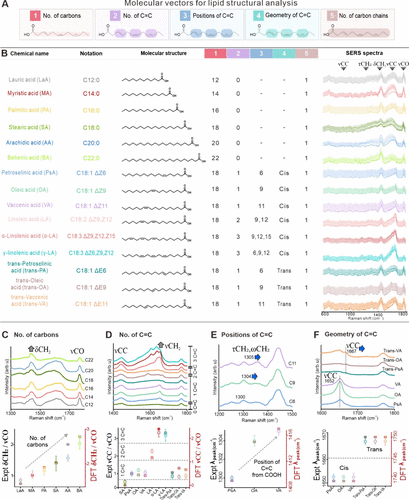
    Figure 2. SERS fingerprints encode lipid molecular vectors governing chain length, unsaturation, and isomerism. (A) Lipid structures are encoded using five chemically interpretable molecular vectors: (1) number of carbon atoms, (2) number of C═C bonds, (3) positions of C═C bonds, (4) cis–trans geometry of C═C, and (5) total number of carbon chains. (B) A curated data set of various free fatty acids is shown alongside molecular structures and corresponding SERS spectra. Systematic and reproducible changes in vibrational features accompany variation of individual molecular vectors, indicating that SERS directly encodes lipid structural chemistry. (C) Increasing carbon number (C12–C22) yields a monotonic increase in the δCH2/νCO intensity ratio. (D) Increasing the number of C═C bonds (0–3) systematically modulates the νCC/νCH2 intensity ratio with increasing unsaturation. (E) Positional isomers exhibit correlated shifts in τCH2 and δCH2 modes as a function of C═C bond location, enabling discrimination of double-bond position. (F) Cis–trans geometry of C═C is resolved by a characteristic blue shift of the νCC. Symbols: ν, stretching vibration; δ, deformation (bending) vibration; τ, twisting vibration; ω, wagging vibration (out-of-plane bending).

    Figure 3
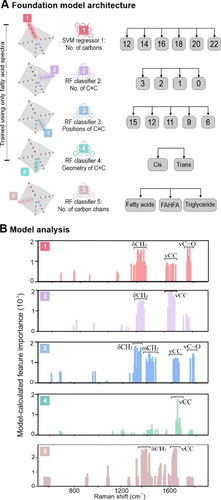
    Figure 3. Architecture and interpretability of the SERS lipid foundation model for fatty-acid-derived lipids. (A) The foundation model comprises an ensemble of parallel regressors and classifiers trained exclusively on free fatty acid SERS spectra to predict five lipid molecular vectors independently. (B) Feature-importance analysis for each model reveals distinctive vibrational modes (δCH2, νCC, and νCO) associated with each molecular vector, showing that the models learn physically meaningful spectral–structure relationships from SERS spectra for robust lipid structure elucidation. Symbols: ν, stretching vibration; δ, deformation (bending) vibration; τ, twisting vibration; ω, wagging vibration (out-of-plane bending).

    Figure 4

    Figure 4. SERS foundation model for vector-based lipid structure elucidation and cross-class generalization. (A) Schematics of the prediction workflow in which feature-matching highlights informative regions in an unknown SERS spectrum, an ensemble infers five molecular vectors, and the vector set is assembled to reconstruct the complete lipid structure. (B) Cross-class spectral comparison showing conserved fatty acid-derived bands alongside added contributions in complex lipids; FAHFAs and triglycerides exhibit broadened CH2 fingerprints, ester features, and glycerol signatures superimposed on fatty-acid modes. (C) Blind-test results across lipid classes demonstrate stable prediction beyond the single-chain FFA training chemical space, achieving overall elucidation accuracies of 91.7% (FFAs), 85.5% (FAHFAs), and 80.0% (triglycerides), with representative reconstructed structures shown for each class. Symbols: ν, stretching vibration; δ, deformation (bending) vibration; τ, twisting vibration; ω, wagging vibration (out-of-plane bending).

    Figure 5
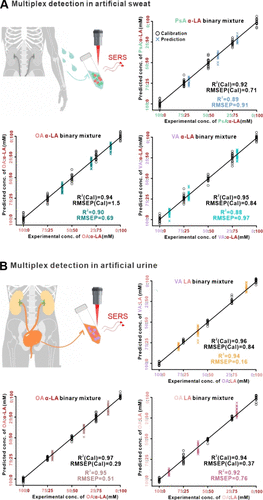
    Figure 5. Multiplex quantitative lipid detection in complex biofluids. SERS combined with the support vector machine regressor (SVM-R) enables multiplex quantification of three different binary lipid mixtures in (A) artificial sweat and (B) artificial urine. The blind-test-predicted concentrations closely match experimental values across multiple lipid pairs with high coefficients of determination and low prediction errors, demonstrating matrix-tolerant multiplex analysis in biologically relevant environments and applicability in real-life scenarios.

  • References


    This article references 30 other publications.

    1. 1
      Guo, H.; Zhi, S.; Zhao, Z.; Gao, T.; Ma, H.; Luo, S.-H.; Zhang, W.; Guo, P.; Ren, B.; Tian, Z.-Q. Rapid SERS Analysis: From Laboratory to Real Sample. ACS Appl. Mater. Interfaces 2025, 17, 33318,  DOI: 10.1021/acsami.5c05699
    2. 2
      Tan, E. X.; Zhong, Q.-Z.; Ting Chen, J. R.; Leong, Y. X.; Leon, G. K.; Tran, C. T.; Phang, I. Y.; Ling, X. Y. Surface-Enhanced Raman Scattering-Based Multimodal Techniques: Advances and Perspectives. ACS Nano 2024, 18 (47), 3231532334,  DOI: 10.1021/acsnano.4c12996
    3. 3
      Tan, E. X.; Nguyen, L. B. T.; Jin, Y.; Lv, Y.; Phang, I. Y.; Ling, X. Y. SERS Cheminformatics: Opportunities for Data-Driven Discovery and Applications. ACS Central Science 2025, 11 (11), 20342052,  DOI: 10.1021/acscentsci.5c00785
    4. 4
      Tan, E. X.; Leong, Y. X.; Lim, S. H.; Chng, M. W. K.; Phang, I. Y.; Ling, X. Y. Chemistry-informed recommender system to predict optimal molecular receptors in SERS nanosensors. Nat. Commun. 2025, 16 (1), 7095,  DOI: 10.1038/s41467-025-62519-x
    5. 5
      Tan, E. X.; Leong, S. X.; Liew, W. A.; Phang, I. Y.; Ng, J. Y.; Tan, N. S.; Lee, Y. H.; Ling, X. Y. Forward-predictive SERS-based chemical taxonomy for untargeted structural elucidation of epimeric cerebrosides. Nat. Commun. 2024, 15 (1), 2582,  DOI: 10.1038/s41467-024-46838-z
    6. 6
      Tan, E. X.; Chen, J. R. T.; Pang, D. W. C.; Tan, N. S.; Phang, I. Y.; Ling, X. Y. Transfer Learning-Assisted SERS: Predicting Molecular Identity and Concentration in Mixtures Using Pure Compound Spectra. Angew Chem Int Ed 2025, 64, e202508717  DOI: 10.1002/anie.202508717
    7. 7
      Nguyen, L. B. T.; Tan, E. X.; Leong, S. X.; Koh, C. S. L.; Madhumita, M.; Phang, I. Y.; Ling, X. Y. Harnessing Cooperative Multivalency in Thioguanine for Surface-Enhanced Raman Scattering (SERS)-Based Differentiation of Polyfunctional Analytes Differing by a Single Functional Group. Angew Chem Int Ed 2024, 63, e202410815  DOI: 10.1002/anie.202410815
    8. 8
      Simas, M. V.; Davis, G. A., Jr; Hati, S.; Pu, J.; Goodpaster, J. V.; Sardar, R. Anisotropically Shaped Plasmonic WO3–x Nanostructure-Driven Ultrasensitive SERS Detection and Machine Learning-Based Differentiation of Nitro-Explosives. ACS Appl. Mater. Interfaces 2025, 17 (7), 1130911324,  DOI: 10.1021/acsami.4c19673
    9. 9
      Chen, J. R. T.; Tan, E. X.; Tang, J.; Leong, S. X.; Hue, S. K. X.; Pun, C. S.; Phang, I. Y.; Ling, X. Y. Machine learning-based SERS chemical space for two-way prediction of structures and spectra of untrained molecules. J. Am. Chem. Soc. 2025, 147 (8), 66546664,  DOI: 10.1021/jacs.4c15804
    10. 10
      Abed, M. M.; Wouters, C. L.; Froehlich, C. E.; Nguyen, T. B.; Caldwell, R.; Riley, K. L.; Roy, P.; Reineke, T. M.; Haynes, C. L. A Machine Learning-Enabled SERS Sensor: Multiplex Detection of Lipopolysaccharides from Foodborne Pathogenic Bacteria. ACS Appl. Mater. Interfaces 2025, 17 (31), 4513945149,  DOI: 10.1021/acsami.5c08361
    11. 11
      Du, S.; Su, M.; Wang, C.; Ding, Z.; Jiang, Y.; Liu, H. Pinpointing alkane chain length, saturation, and double bond regio-and stereoisomers by liquid interfacial plasmonic enhanced raman spectroscopy. Anal. Chem. 2022, 94 (6), 28912900,  DOI: 10.1021/acs.analchem.1c04774
    12. 12
      Fahy, E.; Subramaniam, S.; Brown, H. A.; Glass, C. K.; Merrill, A. H., Jr; Murphy, R. C.; Raetz, C. R.; Russell, D. W.; Seyama, Y.; Shaw, W. A comprehensive classification system for lipids. European journal of lipid science and technology 2005, 107 (5), 337364,  DOI: 10.1002/ejlt.200405001
    13. 13
      Xia, F.; Wan, J. B. Chemical derivatization strategy for mass spectrometry-based lipidomics. Mass Spectrom. Rev. 2023, 42 (1), 432452,  DOI: 10.1002/mas.21729
    14. 14
      Kirkwood, K. I.; Pratt, B. S.; Shulman, N.; Tamura, K.; MacCoss, M. J.; MacLean, B. X.; Baker, E. S. Utilizing Skyline to analyze lipidomics data containing liquid chromatography, ion mobility spectrometry and mass spectrometry dimensions. Nat. Protoc. 2022, 17 (11), 24152430,  DOI: 10.1038/s41596-022-00714-6
    15. 15
      Nagana Gowda, G.; Raftery, D. NMR metabolomics methods for investigating disease. Analytical chemistry 2023, 95 (1), 8399,  DOI: 10.1021/acs.analchem.2c04606
    16. 16
      Tan, E. X.; Tang, J.; Leong, Y. X.; Phang, I. Y.; Lee, Y. H.; Pun, C. S.; Ling, X. Y. Creating 3D Nanoparticle Structural Space via Data Augmentation to Bidirectionally Predict Nanoparticle Mixture’s Purity, Size, and Shape from Extinction Spectra. Angew Chem Int Ed 2024, 63 (14), e202317978  DOI: 10.1002/anie.202317978
    17. 17
      Beattie, J. R.; Bell, S. E.; Moss, B. W. A critical evaluation of Raman spectroscopy for the analysis of lipids: Fatty acid methyl esters. Lipids 2004, 39 (5), 407419,  DOI: 10.1007/s11745-004-1245-z
    18. 18
      Geerlings, P.; De Proft, F.; Langenaeker, W. Conceptual density functional theory. Chem. Rev. 2003, 103 (5), 17931874,  DOI: 10.1021/cr990029p
    19. 19
      Cohen, A. J.; Mori-Sánchez, P.; Yang, W. Challenges for density functional theory. Chem. Rev. 2012, 112 (1), 289320,  DOI: 10.1021/cr200107z
    20. 20
      Patterson, M. L.; Weaver, M. J. Surface-enhanced Raman spectroscopy as a probe of adsorbate-surface bonding: simple alkenes and alkynes adsorbed at gold electrodes. J. Phys. Chem. 1985, 89 (23), 50465051,  DOI: 10.1021/j100269a032
    21. 21
      Tan, E. X.; Chen, Y.; Lee, Y. H.; Leong, Y. X.; Leong, S. X.; Stanley, C. V.; Pun, C. S.; Ling, X. Y. Incorporating plasmonic featurization with machine learning to achieve accurate and bidirectional prediction of nanoparticle size and size distribution. Nanoscale Horizons 2022, 7 (6), 626633,  DOI: 10.1039/D2NH00146B
    22. 22
      Breiman, L. Random forests. Machine learning 2001, 45 (1), 532,  DOI: 10.1023/A:1010933404324
    23. 23
      Pisner, D. A.; Schnyer, D. M. Support vector machine. Machine learning 2020, 101121,  DOI: 10.1016/B978-0-12-815739-8.00006-7
    24. 24
      Xie, H.; Cheng, H. S.; Ng, J. X. J.; Zhang, S.; Kim, J. H. S.; Tan, S. H.; Tan, C.-H.; Tan, N. S. A gut-liver lipid flux checkpoint mediates FAHFA protection from MASLD. Pharmacol. Res. 2026, 224, 108085  DOI: 10.1016/j.phrs.2025.108085
    25. 25
      Simopoulos, A. P. Essential fatty acids in health and chronic disease. American journal of clinical nutrition 1999, 70 (3), 560S569S,  DOI: 10.1093/ajcn/70.3.560s
    26. 26
      Gentile, C. L.; Pagliassotti, M. J. The role of fatty acids in the development and progression of nonalcoholic fatty liver disease. Journal of nutritional biochemistry 2008, 19 (9), 567576,  DOI: 10.1016/j.jnutbio.2007.10.001
    27. 27
      Lian, S.; Li, X.; Lv, X. Recent Developments in SERS Microfluidic Chips: From Fundamentals to Biosensing Applications. ACS Appl. Mater. Interfaces 2025, 17 (7), 1019310230,  DOI: 10.1021/acsami.4c17779
    28. 28
      Tao, A.; Sinsermsuksakul, P.; Yang, P. Polyhedral silver nanocrystals with distinct scattering signatures. ANGEWANDTE CHEMIE-INTERNATIONAL EDITION IN ENGLISH- 2006, 45 (28), 4597,  DOI: 10.1002/anie.200601277
    29. 29
      Lee, Y. H.; Lee, C. K.; Tan, B.; Rui Tan, J. M.; Phang, I. Y.; Ling, X. Y. Using the Langmuir–Schaefer technique to fabricate large-area dense SERS-active Au nanoprism monolayer films. Nanoscale 2013, 5 (14), 64046412,  DOI: 10.1039/c3nr00981e
    30. 30
      You, T.-t.; Yin, P.-g.; Jiang, L.; Lang, X.-f.; Guo, L.; Yang, S.-h. In situ identification of the adsorption of 4, 4′-thiobisbenzenethiol on silver nanoparticles surface: a combined investigation of surface-enhanced Raman scattering and density functional theory study. Phys. Chem. Chem. Phys. 2012, 14 (19), 68176825,  DOI: 10.1039/c2cp24147a
  • Supporting Information

    Supporting Information


    The Supporting Information is available free of charge at https://pubs.acs.org/doi/10.1021/acsami.6c00759.

    • Materials and methods, AgNC platform characterization, SERS measurements of lipids, density functional theory calculations, machine learning modeling (PDF)


    Terms & Conditions

    Most electronic Supporting Information files are available without a subscription to ACS Web Editions. Such files may be downloaded by article for research use (if there is a public use license linked to the relevant article, that license may permit other uses). Permission may be obtained from ACS for other uses through requests via the RightsLink permission system: http://pubs.acs.org/page/copyright/permissions.html.