


This publication is Open Access under the license indicated. Learn More

ACS Editors' Choice® is a collection designed to feature scientific articles of broad public interest. Read the latest articles
Atmospheric Black Carbon Loadings and Sources over Eastern Sub-Saharan Africa Are Governed by the Regional Savanna FiresClick to copy article linkArticle link copied!
- Leonard KiragoLeonard KiragoDepartment of Environmental Science, Stockholm University, 10691Stockholm, SwedenBolin Centre for Climate Research, Stockholm University, 10691Stockholm, SwedenMore by Leonard Kirago
- Örjan GustafssonÖrjan GustafssonDepartment of Environmental Science, Stockholm University, 10691Stockholm, SwedenBolin Centre for Climate Research, Stockholm University, 10691Stockholm, SwedenMore by Örjan Gustafsson
- Samuel M. GaitaSamuel M. GaitaDepartment of Environmental Science, Stockholm University, 10691Stockholm, SwedenBolin Centre for Climate Research, Stockholm University, 10691Stockholm, SwedenMore by Samuel M. Gaita
- Sophie L. HaslettSophie L. HaslettDepartment of Environmental Science, Stockholm University, 10691Stockholm, SwedenBolin Centre for Climate Research, Stockholm University, 10691Stockholm, SwedenMore by Sophie L. Haslett
- H. Langley deWittH. Langley deWittCenter for Global Change Science, Massachusetts Institute of Technology, 54-1312, Cambridge, Massachusetts02139, United StatesMore by H. Langley deWitt
- Jimmy GasoreJimmy GasoreCenter for Global Change Science, Massachusetts Institute of Technology, 54-1312, Cambridge, Massachusetts02139, United StatesClimate Secretariat, Ministry of Education, 622Kigali, RwandaPhysics Department, School of Physics, College of Science and Technology, University of Rwanda, 4285Kigali, RwandaMore by Jimmy Gasore
- Katherine E. PotterKatherine E. PotterCenter for Global Change Science, Massachusetts Institute of Technology, 54-1312, Cambridge, Massachusetts02139, United StatesMore by Katherine E. Potter
- Ronald G. PrinnRonald G. PrinnCenter for Global Change Science, Massachusetts Institute of Technology, 54-1312, Cambridge, Massachusetts02139, United StatesMore by Ronald G. Prinn
- Maheswar RupakhetiMaheswar RupakhetiInstitute for Advanced Sustainability Studies (IASS), 14467Potsdam, GermanyMore by Maheswar Rupakheti
- Jean de Dieu NdikubwimanaJean de Dieu NdikubwimanaClimate Secretariat, Ministry of Education, 622Kigali, RwandaMore by Jean de Dieu Ndikubwimana
- Bonfils SafariBonfils SafariPhysics Department, School of Physics, College of Science and Technology, University of Rwanda, 4285Kigali, RwandaMore by Bonfils Safari
- August Andersson*August Andersson*Email: [email protected]Department of Environmental Science, Stockholm University, 10691Stockholm, SwedenBolin Centre for Climate Research, Stockholm University, 10691Stockholm, SwedenMore by August Andersson
Environmental Science & Technology
Copyright © 2022 The Authors. Published by American Chemical Society. This publication is licensed under
License Summary*
You are free to share (copy and redistribute) this article in any medium or format and to adapt (remix, transform, and build upon) the material for any purpose, even commercially within the parameters below:

Creative Commons (CC): This is a Creative Commons license.

Attribution (BY): Credit must be given to the creator.
*Disclaimer
This summary highlights only some of the key features and terms of the actual license. It is not a license and has no legal value. Carefully review the actual license before using these materials.
Abstract
Vast black carbon (BC) emissions from sub-Saharan Africa are perceived to warm the regional climate, impact rainfall patterns, and impair human respiratory health. However, the magnitudes of these perturbations are ill-constrained, largely due to limited ground-based observations and uncertainties in emissions from different sources. This paper reports multiyear concentrations of BC and other key PM2.5 aerosol constituents from the Rwanda Climate Observatory, serving as a regional receptor site. We find a strong seasonal cycle for all investigated chemical species, where the maxima coincide with large-scale upwind savanna fires. BC concentrations show notable interannual variability, with no clear long-term trend. The Δ14C and δ13C signatures of BC unambiguously show highly elevated biomass burning contributions, up to 93 ± 3%, with a clear and strong savanna burning imprint. We further observe a near-equal contribution from C3 and C4 plants, irrespective of air mass source region or season. In addition, the study provides improved relative emission factors of key aerosol components, organic carbon (OC), K+, and NO3–, in savanna-fires-influenced background atmosphere. Altogether, we report quantitative source constraints on Eastern Africa BC emissions, with implications for parameterization of satellite fire and bottom-up emission inventories as well as regional climate and chemical transport modeling.
This publication is licensed under
License Summary*
You are free to share(copy and redistribute) this article in any medium or format and to adapt(remix, transform, and build upon) the material for any purpose, even commercially within the parameters below:
Creative Commons (CC): This is a Creative Commons license.
Attribution (BY): Credit must be given to the creator.
*Disclaimer
This summary highlights only some of the key features and terms of the actual license. It is not a license and has no legal value. Carefully review the actual license before using these materials.
License Summary*
You are free to share(copy and redistribute) this article in any medium or format and to adapt(remix, transform, and build upon) the material for any purpose, even commercially within the parameters below:
Creative Commons (CC): This is a Creative Commons license.
Attribution (BY): Credit must be given to the creator.
*Disclaimer
This summary highlights only some of the key features and terms of the actual license. It is not a license and has no legal value. Carefully review the actual license before using these materials.
License Summary*
You are free to share(copy and redistribute) this article in any medium or format and to adapt(remix, transform, and build upon) the material for any purpose, even commercially within the parameters below:
Creative Commons (CC): This is a Creative Commons license.
Attribution (BY): Credit must be given to the creator.
*Disclaimer
This summary highlights only some of the key features and terms of the actual license. It is not a license and has no legal value. Carefully review the actual license before using these materials.
Synopsis
In this paper, we show that the concentrations of health- and climate-affecting black carbon air particles in the sub-Saharan African atmosphere are dominated by emissions from savanna fires.
Introduction
Materials and Methods
Aerosol Sample Collection at Rwanda Climate Observatory
Chemical and Isotopic Analyses
Source Apportionment Calculations
Analysis of Aethalometer Data
Satellite Observations and Air Mass Back Trajectories
Results and Discussion
Aerosol Characteristics at RCO
Figure 1
Figure 1. Temporal variations in mass concentrations of the main constituents of PM2.5 aerosols at Rwanda Climate Observatory during 2014–2016 period. The investigated PM2.5 species exhibit strong seasonality, with low aerosol concentrations observed during the wet seasons (highlighted with gray background). Data gap exists between December 2014 and April 2015 due to instrument failure after a lightning strike.
Figure 2
Figure 2. Satellite fire observations and air mass back trajectories at the Rwanda Climate Observatory. The blue-green-yellow color scheme depicts the number of fire detections from MODIS-FIRMS per square degree grid. Every second day, back-trajectory with arrival time at 3 AM CET is depicted as black dotted lines. (A) June–July–August (JJA), 2015. (B) September–October–November (SON), 2015. (C) December–January–February (DJF), 2015/16. (D) March–April–May (MAM), 2016.
PM2.5 Aerosol Source Regime at RCO
Multiyear Equivalent BC (eBC) Concentrations
Figure 3
Figure 3. Multiyear (2014–2019) BC concentrations trends for Rwanda Climate Observatory. (A) Temporal variability in weekly averaged (night-time-only) equivalent BC data─retrieved from an AE33 aethalometer at 880 nm. The eBC (black plot) was compared against the Sunset Laboratory thermo-optical measurement data (blue dots; see SI notes S1). (B) Visualization of differences in daily/weekly de-trended annual variability in eBC concentrations (color scheme depicts different years). The spikes in the aethalometer data, potentially from instrumental errors or short-term pollution events were removed as explained in SI Note S1.
Isotope-Based Source Quantification of BC
Figure 4
Figure 4. Dual-carbon (Δ14C and δ13C)-based source apportionment of BC at Rwanda Climate Observatory. (A) Dual-isotope signatures of BC for dry period PM2.5 aerosols. Colored circles represent the isotope signatures for BC for the study period (color represents time period), while black dots represent the isotope signatures for total carbon (TC = EC + OC) from October to November 2014 and May to September 2015. (1) (B) Relative source contributions (means and standard deviations), computed using eq 2.
Top-Down Observational Constraints on the Relative Emission Factors
Scientific and Policy Implications
Supporting Information
The Supporting Information is available free of charge at https://pubs.acs.org/doi/10.1021/acs.est.2c05837.
Discussions on analysis of aethalometer data (Note S1); calculation of sea salt contribution (Note S2) and error propagation (Note S3); quality assurance data (Table S1); sensitivity analysis for isotope measurements (Table S2); seasonal averaged PM2.5 aerosol composition (Table S3); BC loading and sample selection for isotope analysis (Figure S1); equivalent BC data and quality assurance (Figures S2, S3, S10, and S11); PM2.5 aerosol composition and correlations (Figures S4–S6); concentration-dependent geographical origins of BC (Figure S7); and isotope-based source apportionment of BC (Figures S8 and S9); observational data that support the findings of this study will be available in the Bolin Centre Database (bolin.su.se/data/) (PDF)
Terms & Conditions
Most electronic Supporting Information files are available without a subscription to ACS Web Editions. Such files may be downloaded by article for research use (if there is a public use license linked to the relevant article, that license may permit other uses). Permission may be obtained from ACS for other uses through requests via the RightsLink permission system: http://pubs.acs.org/page/copyright/permissions.html.
Author Information
- August Andersson - Department of Environmental Science, Stockholm University, 10691Stockholm, Sweden; Bolin Centre for Climate Research, Stockholm University, 10691Stockholm, Sweden;
 https://orcid.org/0000-0002-4659-7055;
- Maheswar Rupakheti - Institute for Advanced Sustainability Studies (IASS), 14467Potsdam, Germany;https://orcid.org/0000-0002-9618-8735
Conceptualization, funding acquisition, and setup of filter sampler were led by A.A.; sampling and data collection by L.K., J.G., and J.D.N.; methodology by L.K., A.A., and Ö.G.; observatory management and instrumentation by L.d.W., K.E.P., J.G., R.P., and J.D.N.; data analysis, visualization, and original draft writing by L.K. and A.A.; and draft review and editing by Ö.G., S.L.H., and S.M.G. All authors commented on and approved the final version of the manuscript.
This project is supported by research grants from the Swedish Research Council (VR contracts nos. 2013-114, 2017-05687, and 2020-05384), the Swedish Research Council for Sustainable Development (FORMAS contract no. 2020-01951), and the Swedish Research Council Distinguished Professor Grant (VR contract no. 2017-01601).
Acknowledgments
Maheswar Rupakheti acknowledges the support provided by COMESA and Ministry of Education, Rwanda, as well as by the Institute for Advanced Sustainability Studies (IASS), which is funded by the German Federal Ministry for Education and Research (BMBF) and the Brandenburg Ministry for Science, Research and Culture (MWFK). The authors thank the generous MIT alumni donors of the Rwanda-MIT Climate Observatory Project and the MIT Center for Global Change Science for RCO instrumentation. They commend the efforts of the Government of Rwanda and the Rwanda Ministry of Education for RCO operations. They appreciate the field and technical support from the RCO Technical Experts, Theobald Habineza, Modeste Mugabo, Olivier Shyaka, Gaston Munyampundu, and Yves Fidele. They acknowledge the use of data and imagery from LANCE FIRMS, operated by NASA’s Earth Science Data and Information System (ESDIS) with funding provided by NASA Headquarters. The authors gratefully acknowledge the NOAA Air Resources Laboratory (ARL) for the provision of the HYSPLIT transport and dispersion model and/or READY website (https://www.ready.noaa.gov) used in this publication.
References
This article references 56 other publications.
- 1Andersson, A.; Kirillova, E. N.; Decesari, S.; Dewitt, L.; Gasore, J.; Potter, K. E.; Prinn, R. G.; Rupakheti, M.; De Dieu Ndikubwimana, J.; Nkusi, J.; Safari, B. Seasonal Source Variability of Carbonaceous Aerosols at the Rwanda Climate Observatory. Atmos. Chem. Phys. 2020, 20, 4561– 4573, DOI: 10.5194/acp-20-4561-2020Google Scholar1Seasonal source variability of carbonaceous aerosols at the rwanda climate observatoryAndersson, August; Kirillova, Elena N.; Decesari, Stefano; DeWitt, Langley; Gasore, Jimmy; Potter, Katherine E.; Prinn, Ronald G.; Rupakheti, Maheswar; de Dieu Ndikubwimana, Jean; Nkusi, Julius; Safari, BonfilsAtmospheric Chemistry and Physics (2020), 20 (8), 4561-4573CODEN: ACPTCE; ISSN:1680-7324. (Copernicus Publications)Sub-Saharan Africa (SSA) is a global hot spot for aerosol emissions, which affect the regional climate and air quality. In this paper, we use ground-based observations to address the large uncertainties in the source-resolved emission estn. of carbonaceous aerosols. Ambient fine fraction aerosol was collected on filters at the high-altitude (2590 m a.s.l.) Rwanda Climate Observatory (RCO), a SSA background site, during the dry and wet seasons in 2014 and 2015. The concns. of both the carbonaceous and inorg. ion components show a strong seasonal cycle, with highly elevated concns. during the dry season. Source marker ratios, including carbon isotopes, show that the wet and dry seasons have distinct aerosol compns. The dry season is characterized by elevated amts. of biomass burning products, which approach ∼95% for carbonaceous aerosols. An isotopic mass-balance est. shows that the amt. of the carbonaceous aerosol stemming from savanna fires may increase from 0.2μg m-3 in the wet season up to 10μg m-3 during the dry season. Based on these results, we quant. show that savanna fire is the key modulator of the seasonal aerosol compn. variability at the RCO.
- 2Andreae, M. O. Emission of Trace Gases and Aerosols from Biomass Burning─An Updated Assessment. Atmos. Chem. Phys. 2019, 19, 8523– 8546, DOI: 10.5194/acp-19-8523-2019Google Scholar2Emission of trace gases and aerosols from biomass burning - an updated assessmentAndreae, Meinrat O.Atmospheric Chemistry and Physics (2019), 19 (13), 8523-8546CODEN: ACPTCE; ISSN:1680-7324. (Copernicus Publications)Since the publication of the compilation of biomass burning emission factors by Andreae and Merlet (2001), a large no. of studies have greatly expanded the amt. of available data on emissions from various types of biomass burning. Using essentially the same methodol. as Andreae and Merlet (2001), this paper presents an updated compilation of emission factors. The data from over 370 published studies were critically evaluated and integrated into a consistent format. Several new categories of biomass burning were added, and the no. of species for which emission data are presented was increased from 93 to 121. Where field data are still insufficient, ests. based on appropriate extrapolation techniques are proposed. For key species, the updated emission factors are compared with previously published values. Based on these emission factors and published global activity ests., I have derived ests. of pyrogenic emissions for important species released by the various types of biomass burning.
- 3Liousse, C.; Assamoi, E.; Criqui, P.; Granier, C.; Rosset, R. Explosive Growth in African Combustion Emissions from 2005 to 2030. Environ. Res. Lett. 2014, 9, 035003 DOI: 10.1088/1748-9326/9/3/035003Google Scholar3Explosive growth in African combustion emissions from 2005 to 2030Liousse, C.; Assamoi, E.; Criqui, P.; Granier, C.; Rosset, R.Environmental Research Letters (2014), 9 (3), 035003CODEN: ERLNAL; ISSN:1748-9326. (IOP Publishing Ltd.)Emissions of gases and particles from the combustion of fossil fuels and biofuels in Africa are expected to increase significantly in the near future due to the rapid growth of African cities and megacities. There is currently no regional emissions inventory that provides ests. of anthropogenic combustion for the African continent. This work provides a quantification of the evolution of African combustion emissions from 2005 to 2030, using a bottom-up method. This inventory predicts very large increases in black carbon, org. carbon, CO, NOx, SO2 and non-methane hydrocarbon emissions if no emission regulations are implemented. This paper discusses the effectiveness of scenarios involving certain fuels, specific to Africa in each activity sector and each region (western, eastern, northern and southern Africa), to reduce the emissions. The estd. trends in African emissions are consistent with emissions provided by global inventories, but they display a larger range of values. African combustion emissions contributed significantly to global emissions in 2005. This contribution will increase more significantly by 2030: org. carbon emissions will for example make up 50% of the global emissions in 2030. Furthermore, we show that the magnitude of African anthropogenic emissions could be similar to African biomass burning emissions around 2030.
- 4Hickman, J. E.; Andela, N.; Tsigaridis, K.; Galy-Lacaux, C.; Ossohou, M.; Bauer, S. E. Reductions in NO2 Burden over North Equatorial Africa from Decline in Biomass Burning in Spite of Growing Fossil Fuel Use, 2005 to 2017. Proc. Natl. Acad. Sci. U.S.A. 2021, 118, e2002579118 DOI: 10.1073/pnas.2002579118Google Scholar4Reductions in NO2 burden over north equatorial Africa from decline in biomass burning in spite of growing fossil fuel use, 2005 to 2017Hickman, Jonathan E.; Andela, Niels; Tsigaridis, Kostas; Galy-Lacaux, Corinne; Ossohou, Money; Bauer, Susanne E.Proceedings of the National Academy of Sciences of the United States of America (2021), 118 (7), e2002579118CODEN: PNASA6; ISSN:0027-8424. (National Academy of Sciences)Socioeconomic development in low- and middle-income countries was accompanied by increased emissions of air pollutants, such as nitrogen oxides [NOx: nitrogen dioxide (NO2) + nitric oxide (NO)], which affect human health. In sub-Saharan Africa, fossil fuel combustion has nearly doubled since 2000. At the same time, landscape biomass burning-another important NOx source-has declined in north equatorial Africa, attributed to changes in climate and anthropogenic fire management. Here, we use satellite observations of tropospheric NO2 vertical column densities (VCDs) and burned area to identify NO2 trends and drivers over Africa. Across the northern ecosystems where biomass burning occurs-home to hundreds of millions of people-mean annual tropospheric NO2 VCDs decreased by 4.5% from 2005 through 2017 during the dry season of Nov. through Feb. Redns. in burned area explained the majority of variation in NO2 VCDs, though changes in fossil fuel emissions also explained some variation. Over Africa's biomass burning regions, raising mean GDP d. (USD·km-2) above its lowest levels is assocd. with lower NO2 VCDs during the dry season, suggesting that economic development mitigates net NO2 emissions during these highly polluted months. In contrast to the traditional notion that socioeconomic development increases air pollutant concns. in low- and middle-income nations, our results suggest that countries in Africa's northern biomass-burning region are following a different pathway during the fire season, resulting in potential air quality benefits. However, these benefits may be lost with increasing fossil fuel use and are absent during the rainy season.
- 5Ramo, R.; Roteta, E.; Bistinas, I.; van Wees, D.; Bastarrika, A.; Chuvieco, E.; van der Werf, G. R. African Burned Area and Fire Carbon Emissions Are Strongly Impacted by Small Fires Undetected by Coarse Resolution Satellite Data. Proc. Natl. Acad. Sci. U.S.A. 2021, 118, 1– 7, DOI: 10.1073/pnas.2011160118Google ScholarThere is no corresponding record for this reference.
- 6Keita, S.; Liousse, C.; Assamoi, E. M.; Doumbia, T.; N’Datchoh, E. T.; Gnamien, S.; Elguindi, N.; Granier, C.; Yoboué, V. African Anthropogenic Emissions Inventory for Gases and Particles from 1990 to 2015. Earth Syst. Sci. Data 2021, 13, 3691– 3705, DOI: 10.5194/essd-13-3691-2021Google ScholarThere is no corresponding record for this reference.
- 7Marais, E. A.; Wiedinmyer, C. Air Quality Impact of Diffuse and Inefficient Combustion Emissions in Africa (DICE-Africa). Environ. Sci. Technol. 2016, 50, 10739– 10745, DOI: 10.1021/acs.est.6b02602Google Scholar7Air Quality Impact of Diffuse and Inefficient Combustion Emissions in Africa (DICE-Africa)Marais, Eloise A.; Wiedinmyer, ChristineEnvironmental Science & Technology (2016), 50 (19), 10739-10745CODEN: ESTHAG; ISSN:0013-936X. (American Chemical Society)Anthropogenic pollution in Africa is dominated by diffuse and inefficient combustion sources, as electricity access is low and motorcycles and outdated cars proliferate. These sources are missing, out-of-date, or misrepresented in state-of-the-science emission inventories. We address these deficiencies with a detailed inventory of Diffuse and Inefficient Combustion Emissions in Africa (DICE-Africa) for 2006 and 2013. Fuelwood for energy is the largest emission source in DICE-Africa, but grows from 2006 to 2013 at a slower rate than charcoal prodn. and use, and gasoline and diesel for motorcycles, cars, and generators. Only kerosene use and gas flaring decline. Increase in emissions from 2006 to 2013 in this work is consistent with trends in satellite observations of formaldehyde and NO2, but much slower than the explosive growth projected with a fuel consumption model. Seasonal biomass burning is considered a large pollution source in Africa, but we est. comparable emissions of black carbon and higher emissions of nonmethane volatile org. compds. from DICE-Africa. Nitrogen oxide (NOx ≃ NO + NO2) emissions are much lower than from biomass burning. We use GEOS-Chem to est. that the largest contribution of DICE-Africa to annual mean surface fine particulate matter (PM2.5) is >5 μg m-3 in populous Nigeria.
- 8Andela, N.; Van Der Werf, G. R. Recent Trends in African Fires Driven by Cropland Expansion and El Niño to La Niña Transition. Nat. Clim. Change 2014, 4, 791– 795, DOI: 10.1038/nclimate2313Google ScholarThere is no corresponding record for this reference.
- 9Hodnebrog, Ø.; Myhre, G.; Forster, P. M.; Sillmann, J.; Samset, B. H. Local Biomass Burning Is a Dominant Cause of the Observed Precipitation Reduction in Southern Africa. Nat. Commun. 2016, 7, 2119 DOI: 10.1038/ncomms11236Google ScholarThere is no corresponding record for this reference.
- 10Agbo, K. E.; Walgraeve, C.; Eze, J. I.; Ugwoke, P. E.; Ukoha, P. O.; Van Langenhove, H. A Review on Ambient and Indoor Air Pollution Status in Africa. Atmos. Pollut. Res. 2021, 12, 243– 260, DOI: 10.1016/j.apr.2020.11.006Google Scholar10A review on ambient and indoor air pollution status in AfricaAgbo, Kevin Emeka; Walgraeve, Christophe; Eze, John Ikechukwu; Ugwoke, Paulinus Ekene; Ukoha, Pius Oziri; Van Langenhove, HermanAtmospheric Pollution Research (2021), 12 (2), 243-260CODEN: APRTCD; ISSN:1309-1042. (Elsevier B.V.)A review. In spite of the global outcry for urgent action against air pollution, most African countries lack functional air quality monitoring stations and data there from; making air quality management difficult. Therefore, stand-alone studies are reviewed to provide information on air pollutant levels, sources, spatial and seasonal variation across the continent. Air quality studies are limited in Africa. Available data show that vehicular traffics, industries, wildfire and biomass burning are significant sources of PM, CO, NO2, SO2 and VOCs in the continent. Sahara Desert is an important source of PM in the region esp. during harmattan periods. The air levels of pollutants exhibit seasonality and is inversely impacted by increased pptn. rate and wind speed. Exceedances of WHO AQG are common in both season. The reported annual and 24-h mean concns. of ambient PM are resp. lower than the relevant WHO AQG in only 10 and 13% for PM2.5, and 0% and 12% for PM10. Only a third of the towns have ambient CO concns. below the 24-h WHO (7 mg/m3) AQG. Benzene levels at nearly all (96%) sites are a factor 2-920 times larger than 0.17μg/m3 assocd. with an excess lifetime risk 1/1000 000. The mean concns. of indoor PM, CO, NO2 and SO2 exceed the relevant WHO AQG and much more in firewood-fueled poorly-ventilated kitchens in the rural areas, implying a potentially high exposure to women and children in Africa.
- 11Burnett, R.; Chen, H.; Szyszkowicz, M.; Fann, N.; Hubbell, B.; Pope, C. A.; Apte, J. S.; Brauer, M.; Cohen, A.; Weichenthal, S.; Coggins, J.; Di, Q.; Brunekreef, B.; Frostad, J.; Lim, S. S.; Kan, H.; Walker, K. D.; Thurston, G. D.; Hayes, R. B.; Lim, C. C.; Turner, M. C.; Jerrett, M.; Krewski, D.; Gapstur, S. M.; Diver, W. R.; Ostro, B.; Goldberg, D.; Crouse, D. L.; Martin, R. V.; Peters, P.; Pinault, L.; Tjepkema, M.; Van Donkelaar, A.; Villeneuve, P. J.; Miller, A. B.; Yin, P.; Zhou, M.; Wang, L.; Janssen, N. A. H.; Marra, M.; Atkinson, R. W.; Tsang, H.; Thach, T. Q.; Cannon, J. B.; Allen, R. T.; Hart, J. E.; Laden, F.; Cesaroni, G.; Forastiere, F.; Weinmayr, G.; Jaensch, A.; Nagel, G.; Concin, H.; Spadaro, J. V. Global Estimates of Mortality Associated with Longterm Exposure to Outdoor Fine Particulate Matter. Proc. Natl. Acad. Sci. U.S.A. 2018, 115, 9592– 9597, DOI: 10.1073/pnas.1803222115Google Scholar11Global estimates of mortality associated with long-term exposure to outdoor fine particulate matterBurnett, Richard; Chen, Hong; Szyszkowicz, MieczysAaw; Fann, Neal; Hubbell, Bryan; Arden Pope, C.; Apte, Joshua S.; Brauer, Michael; Cohen, Aaron; Weichenthal, Scott; Coggins, Jay; Di, Qian; Brunekreef, Bert; Frostad, Joseph; Lim, Stephen S.; Kan, Haidong; Walker, Katherine D.; Thurston, George D.; Hayes, Richard B.; Lim, Chris C.; Turner, Michelle C.; Jerrett, Michael; Krewski, Daniel; Gapstur, Susan M.; Diver, W. Ryan; Ostro, Bart; Goldberg, Debbie; Crouse, Daniel L.; Martin, Randall V.; Peters, Paul; Pinault, Lauren; Tjepkema, Michael; van Donkelaar, Aaron; Villeneuve, Paul J.; Miller, Anthony B.; Yin, Peng; Zhou, Maigeng; Wang, Lijun; Janssen, Nicole A. H.; Marra, Marten; Atkinson, Richard W.; Tsang, Hilda; Thach, Thuan Quoc; Cannon, John B.; Allen, Ryan T.; Hart, Jaime E.; Laden, Francine; Cesaroni, Giulia; Forastiere, Francesco; Weinmayr, Gudrun; Jaensch, Andrea; Nagel, Gabriele; Concin, Hans; Spadaro, Joseph V.Proceedings of the National Academy of Sciences of the United States of America (2018), 115 (38), 9592-9597CODEN: PNASA6; ISSN:0027-8424. (National Academy of Sciences)Exposure to ambient fine particulate matter (PM2.5) is a major global health concern. Quant. ests. of attributable mortality are based on disease-specific hazard ratio models that incorporate risk information from multiple PM2.5 sources (outdoor and indoor air pollution from use of solid fuels and secondhand and active smoking), requiring assumptions about equiv. exposure and toxicity. We relax these contentious assumptions by constructing a PM2.5-mortality hazard ratio function based only on cohort studies of outdoor air pollution that covers the global exposure range. We modeled the shape of the assocn. between PM2.5 and nonaccidental mortality using data from 41 cohorts from 16 countries a$$Hat$$ the Global Exposure Mortality Model (GEMM). We then constructed GEMMs for five specific causes of death examd. by the global burden of disease (GBD). The GEMM predicts 8.9 million [95% confidence interval (CI): 7.5a$$Hat$$ 10.3] deaths in 2015, a figure 30% larger than that predicted by the sum of deaths among the five specific causes (6.9; 95% CI: 4.9a$$Hat$$ 8.5) and 120% larger than the risk function used in the GBD (4.0; 95% CI: 3.3a$$Hat$$ 4.8). Differences between the GEMM and GBD risk functions are larger for a 20% redn. in concns., with the GEMM predicting 220% higher excess deaths. These results suggest that PM2.5 exposure may be related to addnl. causes of death than the five considered by the GBD and that incorporation of risk information from other, nonoutdoor, particle sources leads to underestimation of disease burden, esp. at higher concns.
- 12Kulmala, M. Build a Global Earth Observatory. Nature 2018, 553, 21– 23, DOI: 10.1038/d41586-017-08967-yGoogle Scholar12Build a global Earth observatoryKulmala, MarkkuNature (London, United Kingdom) (2018), 553 (7686), 21-23CODEN: NATUAS; ISSN:0028-0836. (Nature Research)Markku Kulmala calls for continuous, comprehensive monitoring of interactions between the planet's surface and atm.
- 13Bond, T. C.; Doherty, S. J.; Fahey, D. W.; Forster, P. M.; Berntsen, T.; Deangelo, B. J.; Flanner, M. G.; Ghan, S.; Kärcher, B.; Koch, D.; Kinne, S.; Kondo, Y.; Quinn, P. K.; Sarofim, M. C.; Schultz, M. G.; Schulz, M.; Venkataraman, C.; Zhang, H.; Zhang, S.; Bellouin, N.; Guttikunda, S. K.; Hopke, P. K.; Jacobson, M. Z.; Kaiser, J. W.; Klimont, Z.; Lohmann, U.; Schwarz, J. P.; Shindell, D.; Storelvmo, T.; Warren, S. G.; Zender, C. S. Bounding the Role of Black Carbon in the Climate System: A Scientific Assessment. J. Geophys. Res.: Atmos. 2013, 118, 5380– 5552, DOI: 10.1002/jgrd.50171Google Scholar13Bounding the role of black carbon in the climate system: A scientific assessmentBond, T. C.; Doherty, S. J.; Fahey, D. W.; Forster, P. M.; Berntsen, T.; DeAngelo, B. J.; Flanner, M. G.; Ghan, S.; Kaercher, B.; Koch, D.; Kinne, S.; Kondo, Y.; Quinn, P. K.; Sarofim, M. C.; Schultz, M. G.; Schulz, M.; Venkataraman, C.; Zhang, H.; Zhang, S.; Bellouin, N.; Guttikunda, S. K.; Hopke, P. K.; Jacobson, M. Z.; Kaiser, J. W.; Klimont, Z.; Lohmann, U.; Schwarz, J. P.; Shindell, D.; Storelvmo, T.; Warren, S. G.; Zender, C. S.Journal of Geophysical Research: Atmospheres (2013), 118 (11), 5380-5552CODEN: JGRDE3; ISSN:2169-8996. (Wiley-Blackwell)Black carbon aerosol plays a unique and important role in Earth's climate system. Black carbon is a type of carbonaceous material with a unique combination of phys. properties. This assessment provides an evaluation of black-carbon climate forcing that is comprehensive in its inclusion of all known and relevant processes and that is quant. in providing best ests. and uncertainties of the main forcing terms: direct solar absorption; influence on liq., mixed phase, and ice clouds; and deposition on snow and ice. These effects are calcd. with climate models, but when possible, they are evaluated with both microphys. measurements and field observations. Predominant sources are combustion related, namely, fossil fuels for transportation, solid fuels for industrial and residential uses, and open burning of biomass. Total global emissions of black carbon using bottom-up inventory methods are 7500 Gg yr-1 in the year 2000 with an uncertainty range of 2000 to 29000. However, global atm. absorption attributable to black carbon is too low in many models and should be increased by a factor of almost 3. After this scaling, the best est. for the industrial-era (1750 to 2005) direct radiative forcing of atm. black carbon is +0.71 W m-2 with 90% uncertainty bounds of (+0.08, +1.27) W m-2. Total direct forcing by all black carbon sources, without subtracting the preindustrial background, is estd. as +0.88 (+0.17, +1.48) W m-2. Direct radiative forcing alone does not capture important rapid adjustment mechanisms. A framework is described and used for quantifying climate forcings, including rapid adjustments. The best est. of industrial-era climate forcing of black carbon through all forcing mechanisms, including clouds and cryosphere forcing, is +1.1 W m-2 with 90% uncertainty bounds of +0.17 to +2.1 W m-2. Thus, there is a very high probability that black carbon emissions, independent of co-emitted species, have a pos. forcing and warm the climate. We est. that black carbon, with a total climate forcing of +1.1 W m-2, is the second most important human emission in terms of its climate forcing in the present-day atm.; only carbon dioxide is estd. to have a greater forcing. Sources that emit black carbon also emit other short-lived species that may either cool or warm climate. Climate forcings from co-emitted species are estd. and used in the framework described herein. When the principal effects of short-lived co-emissions, including cooling agents such as sulfur dioxide, are included in net forcing, energy-related sources (fossil fuel and biofuel) have an industrial-era climate forcing of +0.22 (-0.50 to +1.08) W m-2 during the first year after emission. For a few of these sources, such as diesel engines and possibly residential biofuels, warming is strong enough that eliminating all short-lived emissions from these sources would reduce net climate forcing (i.e., produce cooling). When open burning emissions, which emit high levels of org. matter, are included in the total, the best est. of net industrial-era climate forcing by all short-lived species from black-carbon-rich sources becomes slightly neg. (-0.06 W m-2 with 90% uncertainty bounds of -1.45 to +1.29 W m-2). The uncertainties in net climate forcing from black-carbon-rich sources are substantial, largely due to lack of knowledge about cloud interactions with both black carbon and co-emitted org. carbon. In prioritizing potential black-carbon mitigation actions, non-science factors, such as tech. feasibility, costs, policy design, and implementation feasibility play important roles. The major sources of black carbon are presently in different stages with regard to the feasibility for near-term mitigation. This assessment, by evaluating the large no. and complexity of the assocd. phys. and radiative processes in black-carbon climate forcing, sets a baseline from which to improve future climate forcing ests.
- 14Szopa, S.; Naik, V.; Adhikary, B.; Artaxo, P.; Berntsen, T.; Collins, W. D.; Fuzzi, S.; Gallardo, L.; Kiendler, A.; Scharr, Z.; Klimont; ; Liao, H.; Unger, N.; Zanis, P. Short-Lived Climate Forces. In Climate Change 2021: The Physical Science Basis , Contribution of Working Group I to the Sixth Assessment Report of the Intergovernmental Panel on Climate Change, 2021.Google ScholarThere is no corresponding record for this reference.
- 15Boucher, O.; Balkanski, Y.; Hodnebrog, Ø.; Myhre, C. L.; Myhre, G.; Quaas, J.; Samset, B. H.; Schutgens, N.; Stier, P.; Wang, R. Jury Is Still out on the Radiative Forcing by Black Carbon. Proc. Natl. Acad. Sci. U.S.A. 2016, 113, E5092– E5093, DOI: 10.1073/pnas.1607005113Google Scholar15Jury is still out on the radiative forcing by black carbonBoucher, Olivier; Balkanski, Yves; Hodnebrog, Oeivind; Myhre, Cathrine Lund; Myhre, Gunnar; Quaas, Johannes; Samset, Bjoern Hallvard; Schutgens, Nick; Stier, Philip; Wang, RongProceedings of the National Academy of Sciences of the United States of America (2016), 113 (35), E5092-E5093CODEN: PNASA6; ISSN:0027-8424. (National Academy of Sciences)There is no expanded citation for this reference.
- 16Gustafsson, Ö.; Ramanathan, V. Convergence on Climate Warming by Black Carbon Aerosols. Proc. Natl. Acad. Sci. U.S.A. 2016, 113, 4243– 4245, DOI: 10.1073/pnas.1603570113Google Scholar16Convergence on climate warming by black carbon aerosolsGustafsson, Oerjan; Ramanathan, VeerabhadranProceedings of the National Academy of Sciences of the United States of America (2016), 113 (16), 4243-4245CODEN: PNASA6; ISSN:0027-8424. (National Academy of Sciences)There is no expanded citation for this reference.
- 17Zhao, Y.; Nielsen, C. P.; Lei, Y.; McElroy, M. B.; Hao, J. Quantifying the Uncertainties of a Bottom-up Emission Inventory of Anthropogenic Atmospheric Pollutants in China. Atmos. Chem. Phys. 2011, 11, 2295– 2308, DOI: 10.5194/acp-11-2295-2011Google Scholar17Quantifying the uncertainties of a bottom-up emission inventory of anthropogenic atmospheric pollutants in ChinaZhao, Y.; Nielsen, C. P.; Lei, Y.; McElroy, M. B.; Hao, J.Atmospheric Chemistry and Physics (2011), 11 (5), 2295-2308CODEN: ACPTCE; ISSN:1680-7316. (Copernicus Publications)The uncertainties of a national, bottom-up inventory of Chinese emissions of anthropogenic SO2, NOx, and particulate matter (PM) of different size classes and carbonaceous species are comprehensively quantified, for the first time, using Monte Carlo simulation. The inventory is structured by seven dominant sectors: coal-fired elec. power, cement, iron and steel, other industry (boiler combustion), other industry (non-combustion processes), transportation, and residential. For each parameter related to emission factors or activity-level calcns., the uncertainties, represented as probability distributions, are either statistically fitted using results of domestic field tests or, when these are lacking, estd. based on foreign or other domestic data. The uncertainties (i.e., 95% confidence intervals around the central ests.) of Chinese emissions of SO2, NOx, total PM, PM10, PM2.5, black carbon (BC), and org. carbon (OC) in 2005 are estd. to be -14%∼13%, -13%∼37%, -11%∼38%, -14%∼45%, -17%∼54%, -25%∼136%, and -40%∼121%, resp. Variations at activity levels (e.g., energy consumption or industrial prodn.) are not the main source of emission uncertainties. Due to narrow classification of source types, large sample sizes, and relatively high data quality, the coal-fired power sector is estd. to have the smallest emission uncertainties for all species except BC and OC. Due to poorer source classifications and a wider range of estd. emission factors, considerable uncertainties of NOx and PM emissions from cement prodn. and boiler combustion in other industries are found. The probability distributions of emission factors for biomass burning, the largest source of BC and OC, are fitted based on very limited domestic field measurements, and special caution should thus be taken interpreting these emission uncertainties. Although Monte Carlo simulation yields narrowed ests. of uncertainties compared to previous bottom-up emission studies, the results are not always consistent with those derived from satellite observations. The results thus represent an incremental research advance; while the anal. provides current ests. of uncertainty to researchers investigating Chinese and global atm. transport and chem., it also identifies specific needs in data collection and anal. to improve on them. Strengthened quantification of emissions of the included species and other, closely assocd. ones - notably CO2, generated largely by the same processes and thus subject to many of the same parameter uncertainties - is essential not only for science but for the design of policies to redress crit. atm. environmental hazards at local, regional, and global scales.
- 18Kirago, L.; Gatari, M. J.; Gustafsson, Ö.; Andersson, A. Black Carbon Emissions from Traffic Contribute Substantially to Air Pollution in Nairobi, Kenya. Commun. Earth Environ. 2022, 3, 1– 8, DOI: 10.1038/s43247-022-00400-1Google ScholarThere is no corresponding record for this reference.
- 19Winiger, P.; Andersson, A.; Eckhardt, S.; Stohl, A.; Gustafsson, O. The Sources of Atmospheric Black Carbon at a European Gateway to the Arctic. Nat. Commun. 2016, 7, 12776 DOI: 10.1038/ncomms12776Google Scholar19The sources of atmospheric black carbon at a European gateway to the ArcticWiniger, P.; Andersson, A.; Eckhardt, S.; Stohl, A.; Gustafsson, Oe.Nature Communications (2016), 7 (), 12776CODEN: NCAOBW; ISSN:2041-1723. (Nature Publishing Group)Black carbon (BC) aerosols from incomplete combustion of biomass and fossil fuel contribute to Arctic climate warming. Models-seeking to advise mitigation policy-are challenged in reproducing observations of seasonally varying BC concns. in the Arctic air. Here we compare year-round observations of BC and its δ13C/Δ14C-diagnosed sources in Arctic Scandinavia, with tailored simulations from an atm. transport model. The model predictions for this European gateway to the Arctic are greatly improved when the emission inventory of anthropogenic sources is amended by satellite-derived ests. of BC emissions from fires. Both BC concns. (R2=0.89, P<0.05) and source contributions (R2=0.77, P<0.05) are accurately mimicked and linked to predominantly European emissions. This improved model skill allows for more accurate assessment of sources and effects of BC in the Arctic, and a more credible scientific underpinning of policy efforts aimed at efficiently reducing BC emissions reaching the European Arctic.
- 20Dasari, S.; Andersson, A.; Stohl, A.; Evangeliou, N.; Bikkina, S.; Holmstrand, H.; Budhavant, K.; Salam, A.; Gustafsson, O. Source Quantification of South Asian Black Carbon Aerosols with Isotopes and Modeling. Environ. Sci. Technol. 2020, 54, 11771– 11779, DOI: 10.1021/acs.est.0c02193Google Scholar20Source quantification of South Asian black carbon aerosols with isotopes and modelingDasari, Sanjeev; Andersson, August; Stohl, Andreas; Evangeliou, Nikolaos; Bikkina, Srinivas; Holmstrand, Henry; Budhavant, Krishnakant; Salam, Abdus; Gustafsson, OerjanEnvironmental Science & Technology (2020), 54 (19), 11771-11779CODEN: ESTHAG; ISSN:0013-936X. (American Chemical Society)Black carbon (BC) aerosols perturb climate and impoverish air quality/human health-affecting ~ 1.5 billion people in South Asia. However, the lack of source-diagnostic observations of BC is hindering the evaluation of uncertain bottom-up emission inventories (EIs) and thereby also models/policies. Here, we present dual-isotope-based (Δ14C/δ13C) fingerprinting of wintertime BC at two receptor sites of the continental outflow. Our results show a remarkable similarity in contributions of biomass and fossil combustion, both from the site capturing the highly populated highly polluted Indo-Gangetic Plain footprint (IGP; Δ14C-fbiomass = 50 ± 3%) and the second site in the N. Indian Ocean representing a wider South Asian footprint (52 ± 6%). Yet, both sites reflect distinct δ13C-fingerprints, indicating a distinguishable contribution of C4-biomass burning from peninsular India (PI). Tailored-model-predicted season-averaged BC concns. (700 ± 440 ng m-3) match observations (740 ± 250 ng m-3), however, unveiling a systematically increasing model-observation bias (+19% to -53%) through winter. Inclusion of BC from open burning alone does not reconcile predictions (fbiomass = 44 ± 8%) with observations. Direct source-segregated comparison reveals regional offsets in anthropogenic emission fluxes in EIs, overestimated fossil-BC in the IGP, and underestimated biomass-BC in PI, which contributes to the model-observation bias. This ground-truthing pinpoints uncertainties in BC emission sources, which benefit both climate/air-quality modeling and mitigation policies in South Asia.
- 21Andersson, A.; Deng, J.; Du, K.; Zheng, M.; Yan, C.; Sköld, M.; Gustafsson, Ö. Regionally-Varying Combustion Sources of the January 2013 Severe Haze Events over Eastern China. Environ. Sci. Technol. 2015, 49, 2038– 2043, DOI: 10.1021/es503855eGoogle Scholar21Regionally-Varying Combustion Sources of the January 2013 Severe Haze Events over Eastern ChinaAndersson, August; Deng, Junjun; Du, Ke; Zheng, Mei; Yan, Caiqing; Skoeld, Martin; Gustafsson, OerjanEnvironmental Science & Technology (2015), 49 (4), 2038-2043CODEN: ESTHAG; ISSN:0013-936X. (American Chemical Society)Thick haze plagued northeastern China in Jan. 2013, strongly affecting both regional climate and human respiratory health. Here, we present dual carbon isotope constrained (Δ14C and δ13C) source apportionment for combustion-derived black carbon aerosol (BC) for three key hotspot regions (megacities): North China Plain (NCP, Beijing), the Yangtze River Delta (YRD, Shanghai), and the Pearl River Delta (PRD, Guangzhou) for Jan. 2013. BC, here quantified as elemental carbon (EC), is one of the most health-detrimental components of PM2.5 and a strong climate warming agent. The results show that these severe haze events were equally affected (∼30%) by biomass combustion in all three regions, whereas the sources of the dominant fossil fuel component was dramatically different between north and south. In the NCP region, coal combustion accounted for 66% (46-74%, 95% C.I.) of the EC, whereas, in the YRD and PRD regions, liq. fossil fuel combustion (e.g., traffic) stood for 46% (18-66%) and 58% (38-68%), resp. Taken together, these findings suggest the need for a regionally-specific description of BC sources in climate models and regionally-tailored mitigation to combat severe air pollution events in East Asia.
- 22Winiger, P.; Andersson, A.; Eckhardt, S.; Stohl, A.; Semiletov, I. P.; Dudarev, O. V.; Charkin, A.; Shakhova, N.; Klimont, Z.; Heyes, C.; Gustafsson, Ö. Siberian Arctic Black Carbon Sources Constrained by Model and Observation. Proc. Natl. Acad. Sci. U.S.A. 2017, 114, E1054– E1061, DOI: 10.1073/pnas.1613401114Google Scholar22Siberian Arctic black carbon sources constrained by model and observationWiniger, Patrik; Andersson, August; Eckhardt, Sabine; Stohl, Andreas; Semiletov, Igor P.; Dudarev, Oleg V.; Charkin, Alexander; Shakhova, Natalia; Klimont, Zbigniew; Heyes, Chris; Gustafsson, OerjanProceedings of the National Academy of Sciences of the United States of America (2017), 114 (7), E1054-E1061CODEN: PNASA6; ISSN:0027-8424. (National Academy of Sciences)Black carbon (BC) in haze and deposited on snow and ice can strongly affect the radiative balance in the Arctic. There is a geog. bias in Arctic BC studies toward the Atlantic sector, with lack of observational constraints for the extensive Russian Siberian Arctic, spanning nearly half the circum-Arctic. Two years of observations at Tiksi (East Siberian Arctic) established a strong seasonality in BC concns. (8-302 ng/m3) and dual isotope-constrained sources (19-73% contribution from biomass burning). Comparisons between observations and a dispersion model, coupled with anthropogenic emissions and fire emissions inventories, give mixed results. In the European Arctic, this model simulated BC concns. and source contributions well; however, it was less successful in reproducing BC concns. and sources for the Russian Arctic. Using a Bayesian approach, the authors showed that in contrast to earlier studies, contributions from gas flaring (6%), power generating facilities (9%), and open fires (12%) were relatively small; the major sources were domestic (35%) and transportation (38%). Observation-based evaluation of reported emissions identified errors in the spatial allocation of BC sources in the inventory and highlighted the importance of improving emission distribution and source attribution, to develop reliable mitigation strategies to efficiently reduce BC impacts on the Russian Arctic, one of the fastest-warming regions on Earth.
- 23Prinn, R. G.; Weiss, R. F.; Arduini, J.; Arnold, T.; Langley Dewitt, H.; Fraser, P. J.; Ganesan, A. L.; Gasore, J.; Harth, C. M.; Hermansen, O.; Kim, J.; Krummel, P. B.; Li, S.; Loh, Z. M.; Lunder, C. R.; Maione, M.; Manning, A. J.; Miller, B. R.; Mitrevski, B.; Mühle, J.; O’Doherty, S.; Park, S.; Reimann, S.; Rigby, M.; Saito, T.; Salameh, P. K.; Schmidt, R.; Simmonds, P. G.; Paul Steele, L.; Vollmer, M. K.; Wang, R. H.; Yao, B.; Yokouchi, Y.; Young, D.; Zhou, L. History of Chemically and Radiatively Important Atmospheric Gases from the Advanced Global Atmospheric Gases Experiment (AGAGE). Earth Syst. Sci. Data 2018, 10, 985– 1018, DOI: 10.5194/essd-10-985-2018Google ScholarThere is no corresponding record for this reference.
- 24DeWitt, H. L.; Gasore, J.; Rupakheti, M.; Potter, K. E.; Prinn, R. G.; De Dieu Ndikubwimana, J.; Nkusi, J.; Safari, B. Seasonal and Diurnal Variability in O3, Black Carbon, and CO Measured at the Rwanda Climate Observatory. Atmos. Chem. Phys. 2019, 19, 2063– 2078, DOI: 10.5194/acp-19-2063-2019Google Scholar24Seasonal and diurnal variability in O3, black carbon, and CO measured at the Rwanda Climate ObservatoryDeWitt, H. Langley; Gasore, Jimmy; Rupakheti, Maheswar; Potter, Katherine E.; Prinn, Ronald G.; de Dieu Ndikubwimana, Jean; Nkusi, Julius; Safari, BonfilsAtmospheric Chemistry and Physics (2019), 19 (3), 2063-2078CODEN: ACPTCE; ISSN:1680-7324. (Copernicus Publications)Air pollution is understudied in sub-Saharan Africa, resulting in a gap in the scientific understanding of emissions, atm. processes, and impacts of air pollutants in this region. The Rwanda Climate Observatory, a joint partnership between MIT and the government of Rwanda, has been measuring ambient concns. of key long-lived greenhouse gases and the short-lived climateforcing pollutants CO2, CO, CH4, black carbon (BC), and O3 with state-of-the-art instruments on the summit of Mt. Mugogo (1.586° S, 29.566° E; 2590m above sea level) since May 2015. Rwanda is a small, mountainous, and densely populated country in equatorial East Africa, currently undergoing rapid development but still at less than 20% urbanization. Black carbon concns. during Rwanda's two dry seasons (Dec.-Jan.-Feb., DJF, and June-July-August, JJA), which coincide with the two regional biomass burning seasons, are higher at Mt. Mugogo than in major European cities with daily values (24 h) during the dry season of around 5 μgm-3 (daily av. concns. ranging from less than 0.1 to over 17 μgm-3 for the entire measurement period). BC baseline concns. during biomass burning seasons are loosely correlated with fire radiative power data for the region acquired with a MODIS satellite instrument. The position and meteorol. of Rwanda is such that the emissions transported from both the northern and southern African biomass burning seasons affect BC, CO, and O3 concns. in Rwanda. Spectral aerosol absorption measured with a dual-spot Aethalometer varies seasonally due to changes in types of fuel burned and the direction of pollution transport to the site. Ozone concns. peaked during Rwanda's dry seasons (daily measured max. of 70 ppbv). The understanding and quantification of the percent contributions of regional and local (beyond large-scale biomass) emissions is essential to guide policy in the region. During the rainy seasons, local emitting activities (e.g., cooking, transportation, trash burning) remain steady, regional biomass burning is low, and transport distances are shorter as rainout of pollution occurs regularly. Thus, local pollution at Mugogo can be estd. during this time period and was found to account for up to 35% of annual av. BC measured. Our measurements indicate that air pollution is a current and growing problem in equatorial East Africa.
- 25Birch, M. E.; Cary, R. A. Elemental Carbon-Based Method for Monitoring Occupational Exposures to Particulate Diesel Exhaust. Aerosol Sci. Technol. 1996, 25, 221– 241, DOI: 10.1080/02786829608965393Google Scholar25Elemental carbon-based method for monitoring occupational exposure to particulate diesel exhaustBirch, M. E.; Cary, R. A.Aerosol Science and Technology (1996), 25 (3), 221-241CODEN: ASTYDQ; ISSN:0278-6826. (Elsevier)Results of investigation of a thermal-optical technique for anal. of the carbonaceous fraction of particulate diesel exhaust are reported. With this technique, speciation of org. and elemental C is accomplished through temp. and atm. control, and by an optical feature that corrects for pyrolytically generated C (char) which is formed during the anal. of some materials. The thermal-optical method was selected because the instrument has desirable design features not present in other C analyzers. Although various C types are detd., elemental C is the superior marker of diesel particulate matter because elemental C constitutes a large fraction of the particulate mass, it can be quantified at low levels, and its only significant source in most workplaces is the diesel engine. Exposure-related issues and results of investigation of various sampling methods for particulate diesel exhaust are discussed.
- 26Khan, B.; Hays, M. D.; Geron, C.; Jetter, J. Differences in the OC/EC Ratios That Characterize Ambient and Source Aerosols Due to Thermal-Optical Analysis. Aerosol Sci. Technol. 2012, 46, 127– 137, DOI: 10.1080/02786826.2011.609194Google Scholar26Differences in the OC/EC Ratios that Characterize Ambient and Source Aerosols due to Thermal-Optical AnalysisKhan, Bernine; Hays, Michael D.; Geron, Chris; Jetter, JamesAerosol Science and Technology (2012), 46 (2), 127-137CODEN: ASTYDQ; ISSN:0278-6826. (Taylor & Francis, Inc.)Different thermal-optical methods used to measure OC/EC and EC/TC ratios in atm. aerosols often produce significantly different results due to variations within the temp. programming and optical techniques of each method. To quantify the thermal and optical effects on these ratios, various source (residential cookstoves and diesel exhaust) and atm. (rural and urban) aerosols were analyzed using 3 thermal protocols: (1) two modified versions of the Birch and Cary (1996, Elemental Carbon-Based Method for Monitoring Occupational Exposures to Particulate Diesel Exhaust. Aerosol Sci. Technol., 25:221-241) National Institute of Occupational Safety and Health (NIOSH 5040) protocol-designated in this paper as NIOSH and NIST-EPA protocols, and (2) the IMPROVE (the Interagency Monitoring of Protected Visual Environments) protocol outlined by Chow et al. 1993 (The DRI Thermal/Optical Reflectance Carbon Anal. System: Description, Evaluation, and Applications in U.S. Air Quality Studies. Atmos. Environ., 27:1185-1201)-designated in this paper as IMPROVE protocol. The use of a dual-optical instrument permitted simultaneous monitoring of the transmission (TOT [thermal-optical transmission]) and reflectance (TOR [thermal-optical reflectance]) for each protocol. Results show that the aerosols contg. components susceptible to charring (such as water-sol. org. compds. typical of cookstove and rural aerosols) had higher OC/EC variability among the methods when compared with diesel-impacted aerosols (diesel and urban), which showed little to no "instrumentally calcd." pyrolyzed carbon (PyC). Thermal effects on the OC/EC ratios among the 3 TOT methods were significantly lower for diesel-impacted aerosols. Similar OC/EC findings were obsd. for the 3 TOR methods. Optical effects (TOT/TOR ratio) for the OC/EC ratio ranged from 1.37-1.71 (residential cookstoves), 1.63-2.23 (rural), 1.05-1.24 (diesel exhaust), and 0.80-1.12 (urban) for the 3 methods, with IMPROVE (TOT and TOR) always significantly lower when compared with NIST-EPA (TOT and TOR) and NIOSH (TOT and TOR) for all sample types. Thermal and optical effects on the EC/TC ratios were similar to those obsd. for the OC/EC ratios. Due to their distinct aerosol characteristics, different sample types behave differently under various thermal and optical conditions. Hence, use of a single TOA method to define OC/EC ratios for all aerosol types may not be feasible.
- 27Chen, B.; Andersson, A.; Lee, M.; Kirillova, E. N.; Xiao, Q.; Kruså, M.; Shi, M.; Hu, K.; Lu, Z.; Streets, D. G.; Du, K.; Gustafsson, Ö. Source Forensics of Black Carbon Aerosols from China. Environ. Sci. Technol. 2013, 47, 9102– 9108, DOI: 10.1021/es401599rGoogle Scholar27Source Forensics of Black Carbon Aerosols from ChinaChen, Bing; Andersson, August; Lee, Meehye; Kirillova, Elena N.; Xiao, Qianfen; Krusa, Martin; Shi, Meinan; Hu, Ke; Lu, Zifeng; Streets, David G.; Du, Ke; Gustafsson, OrjanEnvironmental Science & Technology (2013), 47 (16), 9102-9108CODEN: ESTHAG; ISSN:0013-936X. (American Chemical Society)Limited understanding of black carbon (BC) aerosol emissions from incomplete combustion causes a poorly constrained anthropogenic climate warming which globally may be second only to CO2 and regionally, e.g., over East Asia, the dominant driver of climate change. The relative atm. contribution of BC from fossil fuel vs. biomass combustion is important to constrain, since fossil BC is a stronger climate forcer. Source apportionment is the underpinning for targeted mitigation action; however, technol.-based bottom-up emission inventories are inconclusive, largely due to uncertain BC emission factors from small scale/household combustion and open burning. This work used top-down radiocarbon measurements of atm. BC from 5 sites (3 city, 2 regional sites) to det. that fossil fuel combustion produces 80 ± 6% of BC emitted from China. This source-diagnostic radiocarbon signal in ambient aerosol over East Asia established a much larger role for fossil fuel combustion than suggested by all 15 BC emission inventory models, including one with monthly resoln. Results suggested current climate modeling should refine BC emission strength and consider stronger radiative absorption assocd. with fossil fuel-derived BC. To mitigate near-term climate effects and improve air quality in East Asia, activities such as residential coal combustion and city traffic should be targeted.
- 28Salehpour, M.; Håkansson, K.; Possnert, G. Accelerator Mass Spectrometry of Ultra-Small Samples with Applications in the Biosciences. Nucl. Instrum. Methods Phys. Res., Sect. B 2013, 294, 97– 103, DOI: 10.1016/j.nimb.2012.08.054Google Scholar28Accelerator mass spectrometry of ultra-small samples with applications in the biosciencesSalehpour, Mehran; Hakansson, Karl; Possnert, GoeranNuclear Instruments & Methods in Physics Research, Section B: Beam Interactions with Materials and Atoms (2013), 294 (), 97-103CODEN: NIMBEU; ISSN:0168-583X. (Elsevier B.V.)An overview is presented covering the biol. accelerator mass spectrometry activities at Uppsala University. The research utilizes the Uppsala University Tandem lab. facilities, including a 5 MV Pelletron tandem accelerator and two stable isotope ratio mass spectrometers. In addn., a dedicated sample prepn. lab. for biol. samples with natural activity is in use, as well as another lab. specifically for 14C-labeled samples. A variety of ongoing projects are described and presented. Examples are: (1) Ultra-small sample AMS. We routinely analyze samples with masses in the 5-10 μg C range. Data is presented regarding the sample prepn. method, (2) bomb peak biol. dating of ultra-small samples. A long term project is presented where purified and cell-specific DNA from various part of the human body including the heart and the brain are analyzed with the aim of extg. regeneration rate of the various human cells, (3) biol. dating of various human biopsies, including atherosclerosis related plaques is presented. The av. built up time of the surgically removed human carotid plaques have been measured and correlated to various data including the level of insulin in the human blood, and (4) In addn. to std. microdosing type measurements using small pharmaceutical drugs, pre-clin. pharmacokinetic data from a macromol. drug candidate are discussed.
- 29Salehpour, M.; Håkansson, K.; Possnert, G.; Wacker, L.; Synal, H. A. Performance Report for the Low Energy Compact Radiocarbon Accelerator Mass Spectrometer at Uppsala University. Nucl. Instrum. Methods Phys. Res., Sect. B 2016, 371, 360– 364, DOI: 10.1016/j.nimb.2015.10.034Google Scholar29Performance report for the low energy compact radiocarbon accelerator mass spectrometer at Uppsala UniversitySalehpour, M.; Haakansson, K.; Possnert, G.; Wacker, L.; Synal, H.-A.Nuclear Instruments & Methods in Physics Research, Section B: Beam Interactions with Materials and Atoms (2016), 371 (), 360-364CODEN: NIMBEU; ISSN:0168-583X. (Elsevier B.V.)A range of ion beam anal. activities are ongoing at Uppsala University, including Accelerator Mass Spectrometry (AMS). Various isotopes are used for AMS but the isotope with the widest variety of applications is radiocarbon. Up until recently, only the 5 MV Pelletron tandem accelerator had been used at our site for radiocarbon AMS, ordinarily using 12 MeV 14,13,12C3+ ions. Recently a new radiocarbon AMS system, the Green-MICADAS, developed at the ion physics group at ETH Zurich, was installed. The system has a no. of outstanding features which will be described. The system operates at a terminal voltage of 175 kV and uses helium stripper gas, extg. singly charged carbon ions. The low- and high energy mass spectrometers in the system are stigmatic dipole permanent magnets (0.42 and 0.97 T) requiring no elec. power nor cooling water. The system measures both the 14C/12C and the 13C/12C ratios online. Performance of the system is presented for both std. mg samples as well as μg-sized samples.
- 30Winiger, P.; Andersson, A.; Yttri, K. E.; Tunved, P.; Gustafsson, Ö. Isotope-Based Source Apportionment of EC Aerosol Particles during Winter High-Pollution Events at the Zeppelin Observatory, Svalbard. Environ. Sci. Technol. 2015, 49, 11959– 11966, DOI: 10.1021/acs.est.5b02644Google Scholar30Isotope-Based Source Apportionment of EC Aerosol Particles during Winter High-Pollution Events at the Zeppelin Observatory, SvalbardWiniger, Patrik; Andersson, August; Yttri, Karl E.; Tunved, Peter; Gustafsson, OerjanEnvironmental Science & Technology (2015), 49 (19), 11959-11966CODEN: ESTHAG; ISSN:0013-936X. (American Chemical Society)Black carbon (BC) aerosol particles contribute to climate warming of the Arctic, yet their sources and source-related effects are currently poorly constrained. Bottom-up emission inventory (EI) approaches are challenged for BC in general and the Arctic in particular. For example, ests. from 3 different EI models on the fractional contribution to BC from biomass burning (north of 60° N) vary from 11 to 68, each acknowledging large uncertainties. This work presents the first dual-C isotope-based (Δ14C, δ13C) source apportionment of elemental C (EC), the mass-based correspondent to optically defined BC, in the Arctic atm. It targeted 14 high-load/high-pollution events from Jan. to March 2009 at the Zeppelin Observatory (79° N; Svalbard, Norway), with these representing 1/3 of the total sampling period responsible for 3/4 of the total EC load. A top-down source-diagnostic 14C fingerprint constrained that 52 ± 15% (n = 12) of EC stemmed from biomass burning. Including 2 samples with 95 and 98% biomass contribution yielded 57 ± 21% of EC from biomass burning. Significant variability in the stable C isotope signature indicated temporally shifting emissions between different fossil sources, likely including liq. fossil and gas flaring. Improved source constraints of Arctic BC aids in better understanding of effects and guides policy actions to mitigate emissions.
- 31Graven, H. D. Impact of Fossil Fuel Emissions on Atmospheric Radiocarbon and Various Applications of Radiocarbon over This Century. Proc. Natl. Acad. Sci. U.S.A. 2015, 112, 9542– 9545, DOI: 10.1073/pnas.1504467112Google Scholar31Impact of fossil fuel emissions on atmospheric radiocarbon and various applications of radiocarbon over this centuryGraven, Heather D.Proceedings of the National Academy of Sciences of the United States of America (2015), 112 (31), 9542-9545CODEN: PNASA6; ISSN:0027-8424. (National Academy of Sciences)Radiocarbon analyses are commonly used in a broad range of fields, including earth science, archaeol., forgery detection, isotope forensics, and physiol. Many applications are sensitive to the radiocarbon (14C) content of atm. CO2, which has varied since 1890 as a result of nuclear weapons testing, fossil fuel emissions, and CO2 cycling between atm., oceanic, and terrestrial carbon reservoirs. Over this century, the ratio 14C/C in atm. CO2 (Δ14CO2) will be detd. by the amt. of fossil fuel combustion, which decreases Δ14CO2 because fossil fuels have lost all 14C from radioactive decay. Simulations of Δ14CO2 using the emission scenarios from the Intergovernmental Panel on Climate Change Fifth Assessment Report, the Representative Concn. Pathways, indicate that ambitious emission redns. could sustain Δ14CO2 near the preindustrial level of 0‰ through 2100, whereas "business-as-usual" emissions will reduce Δ14CO2 to -250‰, equiv. to the depletion expected from over 2,000 y of radioactive decay. Given current emissions trends, fossil fuel emission-driven artificial "aging" of the atm. is likely to occur much faster and with a larger magnitude than previously expected. This finding has strong and as yet unrecognized implications for many applications of radiocarbon in various fields, and it implies that radiocarbon dating may no longer provide definitive ages for samples up to 2,000 y old.
- 32Bikkina, S.; Andersson, A.; Kirillova, E. N.; Holmstrand, H.; Tiwari, S.; Srivastava, A. K.; Bisht, D. S.; Gustafsson, Ö. Air Quality in Megacity Delhi Affected by Countryside Biomass Burning. Nat. Sustain. 2019, 2, 200– 205, DOI: 10.1038/s41893-019-0219-0Google ScholarThere is no corresponding record for this reference.
- 33Winiger, P.; Barrett, T. E.; Sheesley, R. J.; Huang, L.; Sharma, S.; Barrie, L. A.; Yttri, K. E.; Evangeliou, N.; Eckhardt, S.; Stohl, A.; Klimont, Z.; Heyes, C.; Semiletov, I. P.; Dudarev, O. V.; Charkin, A.; Shakhova, N.; Holmstrand, H.; Andersson, A.; Gustafsson Source Apportionment of Circum-Arctic Atmospheric Black Carbon from Isotopes and Modeling. Sci. Adv. 2019, 5, 85 DOI: 10.1126/sciadv.aau8052Google ScholarThere is no corresponding record for this reference.
- 34Petzold, A.; Ogren, J. A.; Fiebig, M.; Laj, P.; Li, S. M.; Baltensperger, U.; Holzer-Popp, T.; Kinne, S.; Pappalardo, G.; Sugimoto, N.; Wehrli, C.; Wiedensohler, A.; Zhang, X. Y. Recommendations for Reporting Black Carbon Measurements. Atmos. Chem. Phys. 2013, 13, 8365– 8379, DOI: 10.5194/acp-13-8365-2013Google Scholar34Recommendations for reporting "black carbon" measurementsPetzold, A.; Ogren, J. A.; Fiebig, M.; Laj, P.; Li, S.-M.; Baltensperger, U.; Holzer-Popp, T.; Kinne, S.; Pappalardo, G.; Sugimoto, N.; Wehrli, C.; Wiedensohler, A.; Zhang, X.-Y.Atmospheric Chemistry and Physics (2013), 13 (16), 8365-8379, 15 pp.CODEN: ACPTCE; ISSN:1680-7324. (Copernicus Publications)Although black carbon (BC) is one of the key atm. particulate components driving climate change and air quality, there is no agreement on the terminol. that considers all aspects of specific properties, definitions, measurement methods, and related uncertainties. As a result, there is much ambiguity in the scientific literature of measurements and numerical models that refer to BC with different names and based on different properties of the particles, with no clear definition of the terms. The authors present here a recommended terminol. to clarify the terms used for BC in atm. research, with the goal of establishing unambiguous links between terms, targeted material properties and assocd. measurement techniques.
- 35Laing, J. R.; Jaffe, D. A.; Sedlacek, A. J. Comparison of Filter-Based Absorption Measurements of Biomass Burning Aerosol and Background Aerosol at the Mt. Bachelor Observatory. Aerosol Air Qual. Res. 2020, 20, 663– 678, DOI: 10.4209/aaqr.2019.06.0298Google Scholar35Comparison of filter-based absorption measurements of biomass burning aerosol and background aerosol at the Mt. Bachelor ObservatoryLaing, James R.; Jaffe, Daniel A.; Sedlacek, Arthur III J.Aerosol and Air Quality Research (2020), 20 (4), 663-678CODEN: AAQRAV; ISSN:2071-1409. (Taiwan Association for Aerosol Research)In this study we evaluate the recently upgraded aethalometer (AE33) and the newly released tricolor absorption photometer (TAP) with respect to their response to wildfire aerosol plumes during their deployment at the Mount Bachelor Observatory (MBO; 2763 m a.s.l.) in central Oregon, USA, during the summer of 2016. While both instruments use similar methodol. (i.e., light extinction through an aerosol-laden filter), each has a unique set of correction schemes to address artifacts originating from filter loading, scattering from captured aerosol particles, and multiple scattering effects of the filter fibers. We also utilize a Single Particle Soot Photometer (SP2) to det. refractory black carbon (rBC) in these air masses. In addn. to comparing the AE33 filter-loading correction methodol. to previously published aethalometer correction schemes, we also compare the AE33 to the correction schemes used for the TAP and evaluate the degree to which the different correction factors influence the derived absorption Angstrom exponents (AAE) and mass absorption cross sections (MACs). We find that while the different correction factors for either the AE33 or TAP do exert an influence on the derived MACs, AAEs exhibit the most sensitivity to the correction schemes. Our study finds that using the AE33 manufacturer's recommended settings results in aerosol light absorption coeffs. that are 3.4 to 4 times greater than the aerosol light absorption coeffs. reported by the TAP. We calcd. a correction factor (Cf) of 4.35 for the AE33 by normalizing the AE33 to match the TAP. The uncorrected AE33 also gives equiv. black carbon (eBC) values that are approx. 2 times the rBC measured by the SP2 instrument. We also find that biomass burning aerosols result in significant MAC enhancements, particularly at lower wavelengths, which is attributable to brown carbon (BrC).
- 36Andersson, A. Mechanisms for Log Normal Concentration Distributions in the Environment. Sci. Rep. 2021, 11, 463 DOI: 10.1038/s41598-021-96010-6Google ScholarThere is no corresponding record for this reference.
- 37Justice, C. O.; Giglio, L.; Korontzi, S.; Owens, J.; Morisette, J. T.; Roy, D.; Descloitres, J.; Alleaume, S.; Petitcolin, F.; Kaufman, Y. The MODIS Fire Products. Remote Sens. Environ. 2002, 83, 244– 262, DOI: 10.1016/S0034-4257(02)00076-7Google ScholarThere is no corresponding record for this reference.
- 38Stein, A. F.; Draxler, R. R.; Rolph, G. D.; Stunder, B. J. B.; Cohen, M. D.; Ngan, F. Noaa’s Hysplit Atmospheric Transport and Dispersion Modeling System. Bull. Am. Meteorol. Soc. 2015, 96, 2059– 2077, DOI: 10.1175/BAMS-D-14-00110.1Google ScholarThere is no corresponding record for this reference.
- 39Rolph, G.; Stein, A.; Stunder, B. Real-Time Environmental Applications and Display System: READY. Environ. Model. Softw. 2017, 95, 210– 228, DOI: 10.1016/j.envsoft.2017.06.025Google ScholarThere is no corresponding record for this reference.
- 40Formenti, P.; Elbert, W.; Maenhaut, W.; Haywood, J.; Osborne, S.; Andreae, M. O. Inorganic and Carbonaceous Aerosols during the Southern African Regional Science Initiative (SAFARI 2000) Experiment: Chemical Characteristics, Physical Properties, and Emission Data or Smoke from African Biomass Burning. J. Geophys. Res., D: Atmos. 2003, 108, 1– 16, DOI: 10.1029/2002jd002408Google ScholarThere is no corresponding record for this reference.
- 41Gao, S.; Hegg, D. A.; Hobbs, P. V.; Kirschstetter, T. W.; Magi, B. I.; Sadilek, M. Water-Soluble Organic Components in Aerosols Associated with Savanna Fires in Southern Africa: Identification, Evolution, and Distribution. J. Geophys. Res., D: Atmos. 2003, 108, 002324 DOI: 10.1029/2002jd002324Google ScholarThere is no corresponding record for this reference.
- 42Wu, H.; Taylor, J. W.; Langridge, J. M.; Yu, C.; Allan, J. D.; Szpek, K.; Cotterell, M. I.; Williams, P. I.; Flynn, M.; Barker, P.; Fox, C.; Allen, G.; Lee, J.; Coe, H. Rapid Transformation of Ambient Absorbing Aerosols from West African Biomass Burning. Atmos. Chem. Phys. 2021, 21, 9417– 9440, DOI: 10.5194/acp-21-9417-2021Google Scholar42Rapid transformation of ambient absorbing aerosols from West African biomass burningWu, Huihui; Taylor, Jonathan W.; Langridge, Justin M.; Yu, Chenjie; Allan, James D.; Szpek, Kate; Cotterell, Michael I.; Williams, Paul I.; Flynn, Michael; Barker, Patrick; Fox, Cathryn; Allen, Grant; Lee, James; Coe, HughAtmospheric Chemistry and Physics (2021), 21 (12), 9417-9440CODEN: ACPTCE; ISSN:1680-7324. (Copernicus Publications)Seasonal biomass burning (BB) over West Africa is a globally significant source of carbonaceous particles in the atm., which have important climate impacts but are poorly constrained. Here, the evolution of smoke aerosols emitted from flaming-controlled burning of agricultural waste and wooded savannah in the Senegal region was characterized over a timescale of half-day advection from the source during the MOYA-2017 (Methane Observation Yearly Assessment-2017) aircraft campaign. Plumes from such fire types are rich in black carbon (BC) emissions. Concurrent measurements of chem. compn., org. aerosol (OA) oxidn. state, bulk aerosol size and BC mixing state reveal that emitted BB submicron aerosols changed dramatically with time. Various aerosol optical properties (e.g. absorption Angstrom exponent - AAE - and mass absorption coeffs. - MACs) also evolved with ageing. In this study, brown carbon (BrC) was a minor fractional component of the freshly emitted BB aerosols (< 0.5 h), but the increasing AAE with particle age indicates that BrC formation dominated over any loss process over the first ~ 12 h of plume transport. Using different methods, the fractional contribution of BrC to total aerosol absorption showed an increasing trend with time and was ~ 18%-31% at the optical wavelength of 405 nm after half-day transport. The generated BrC was found to be pos. correlated with oxygenated and low-volatility OA, likely from the oxidn. of evapd. primary OA and secondary OA formation. We found that the evolution of BrC with particle age was different in this region compared with previous BB field studies that mainly focused on emissions from smoldering fires, which have shown a high contribution from BrC at the source and BrC net loss upon ageing. This study suggests an initial stage of BrC absorption enhancement during the evolution of BB smoke. Secondary processing is the dominant contributor to BrC prodn. in this BB region, in contrast to the primary emission of BrC previously reported in other BB studies. The total aerosol absorption normalized to BC mass (MACmeas-BC) was also enhanced with ageing due to the lensing effect of increasingly thick coatings on BC and the absorption by BrC. The effect of ageing on aerosol absorption, represented by the absorption enhancement (EAbs-MAC), was estd. over timescales of hours. MOYA-2017 provides novel field results. The comparisons between MOYA-2017 and previous field studies imply that the evolution of absorbing aerosols (BC and BrC) after emission varies with source combustion conditions. Different treatments of absorbing aerosol properties from different types of fires and their downwind evolution should be considered when modeling regional radiative forcing. These observational results will be very important for predicting climate effects of BB aerosol in regions controlled by flaming burning of agricultural waste and savannah-like biomass fuels.
- 43Dasari, S.; Andersson, A.; Bikkina, S.; Holmstrand, H.; Budhavant, K.; Satheesh, S.; Asmi, E.; Kesti, J.; Backman, J.; Salam, A.; Bisht, D. S.; Tiwari, S.; Hameed, Z.; Gustafsson, Ö. Photochemical Degradation Affects the Light Absorption of Water-Soluble Brown Carbon in the South Asian Outflow. Sci. Adv. 2019, 5, 1– 11, DOI: 10.1126/sciadv.aau8066Google ScholarThere is no corresponding record for this reference.
- 44Fer, I.; Tietjen, B.; Jeltsch, F.; Wolff, C. The Influence of El Niño-Southern Oscillation Regimes on Eastern African Vegetation and Its Future Implications under the RCP8.5 Warming Scenario. Biogeosciences 2017, 14, 4355– 4374, DOI: 10.5194/bg-14-4355-2017Google ScholarThere is no corresponding record for this reference.
- 45Harrison, R. M.; Beddows, D. C. S.; Hu, L.; Yin, J. Comparison of Methods for Evaluation of Wood Smoke and Estimation of UK Ambient Concentrations. Atmos. Chem. Phys. 2012, 12, 8271– 8283, DOI: 10.5194/acp-12-8271-2012Google Scholar45Comparison of methods for evaluation of wood smoke and estimation of UK ambient concentrationsHarrison, R. M.; Beddows, D. C. S.; Hu, L.; Yin, J.Atmospheric Chemistry and Physics (2012), 12 (17), 8271-8283CODEN: ACPTCE; ISSN:1680-7316. (Copernicus Publications)Airborne concns. of the wood smoke tracers, levoglucosan and fine potassium have been measured at urban and rural sites in the United Kingdom alongside measurements with a multi-wavelength aethalometer. The UK sites, and esp. those in cities, show low ratios of levoglucosan to potassium in comparison to the majority of published data. It is concluded that there may be two distinct source types, one from wood stoves and fireplaces with a high org. carbon content, best represented by levoglucosan, the other from larger, modern appliances with a very high burn-out efficiency, best represented by potassium. Based upon levoglucosan concns. and a conversion factor of 11.2 from levoglucosan to wood smoke mass, av. concns. of wood smoke including winter and summer sampling periods are 0.23 μg m-3 in Birmingham and 0.33 μg m-3 in London, well below concns. typical of other northern European urban areas. There may be a further contribution from sources of potassium-rich emissions amounting to an estd. 0.08 μg m-3 in Birmingham and 0.30 μg m-3 in London. Concns. were highly correlated between two London sites sepd. by 4 km suggesting that a regional source is responsible. Data from the aethalometer are either supportive of these conclusions or suggest higher concns., depending upon the way in which the data are analyzed.
- 46Keeling, C. D. The Concentration and Isotopic Abundances of Atmospheric Carbon Dioxide in Rural Areas. Geochim. Cosmochim. Acta 1958, 13, 322– 334, DOI: 10.1016/0016-7037(58)90033-4Google Scholar46The concentration and isotopic abundances of atmospheric carbon dioxide in rural areasKeeling, Charles D.Geochimica et Cosmochimica Acta (1958), 13 (), 322-34CODEN: GCACAK; ISSN:0016-7037.cf. Craig, C.A. 51, 17599i. Fifty samples of air collected near the Pacific coast of Washington and California were analyzed for CO2 and isotopic abundance of C13 and O18. The meteorological data for the samples analyzed are tabulated. Min. concns. of CO2 in the air were noted in the afternoons and max. concns. in the evening or early morning hours. The pronounced regularity with which the C isotope ratio follows changes in CO2 concn. is due to the CO2 added to or subtracted from the air, diurnally, by plants and their decay products. It is assumed that the air initially contains 0.031 vol. % CO2, C13/C12 ratio -0.7%, to which is added CO2 of plant origin with a ratio of approx. -2.3%. The uniform min. concn. and C isotope ratio of afternoon air samples, regardless of location, must, on the other hand, be the result of ground-level air mixing with air from above or beyond the zone of vegetative influence. The variation in concn. is only 0.0307-0.0316%; in C13/C12 ratio, -0.67 to -0.74%; it is thought to represent Pacific maritime air. O isotope ratios are about the same as for CO2 in equil. with av. ocean water, at 25°, -0.1%. Samples assocd. with min. concns. range from +1.3 to -0.2%; forest and grassland samples from +2.9 to -1.9%. The variations are apparently not correlated with any measured meteorological or chem. factor. One case was noted where a definite change in O isotope ratio reflected change in barometric pressure, whereas the C isotope ratio and CO2 concn. remained const. It could have been due to partial mixing of air from different air masses that were equilibrated with H2O of different O-isotope compn. or at different temps.
- 47Lloyd, J.; Bird, M. I.; Vellen, L.; Miranda, A. C.; Veenendaal, E. M.; Djagbletey, G.; Miranda, H. S.; Cook, G.; Farquhar, G. D. Contributions of Woody and Herbaceous Vegetation to Tropical Savanna Ecosystem Productivity: A Quasi-Global Estimate. Tree Physiol. 2008, 28, 451– 468, DOI: 10.1093/treephys/28.3.451Google Scholar47Contributions of woody and herbaceous vegetation to tropical savanna ecosystem productivity: a quasi-global estimateLloyd Jon; Bird Michael I; Vellen Lins; Miranda Antonio Carlos; Veenendaal Elmar M; Djagbletey Gloria; Miranda Heloisa S; Cook Garry; Farquhar Graham DTree physiology (2008), 28 (3), 451-68 ISSN:0829-318X.To estimate the relative contributions of woody and herbaceous vegetation to savanna productivity, we measured the 13C/12C isotopic ratios of leaves from trees, shrubs, grasses and the surface soil carbon pool for 22 savannas in Australia, Brazil and Ghana covering the full savanna spectrum ranging from almost pure grassland to closed woodlands on all three continents. All trees and shrubs sampled were of the C3 pathway and all grasses of the C4 pathway with the exception of Echinolaena inflexa (Poir.) Chase, a common C3 grass of the Brazilian cerrado. By comparing the carbon isotopic compositions of the plant and carbon pools, a simple model relating soil delta 13C to the relative abundances of trees + shrubs (woody plants) and grasses was developed. The model suggests that the relative proportions of a savanna ecosystem's total foliar projected cover attributable to grasses versus woody plants is a simple and reliable index of the relative contributions of grasses and woody plants to savanna net productivity. Model calibrations against woody tree canopy cover made it possible to estimate the proportion of savanna productivity in the major regions of the world attributable to trees + shrubs and grasses from ground-based observational maps of savanna woodiness. Overall, it was estimated that 59% of the net primary productivity (Np) of tropical savannas is attributable to C4 grasses, but that this proportion varies significantly within and between regions. The C4 grasses make their greatest relative contribution to savanna Np in the Neotropics, whereas in African regions, a greater proportion of savanna Np is attributable to woody plants. The relative contribution of C4 grasses in Australian savannas is intermediate between those in the Neotropics and Africa. These differences can be broadly ascribed to large scale differences in soil fertility and rainfall.
- 48Budhavant, K.; Andersson, A.; Bosch, C.; Kruså, M.; Kirillova, E. N.; Sheesley, R. J.; Safai, P. D.; Rao, P. S. P.; Gustafsson, Ö. Radiocarbon-Based Source Apportionment of Elemental Carbon Aerosols at Two South Asian Receptor Observatories over a Full Annual Cycle. Environ. Res. Lett. 2015, 10, 064004 DOI: 10.1088/1748-9326/10/6/064004Google Scholar48Radiocarbon-based source apportionment of elemental carbon aerosols at two South Asian receptor observatories over a full annual cycleBudhavant, Krishnakant; Andersson, August; Bosch, Carme; Krusa, Martin; Kirillova, E. N.; Sheesley, R. J.; Safai, P. D.; Rao, P. S. P.; Gustafsson, OerjanEnvironmental Research Letters (2015), 10 (6), 064004/1-064004/7CODEN: ERLNAL; ISSN:1748-9326. (IOP Publishing Ltd.)Black carbon (BC) aerosols impact climate and air quality. Since BC from fossil vs. biomass combustion have different optical properties and different abilities to penetrate the lungs, it is important to better understand their relative contributions in strongly affected regions such as South Asia. This study reports the first year-round 1C-based source apportionment of elemental carbon (EC), the mass-based correspondent to BC, using as regional receptor sites the international Maldives Climate Observatory in Hanimaadhoo (MCOH) and the mountaintop observatory of the Indian Institute of Tropical Meteorol. in Sinhagad, India (SINH). For the highly-polluted winter season (Dec.-March), the fractional contribution to EC from biomass burning (bio) was 53 ± 5% (n = 6) atMCOHand 56 ± 3%at SINH (n = 5). The bio for the non-winter remainder was 53 ± 11% (n = 6) atMCOHand 48 ± 8%(n = 7) at SINH. This observation-based constraint on near-equal contributions from biomass burning and fossil fuel combustion at both sites compare with predictions from eight technol.-based emission inventory (EI) models for India of (bio)EI spanning 55-88%, suggesting that most current EI for Indian BC systematically under predict the relative contribution of fossil fuel combustion. Acontinued iterative testing of bottom-up EI with top-down observational source constraints has the potential to lead to reduced uncertainties regarding EC sources and emissions to the benefit of both models of climate and air quality as well as guide efficient policies to mitigate emissions.
- 49Gustafsson, Ö.; Kruså, M.; Zencak, Z.; Sheesley, R. J.; Granat, L.; Engström, E.; Praveen, P. S.; Rao, P. S. P.; Leck, C.; Rodhe, H. Brown Clouds over South Asia: Biomass or Fossil Fuel Combustion?. Science 2009, 323, 495– 498, DOI: 10.1126/science.1164857Google Scholar49Brown Clouds over South Asia: Biomass or Fossil Fuel Combustion?Gustafsson, Oerjan; Krusa, Martin; Zencak, Zdenek; Sheesley, Rebecca J.; Granat, Lennart; Engstroem, Erik; Praveen, P. S.; Rao, P. S. P.; Leck, Caroline; Rodhe, HenningScience (Washington, DC, United States) (2009), 323 (5913), 495-498CODEN: SCIEAS; ISSN:0036-8075. (American Association for the Advancement of Science)Carbonaceous aerosols cause strong atm. heating and large surface cooling that is as important to South Asian climate forcing as greenhouse gases, yet aerosol sources are poorly understood. Emission inventory models suggested biofuel burning accounts for 50-90% of emissions, whereas the elemental compn. of ambient aerosols points to fossil fuel combustion. Radiocarbon measurements of winter monsoon aerosols over western India and the Indian Ocean were used to det. that biomass combustion produced 2/3 of bulk carbonaceous aerosols and 1/2 and 2/3 of 2 black carbon sub-fractions, resp. These constraints showed biomass combustion (e.g., residential cooking and agricultural burning) and fossil fuel combustion should be targeted to mitigate climate effects and improve air quality.
- 50Liu, J.; Andersson, A.; Zhong, G.; Geng, X.; Ding, P.; Zhu, S.; Cheng, Z.; Zakaria, M. P.; Bong, C. W.; Li, J.; Zheng, J.; Zhang, G.; Gustafsson, Ö. Isotope Constraints of the Strong Influence of Biomass Burning to Climate-Forcing Black Carbon Aerosols over Southeast Asia. Sci. Total Environ. 2020, 744, 140359 DOI: 10.1016/j.scitotenv.2020.140359Google Scholar50Isotope constraints of the strong influence of biomass burning to climate-forcing Black Carbon aerosols over Southeast AsiaLiu, Junwen; Andersson, August; Zhong, Guangcai; Geng, Xiaofei; Ding, Ping; Zhu, Sanyuan; Cheng, Zhineng; Zakaria, Mohamad Pauzi; Bong, Chui Wei; Li, Jun; Zheng, Junyu; Zhang, Gan; Gustafsson, OrjanScience of the Total Environment (2020), 744 (), 140359CODEN: STENDL; ISSN:0048-9697. (Elsevier B.V.)Black Carbon (BC) deteriorates air quality and contributes to climate warming, yet its regionally- and seasonally-varying emission sources are poorly constrained. Here we employ natural abundance radiocarbon (14C) measurements of BC intercepted at a northern Malaysia regional receptor site, Bachok, to quantify the relative biomass vs. fossil source contributions of atm. BC, in a first year-round study for SE Asia (Dec. 2015-Dec. 2016). The annual av. 14C signature suggests as large contributions from biomass burning as from fossil fuel combustion. This is similar to findings from analogous measurements at S Asian receptors sites (∼50% biomass burning), while E Asia sites are dominated by fossil emission (∼20% biomass burning). The 14C-based source fingerprinting of BC in the dry spring season in SE Asia signals an even more elevated biomass burning contribution (∼70% or even higher), presumably from forest, shrub and agricultural fires. This is consistent with this period showing also elevated ratio of org. carbon to BC (up from ∼5 to 30) and ests. of BC emissions from satellite fire data. Hence, the present study emphasizes the importance of mitigating dry season vegetation fires in SE Asia.
- 51Liu, D.; Li, J.; Zhang, Y.; Xu, Y.; Liu, X.; Ding, P.; Shen, C.; Chen, Y.; Tian, C.; Zhang, G. The Use of Levoglucosan and Radiocarbon for Source Apportionment of PM 2.5 Carbonaceous Aerosols at a Background Site in East China. Environ. Sci. Technol. 2013, 47, 10454– 10461, DOI: 10.1021/es401250kGoogle Scholar51The Use of Levoglucosan and Radiocarbon for Source Apportionment of PM2.5 Carbonaceous Aerosols at a Background Site in East ChinaLiu, Di; Li, Jun; Zhang, Yanlin; Xu, Yue; Liu, Xiang; Ding, Ping; Shen, Chengde; Chen, Yingjun; Tian, Chongguo; Zhang, GanEnvironmental Science & Technology (2013), 47 (18), 10454-10461CODEN: ESTHAG; ISSN:0013-936X. (American Chemical Society)Fine airborne particulate matter (PM2.5) was collected from July 2009 to March 2010 at a regional background site in eastern China. Mass concns. of org. and elemental C (OC, EC) were characterized by highest concns. in winter (Dec.-Feb.) and lowest concns. in summer (June-Aug.). Levoglucosan concns. were higher in summer vs. winter. Observations were assocd. with anthropogenic air pollutant (predominantly fossil-fuel combustion) transport from central and northern China by northwest winds in winter, and a large contribution by open biomass burning in summer in southern and eastern China, evident by air mass trajectories and MODIS satellite fire counts. To assign fossil and non-fossil contributions of carbonaceous matter, the radiocarbon content in water-insol. OC (WINSOC) and EC in 4 combined samples representing 4 seasons were analyzed using an isolation system. Results indicated biomass burning and biogenic sources (59%) were the major contributors to WINSOC; fossil fuels (78%) were the dominant contributor to refractory EC at this site. Radiocarbon measured source variations were consistent with other indicators, e.g., OC:EC ratio and levoglucosan concn. Biomass burning and biogenic emissions dominated in summer and autumn, fossil fuel emissions dominated in winter and spring.
- 52Zhang, Y. L.; Li, J.; Zhang, G.; Zotter, P.; Huang, R. J.; Tang, J. H.; Wacker, L.; Prévoît, A. S. H.; Szidat, S. Radiocarbon-Based Source Apportionment of Carbonaceous Aerosols at a Regional Background Site on Hainan Island, South China. Environ. Sci. Technol. 2014, 48, 2651– 2659, DOI: 10.1021/es4050852Google Scholar52Radiocarbon-based source apportionment of Carbonaceous aerosols at a regional background site on Hainan Island, South ChinaZhang, Yan-Lin; Li, Jun; Zhang, Gan; Zotter, Peter; Huang, Ru-Jin; Tang, Jian-Hui; Wacker, Lukas; Prevot, Andre S. H.; Szidat, SoenkeEnvironmental Science & Technology (2014), 48 (5), 2651-2659CODEN: ESTHAG; ISSN:0013-936X. (American Chemical Society)To assign fossil and non-fossil contributions to carbonaceous particles, radiocarbon (14C) measurements were performed on org. and elemental carbon (OC, EC), and water-insol. OC (WINSOC) of aerosols collected from a regional background site in southern China under different seasonal conditions. Av. contributions of fossil sources to EC, OC, and WINSOC were 38 ± 11, 19 ± 10, and 17 ± 10%, resp., indicating a general dominance of non-fossil emissions. A higher contribution from fossil sources to EC (∼51%) and OC (∼30%) was obsd. for air masses transported from southeastern China in fall, assocd. with large fossil fuel combustion and vehicle emissions in highly urbanized regions. In contrast, an increase of the non-fossil contribution of 5-10% was obsd. during periods with enhanced open biomass burning in southeastern Asia or southeastern China. A modified EC tracer method estd. secondary OC from fossil emissions by detg. 14C-derived fossil WINSOC and fossil EC. This approach indicated a dominating secondary component (70 ± 7%) of fossil OC. Biogenic and biomass burning emission contributions to contemporary OC were estd. to be 56 ± 16 and 44 ± 14%, resp.
- 53Zhang, Y. L.; Kawamura, K.; Agrios, K.; Lee, M.; Salazar, G.; Szidat, S. Fossil and Nonfossil Sources of Organic and Elemental Carbon Aerosols in the Outflow from Northeast China. Environ. Sci. Technol. 2016, 50, 6284– 6292, DOI: 10.1021/acs.est.6b00351Google Scholar53Fossil and Non-fossil Sources of Organic and Elemental Carbon Aerosols in the Outflow from Northeast ChinaZhang, Yan-Lin; Kawamura, Kimitaka; Agrios, Konstantinos; Lee, Meehye; Salazar, Gary; Szidat, SonkeEnvironmental Science & Technology (2016), 50 (12), 6284-6292CODEN: ESTHAG; ISSN:0013-936X. (American Chemical Society)Carbonaceous aerosols source quantification in outflow regions of China still remains uncertain despite high mass concns. This work unambiguously quantified fossil and non-fossil contributions to elemental and org. C (EC, OC) of total suspended particles (TSP) from a regional receptor site in northeastern China outfall using radiocarbon measurements. OC and EC concns. were lower in summer, representing mainly marine air, vs. other seasons, when air masses mostly travel over continental regions in Mongolia and northeastern China. The annual mean contribution from fossil-fuel combustion to EC was 76 ± 11% (0.1-1.3 μg/m3). The remaining 24 ± 11% (0.03-0.42 μg/m3) was attributed to biomass burning, with slightly higher contributions in cold (∼31%) vs. warm periods (∼21%) due to enhanced emissions from regional biomass combustion sources. OC was generally dominated by non-fossil sources, with an annual av. of 66 ± 11% (0.5-2.8 μg/m3), approx. half of which was apportioned to primary biomass burning sources (34 ± 6%). In winter, OC almost equally originated from primary OC (POC) emissions and secondary OC (SOC) formation from fossil fuel and biomass burning sources. Summertime OC was dominated by primary biogenic emissions and secondary prodn. from biogenic and biomass burning sources; fossil-derived SOC was the smallest contributor. POC and SOC were distinguished by performing primary POC:EC emission ratios sepn. for fossil and non-fossil emissions.
- 54Ulevicius, V.; Byčenkiene, S.; Bozzetti, C.; Vlachou, A.; Plauškaite, K.; Mordas, G.; Dudoitis, V.; Abbaszade, G.; Remeikis, V.; Garbaras, A.; Masalaite, A.; Blees, J.; Fröhlich, R.; Dällenbach, K. R.; Canonaco, F.; Slowik, J. G.; Dommen, J.; Zimmermann, R.; Schnelle-Kreis, J.; Salazar, G. A.; Agrios, K.; Szidat, S.; El Haddad, I.; Prévôt, A. S. H. Fossil and Non-Fossil Source Contributions to Atmospheric Carbonaceous Aerosols during Extreme Spring Grassland Fires in Eastern Europe. Atmos. Chem. Phys. 2016, 16, 5513– 5529, DOI: 10.5194/acp-16-5513-2016Google Scholar54Fossil and non-fossil source contributions to atmospheric carbonaceous aerosols during extreme spring grassland fires in Eastern EuropeUlevicius, Vidmantas; Bycenkiene, Steigvile; Bozzetti, Carlo; Vlachou, Athanasia; Plauskaite, Kristina; Mordas, Genrik; Dudoitis, Vadimas; Abbaszade, Gulcin; Remeikis, Vidmantas; Garbaras, Andrius; Masalaite, Agne; Blees, Jan; Frohlich, Roman; Dallenbach, Kaspar R.; Canonaco, Francesco; Slowik, Jay G.; Dommen, Josef; Zimmermann, Ralf; Schnelle-Kreis, Jurgen; Salazar, Gary A.; Agrios, Konstantinos; Szidat, Sonke; El Imad, Haddad; Prevot, Andre S. H.Atmospheric Chemistry and Physics (2016), 16 (9), 5513-5529CODEN: ACPTCE; ISSN:1680-7324. (Copernicus Publications)In early spring the Baltic region is frequently affected by high-pollution events due to biomass burning in that area. Here we present a comprehensive study to investigate the impact of biomass/grass burning (BB) on the evolution and compn. of aerosol in Preila, Lithuania, during springtime open fires. Non-refractory submicron particulate matter (NR-PM1) was measured by an Aerodyne aerosol chem. speciation monitor (ACSM) and a source apportionment with the multilinear engine (ME-2) running the pos. matrix factorization (PMF) model was applied to the org. aerosol fraction to investigate the impact of biomass/grass burning. Satellite observations over regions of biomass burning activity supported the results and identification of air mass transport to the area of investigation. Sharp increases in biomass burning tracers, such as levoglucosan up to 683 ng m-3 and black carbon (BC) up to 17 μgm-3 were obsd. during this period. A further sepn. between fossil and non-fossil primary and secondary contributions was obtained by coupling ACSM PMF results and radiocarbon (14C) measurements of the elemental (EC) and org. (OC) carbon fractions. Non-fossil org. carbon (OCnf) was the dominant fraction of PM1, with the primary (POCnf) and secondary (SOCnf) fractions contributing 26-44% and 13- 23% to the total carbon (TC), resp. 5-8% of the TC had a primary fossil origin (POCf), whereas the contribution of fossil secondary org. carbon (SOCf) was 4-13 %. Non-fossil EC (ECnf) and fossil EC (ECf) ranged from 13-24 and 7-13 %, resp. Isotope ratios of stable carbon and nitrogen isotopes were used to distinguish aerosol particles assocd. with solid and liq. fossil fuel burning.
- 55Zotter, P.; Ciobanu, V. G.; Zhang, Y. L.; El-Haddad, I.; Macchia, M.; Daellenbach, K. R.; Salazar, G. A.; Huang, R. J.; Wacker, L.; Hueglin, C.; Piazzalunga, A.; Fermo, P.; Schwikowski, M.; Baltensperger, U.; Szidat, S.; Prévôt, A. S. H. Radiocarbon Analysis of Elemental and Organic Carbon in Switzerland during Winter-Smog Episodes from 2008 to 2012-Part 1: Source Apportionment and Spatial Variability. Atmos. Chem. Phys. 2014, 14, 13551– 13570, DOI: 10.5194/acp-14-13551-2014Google Scholar55Radiocarbon analysis of elemental and organic carbon in Switzerland during winter-smog episodes from 2008 to 2012 - Part 1: source apportionment and spatial variabilityZotter, P.; Ciobanu, V. G.; Zhang, Y. L.; El-Haddad, I.; Macchia, M.; Daellenbach, K. R.; Salazar, G. A.; Huang, R.-J.; Wacker, L.; Hueglin, C.; Piazzalunga, A.; Fermo, P.; Schwikowski, M.; Baltensperger, U.; Szidat, S.; Prevot, A. S. H.Atmospheric Chemistry and Physics (2014), 14 (24), 13551-13570, 20 pp.CODEN: ACPTCE; ISSN:1680-7324. (Copernicus Publications)While several studies have investigated winter-time air pollution with a wide range of concn. levels, hardly any results are available for longer time periods covering several winter-smog episodes at various locations; e.g., often only a few weeks from a single winter are investigated. Here, we present source apportionment results of winter-smog episodes from 16 air pollution monitoring stations across Switzerland from five consecutive winters. Radiocarbon (14C) analyses of the elemental (EC) and org. (OC) carbon fractions, as well as levoglucosan, major water-sol. ionic species and gas-phase pollutant measurements were used to characterize the different sources of PM10. The most important contributions to PM10 during winter-smog episodes in Switzerland were on av. the secondary inorg. constituents (sum of nitrate, sulfate and ammonium = 41 ± 15 %) followed by org. matter (OM) (34 ± 13 %) and EC (5 ± 2 %). The non-fossil fractions of OC (fNF,OC) ranged on av. from 69 to 85 and 80 to 95 % for stations north and south of the Alps, resp., showing that traffic contributes on av. only up to ∼ 30 % to OC. The non-fossil fraction of EC (fNF,EC), entirely attributable to primary wood burning, was on av. 42 ± 13 and 49 ± 15 % for north and south of the Alps, resp. While a high correlation was obsd. between fossil EC and nitrogen oxides, both primarily emitted by traffic, these species did not significantly correlate with fossil OC (OCF), which seems to suggest that a considerable amt. of OCF is secondary, from fossil precursors. Elevated fNF,EC and fNF,OC values and the high correlation of the latter with other wood burning markers, including levoglucosan and water sol. potassium (K+) indicate that residential wood burning is the major source of carbonaceous aerosols during winter-smog episodes in Switzerland. The inspection of the non-fossil OC and EC levels and the relation with levoglucosan and water-sol. K+ shows different ratios for stations north and south of the Alps (most likely because of differences in burning technologies) for these two regions in Switzerland.
- 56Li, C.; Bosch, C.; Kang, S.; Andersson, A.; Chen, P.; Zhang, Q.; Cong, Z.; Chen, B.; Qin, D.; Gustafsson, Ö. Sources of Black Carbon to the Himalayan-Tibetan Plateau Glaciers. Nat. Commun. 2016, 7, 4825 DOI: 10.1038/ncomms12574Google ScholarThere is no corresponding record for this reference.
Cited By
This article is cited by 22 publications.
- Mingyuan Yu, Jie Ding, Yu-Chi Lin, Yan-Lin Zhang. Divergent Responses to Wet Scavenging: Fossil Fuel Black Carbon Exhibits Longer Lifetime and Stronger Light Absorption than Biomass Burning BC. Environmental Science & Technology Letters 2026, 13
(3)
, 386-392. https://doi.org/10.1021/acs.estlett.6c00058
- Amara L. Holder, Amy P. Sullivan. Emissions, Chemistry, and the Environmental Impacts of Wildland Fire. ACS ES&T Air 2024, 1
(9)
, 946-950. https://doi.org/10.1021/acsestair.4c00174
- Amara L. Holder, Amy P. Sullivan. Emissions, Chemistry, and the Environmental Impacts of Wildland Fire. ACS ES&T Water 2024, 4
(9)
, 3614-3618. https://doi.org/10.1021/acsestwater.4c00685
- Amara L. Holder, Amy P. Sullivan. Emissions, Chemistry, and the Environmental Impacts of Wildland Fire. Environmental Science & Technology Letters 2024, 11
(9)
, 903-907. https://doi.org/10.1021/acs.estlett.4c00612
- Amara L. Holder, Amy P. Sullivan. Emissions, Chemistry, and the Environmental Impacts of Wildland Fire. Environmental Science & Technology 2024, 58
(34)
, 14963-14967. https://doi.org/10.1021/acs.est.4c07631
- Vaios Moschos, Cade Christensen, Megan Mouton, Marc N. Fiddler, Tommaso Isolabella, Federico Mazzei, Dario Massabò, Barbara J. Turpin, Solomon Bililign, Jason D. Surratt. Quantifying the Light-Absorption Properties and Molecular Composition of Brown Carbon Aerosol from Sub-Saharan African Biomass Combustion. Environmental Science & Technology 2024, 58
(9)
, 4268-4280. https://doi.org/10.1021/acs.est.3c09378
- Yanyan Li, Yuntao Bai. Murphy’s law, Parkinson’s law, Pareto principle: collaborative management of forest fires based on risk analysis. Frontiers in Forests and Global Change 2026, 9 https://doi.org/10.3389/ffgc.2026.1775825
- Sultan F.I. Abdillah, Sheng-Jie You, Jing Wang, Ya-Fen Wang. Anthropogenic black carbon as short-lived climate pollutants: Critical advancements in global-regional monitoring, characterization, emission inventory, and impact analysis. Renewable and Sustainable Energy Reviews 2026, 226 , 116284. https://doi.org/10.1016/j.rser.2025.116284
- Mazen E. Assiri. Spatiotemporal Analysis and Climatological Drivers of
PM
2.5
Pollution in Saudi Arabia. International Journal of Climatology 2025, 45
(15)
https://doi.org/10.1002/joc.70124
- Nina Davtian, Nuria Penalva, Oriol Teruel, Pau Comes, Antoni Rosell-Melé, Joan Villanueva. Mapping of dissolved black carbon in the Atlantic Ocean. Marine Chemistry 2025, 273 , 104568. https://doi.org/10.1016/j.marchem.2025.104568
- Colin J. Courtney Mustaphi, Sandra O. Camara-Brugger, Nathan J. Chellman, Samuel Muñoz, Rebecca W. Kariuki, Maja Damber, Anna Shoemaker, Anneli Ekblom, Linus Munishi, Paul Lane, Rob Marchant, Oliver Heiri. Multiple paleofire proxy metrics from tropical lake sediment and soil in the Greater Serengeti Ecosystem. The Holocene 2025, 35
(9)
, 926-936. https://doi.org/10.1177/09596836251340882
- Tertsea Igbawua. Temporal investigation of effects of wildfires and aerosols on air pollution changes in Nigeria: a multivariate modelling approach. Recent Advances in Natural Sciences 2025, , 212. https://doi.org/10.61298/rans.2025.3.2.212
- Camilo Bastos Ribeiro, Robson Will, Igor Vinicius Reynaldo Tibúrcio, Rafaela Chiminelli Borth, Leonardo Hoinaski. Global trends and drivers of black carbon in the atmosphere. Environmental Technology 2025, , 1-14. https://doi.org/10.1080/09593330.2025.2528329
- Xiao‐Ying Yang, Fang Cao, Yu‐Chi Lin, Mei‐Yi Fan, Chang‐Liu Wu, Ming‐Yuan Yu, Wen‐Huai Song, Yan‐Lin Zhang. Distinct Sources of Char and Soot Black Carbon Aerosols During Winter Haze at Pair Sites in North China: Source Apportionment From Dual‐Carbon Isotope Constrained PMF. Journal of Geophysical Research: Atmospheres 2025, 130
(11)
https://doi.org/10.1029/2024JD043077
- Zhuolin Yang, Ying Zhang, Yisong Xie, Hua Xu, Chaoyu Yan, Tong Hu, Zhengqiang Li. Inversion of the global carbonaceous aerosol components (CACs) based on ground-based remote sensing of AERONET. Environment International 2025, 198 , 109432. https://doi.org/10.1016/j.envint.2025.109432
- Yurong Zhang, Yong Han, Yan Liu, Ximing Deng, Tianwei Lu, Qicheng Zhou, Li Dong. Black carbon in major global source areas from 2000 to 2023: Spatiotemporal variation, vertical distribution, and extreme case analysis. Environmental Pollution 2025, 371 , 125929. https://doi.org/10.1016/j.envpol.2025.125929
- Theobard Habineza, Allen L. Robinson, H. Langley DeWitt, Jimmy Gasore, Philip L. Croteau, Albert A. Presto. Chemical characterization and source apportionment of fine particulate matter in Kigali, Rwanda, using aerosol mass spectrometry. Atmospheric Chemistry and Physics 2025, 25
(22)
, 15953-15968. https://doi.org/10.5194/acp-25-15953-2025
- Samuel D. Katz, Roger Patrick Kelly, Rebecca S. Robinson, Frank J. Pavia, Robert Pockalny, Rainer Lohmann. Biomass burning is a source of modern black carbon to equatorial Atlantic Ocean sediments. Communications Earth & Environment 2024, 5
(1)
https://doi.org/10.1038/s43247-024-01642-x
- Xinzhu Fang, Zilin Wang, Xin Huang, Lian Xue, Wenxuan Hua, Sijia Lou, Ke Ding, Aijun Ding. Variation of Modified Combustion Efficiency and Its Impact on Biomass Burning Emission Estimation in Africa. Journal of Geophysical Research: Atmospheres 2024, 129
(22)
https://doi.org/10.1029/2024JD041808
- Kari St.Laurent, Mark Cantwell, Rainer Lohmann. New insights on black carbon in pelagic Atlantic sediments. Marine Chemistry 2023, 257 , 104312. https://doi.org/10.1016/j.marchem.2023.104312
- Krishnakant Budhavant, August Andersson, H. Holmstrand, S. K. Satheesh, Örjan Gustafsson. Black carbon aerosols over Indian Ocean have unique source fingerprint and optical characteristics during monsoon season. Proceedings of the National Academy of Sciences 2023, 120
(8)
https://doi.org/10.1073/pnas.2210005120
- Leonard Kirago, Örjan Gustafsson, Samuel Mwaniki Gaita, Sophie L. Haslett, Michael J. Gatari, Maria Elena Popa, Thomas Röckmann, Christoph Zellweger, Martin Steinbacher, Jörg Klausen, Christian Félix, David Njiru, August Andersson. Sources and long-term variability of carbon monoxide at Mount Kenya and in Nairobi. Atmospheric Chemistry and Physics 2023, 23
(22)
, 14349-14357. https://doi.org/10.5194/acp-23-14349-2023


Environmental Science & Technology
Copyright © 2022 The Authors. Published by American Chemical Society. This publication is licensed under
License Summary*
You are free to share (copy and redistribute) this article in any medium or format and to adapt (remix, transform, and build upon) the material for any purpose, even commercially within the parameters below:
Creative Commons (CC): This is a Creative Commons license.
Attribution (BY): Credit must be given to the creator.
*Disclaimer
This summary highlights only some of the key features and terms of the actual license. It is not a license and has no legal value. Carefully review the actual license before using these materials.
Article Views are the COUNTER-compliant sum of full text article downloads since November 2008 (both PDF and HTML) across all institutions and individuals. These metrics are regularly updated to reflect usage leading up to the last few days.
Citations are the number of other articles citing this article, calculated by Crossref and updated daily. Find more information about Crossref citation counts.
The Altmetric Attention Score is a quantitative measure of the attention that a research article has received online. Clicking on the donut icon will load a page at altmetric.com with additional details about the score and the social media presence for the given article. Find more information on the Altmetric Attention Score and how the score is calculated.
Recommended Articles
Abstract

Figure 1
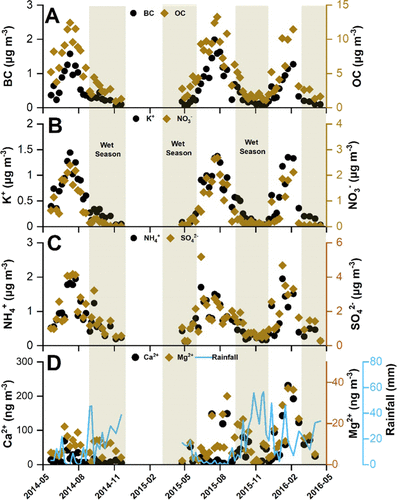
Figure 1. Temporal variations in mass concentrations of the main constituents of PM2.5 aerosols at Rwanda Climate Observatory during 2014–2016 period. The investigated PM2.5 species exhibit strong seasonality, with low aerosol concentrations observed during the wet seasons (highlighted with gray background). Data gap exists between December 2014 and April 2015 due to instrument failure after a lightning strike.
Figure 2
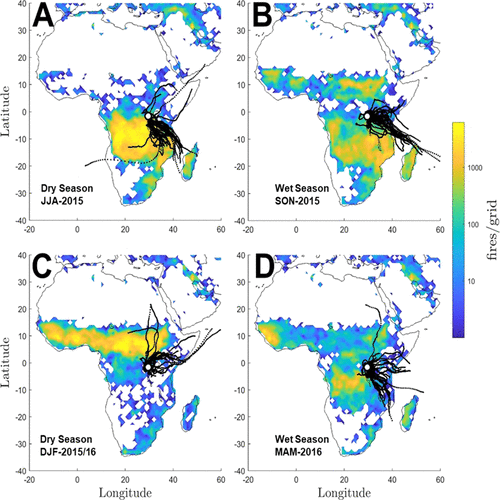
Figure 2. Satellite fire observations and air mass back trajectories at the Rwanda Climate Observatory. The blue-green-yellow color scheme depicts the number of fire detections from MODIS-FIRMS per square degree grid. Every second day, back-trajectory with arrival time at 3 AM CET is depicted as black dotted lines. (A) June–July–August (JJA), 2015. (B) September–October–November (SON), 2015. (C) December–January–February (DJF), 2015/16. (D) March–April–May (MAM), 2016.
Figure 3
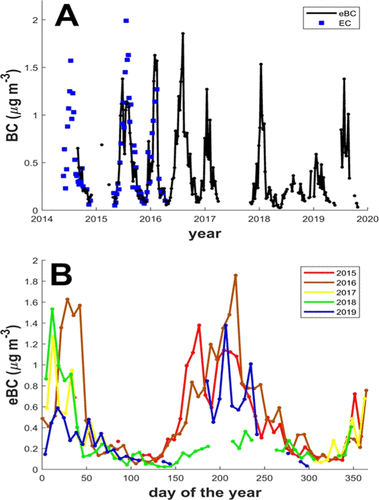
Figure 3. Multiyear (2014–2019) BC concentrations trends for Rwanda Climate Observatory. (A) Temporal variability in weekly averaged (night-time-only) equivalent BC data─retrieved from an AE33 aethalometer at 880 nm. The eBC (black plot) was compared against the Sunset Laboratory thermo-optical measurement data (blue dots; see SI notes S1). (B) Visualization of differences in daily/weekly de-trended annual variability in eBC concentrations (color scheme depicts different years). The spikes in the aethalometer data, potentially from instrumental errors or short-term pollution events were removed as explained in SI Note S1.
Figure 4

Figure 4. Dual-carbon (Δ14C and δ13C)-based source apportionment of BC at Rwanda Climate Observatory. (A) Dual-isotope signatures of BC for dry period PM2.5 aerosols. Colored circles represent the isotope signatures for BC for the study period (color represents time period), while black dots represent the isotope signatures for total carbon (TC = EC + OC) from October to November 2014 and May to September 2015. (1) (B) Relative source contributions (means and standard deviations), computed using eq 2.
References
This article references 56 other publications.
- 1Andersson, A.; Kirillova, E. N.; Decesari, S.; Dewitt, L.; Gasore, J.; Potter, K. E.; Prinn, R. G.; Rupakheti, M.; De Dieu Ndikubwimana, J.; Nkusi, J.; Safari, B. Seasonal Source Variability of Carbonaceous Aerosols at the Rwanda Climate Observatory. Atmos. Chem. Phys. 2020, 20, 4561– 4573, DOI: 10.5194/acp-20-4561-20201Seasonal source variability of carbonaceous aerosols at the rwanda climate observatoryAndersson, August; Kirillova, Elena N.; Decesari, Stefano; DeWitt, Langley; Gasore, Jimmy; Potter, Katherine E.; Prinn, Ronald G.; Rupakheti, Maheswar; de Dieu Ndikubwimana, Jean; Nkusi, Julius; Safari, BonfilsAtmospheric Chemistry and Physics (2020), 20 (8), 4561-4573CODEN: ACPTCE; ISSN:1680-7324. (Copernicus Publications)Sub-Saharan Africa (SSA) is a global hot spot for aerosol emissions, which affect the regional climate and air quality. In this paper, we use ground-based observations to address the large uncertainties in the source-resolved emission estn. of carbonaceous aerosols. Ambient fine fraction aerosol was collected on filters at the high-altitude (2590 m a.s.l.) Rwanda Climate Observatory (RCO), a SSA background site, during the dry and wet seasons in 2014 and 2015. The concns. of both the carbonaceous and inorg. ion components show a strong seasonal cycle, with highly elevated concns. during the dry season. Source marker ratios, including carbon isotopes, show that the wet and dry seasons have distinct aerosol compns. The dry season is characterized by elevated amts. of biomass burning products, which approach ∼95% for carbonaceous aerosols. An isotopic mass-balance est. shows that the amt. of the carbonaceous aerosol stemming from savanna fires may increase from 0.2μg m-3 in the wet season up to 10μg m-3 during the dry season. Based on these results, we quant. show that savanna fire is the key modulator of the seasonal aerosol compn. variability at the RCO.
- 2Andreae, M. O. Emission of Trace Gases and Aerosols from Biomass Burning─An Updated Assessment. Atmos. Chem. Phys. 2019, 19, 8523– 8546, DOI: 10.5194/acp-19-8523-20192Emission of trace gases and aerosols from biomass burning - an updated assessmentAndreae, Meinrat O.Atmospheric Chemistry and Physics (2019), 19 (13), 8523-8546CODEN: ACPTCE; ISSN:1680-7324. (Copernicus Publications)Since the publication of the compilation of biomass burning emission factors by Andreae and Merlet (2001), a large no. of studies have greatly expanded the amt. of available data on emissions from various types of biomass burning. Using essentially the same methodol. as Andreae and Merlet (2001), this paper presents an updated compilation of emission factors. The data from over 370 published studies were critically evaluated and integrated into a consistent format. Several new categories of biomass burning were added, and the no. of species for which emission data are presented was increased from 93 to 121. Where field data are still insufficient, ests. based on appropriate extrapolation techniques are proposed. For key species, the updated emission factors are compared with previously published values. Based on these emission factors and published global activity ests., I have derived ests. of pyrogenic emissions for important species released by the various types of biomass burning.
- 3Liousse, C.; Assamoi, E.; Criqui, P.; Granier, C.; Rosset, R. Explosive Growth in African Combustion Emissions from 2005 to 2030. Environ. Res. Lett. 2014, 9, 035003 DOI: 10.1088/1748-9326/9/3/0350033Explosive growth in African combustion emissions from 2005 to 2030Liousse, C.; Assamoi, E.; Criqui, P.; Granier, C.; Rosset, R.Environmental Research Letters (2014), 9 (3), 035003CODEN: ERLNAL; ISSN:1748-9326. (IOP Publishing Ltd.)Emissions of gases and particles from the combustion of fossil fuels and biofuels in Africa are expected to increase significantly in the near future due to the rapid growth of African cities and megacities. There is currently no regional emissions inventory that provides ests. of anthropogenic combustion for the African continent. This work provides a quantification of the evolution of African combustion emissions from 2005 to 2030, using a bottom-up method. This inventory predicts very large increases in black carbon, org. carbon, CO, NOx, SO2 and non-methane hydrocarbon emissions if no emission regulations are implemented. This paper discusses the effectiveness of scenarios involving certain fuels, specific to Africa in each activity sector and each region (western, eastern, northern and southern Africa), to reduce the emissions. The estd. trends in African emissions are consistent with emissions provided by global inventories, but they display a larger range of values. African combustion emissions contributed significantly to global emissions in 2005. This contribution will increase more significantly by 2030: org. carbon emissions will for example make up 50% of the global emissions in 2030. Furthermore, we show that the magnitude of African anthropogenic emissions could be similar to African biomass burning emissions around 2030.
- 4Hickman, J. E.; Andela, N.; Tsigaridis, K.; Galy-Lacaux, C.; Ossohou, M.; Bauer, S. E. Reductions in NO2 Burden over North Equatorial Africa from Decline in Biomass Burning in Spite of Growing Fossil Fuel Use, 2005 to 2017. Proc. Natl. Acad. Sci. U.S.A. 2021, 118, e2002579118 DOI: 10.1073/pnas.20025791184Reductions in NO2 burden over north equatorial Africa from decline in biomass burning in spite of growing fossil fuel use, 2005 to 2017Hickman, Jonathan E.; Andela, Niels; Tsigaridis, Kostas; Galy-Lacaux, Corinne; Ossohou, Money; Bauer, Susanne E.Proceedings of the National Academy of Sciences of the United States of America (2021), 118 (7), e2002579118CODEN: PNASA6; ISSN:0027-8424. (National Academy of Sciences)Socioeconomic development in low- and middle-income countries was accompanied by increased emissions of air pollutants, such as nitrogen oxides [NOx: nitrogen dioxide (NO2) + nitric oxide (NO)], which affect human health. In sub-Saharan Africa, fossil fuel combustion has nearly doubled since 2000. At the same time, landscape biomass burning-another important NOx source-has declined in north equatorial Africa, attributed to changes in climate and anthropogenic fire management. Here, we use satellite observations of tropospheric NO2 vertical column densities (VCDs) and burned area to identify NO2 trends and drivers over Africa. Across the northern ecosystems where biomass burning occurs-home to hundreds of millions of people-mean annual tropospheric NO2 VCDs decreased by 4.5% from 2005 through 2017 during the dry season of Nov. through Feb. Redns. in burned area explained the majority of variation in NO2 VCDs, though changes in fossil fuel emissions also explained some variation. Over Africa's biomass burning regions, raising mean GDP d. (USD·km-2) above its lowest levels is assocd. with lower NO2 VCDs during the dry season, suggesting that economic development mitigates net NO2 emissions during these highly polluted months. In contrast to the traditional notion that socioeconomic development increases air pollutant concns. in low- and middle-income nations, our results suggest that countries in Africa's northern biomass-burning region are following a different pathway during the fire season, resulting in potential air quality benefits. However, these benefits may be lost with increasing fossil fuel use and are absent during the rainy season.
- 5Ramo, R.; Roteta, E.; Bistinas, I.; van Wees, D.; Bastarrika, A.; Chuvieco, E.; van der Werf, G. R. African Burned Area and Fire Carbon Emissions Are Strongly Impacted by Small Fires Undetected by Coarse Resolution Satellite Data. Proc. Natl. Acad. Sci. U.S.A. 2021, 118, 1– 7, DOI: 10.1073/pnas.2011160118There is no corresponding record for this reference.
- 6Keita, S.; Liousse, C.; Assamoi, E. M.; Doumbia, T.; N’Datchoh, E. T.; Gnamien, S.; Elguindi, N.; Granier, C.; Yoboué, V. African Anthropogenic Emissions Inventory for Gases and Particles from 1990 to 2015. Earth Syst. Sci. Data 2021, 13, 3691– 3705, DOI: 10.5194/essd-13-3691-2021There is no corresponding record for this reference.
- 7Marais, E. A.; Wiedinmyer, C. Air Quality Impact of Diffuse and Inefficient Combustion Emissions in Africa (DICE-Africa). Environ. Sci. Technol. 2016, 50, 10739– 10745, DOI: 10.1021/acs.est.6b026027Air Quality Impact of Diffuse and Inefficient Combustion Emissions in Africa (DICE-Africa)Marais, Eloise A.; Wiedinmyer, ChristineEnvironmental Science & Technology (2016), 50 (19), 10739-10745CODEN: ESTHAG; ISSN:0013-936X. (American Chemical Society)Anthropogenic pollution in Africa is dominated by diffuse and inefficient combustion sources, as electricity access is low and motorcycles and outdated cars proliferate. These sources are missing, out-of-date, or misrepresented in state-of-the-science emission inventories. We address these deficiencies with a detailed inventory of Diffuse and Inefficient Combustion Emissions in Africa (DICE-Africa) for 2006 and 2013. Fuelwood for energy is the largest emission source in DICE-Africa, but grows from 2006 to 2013 at a slower rate than charcoal prodn. and use, and gasoline and diesel for motorcycles, cars, and generators. Only kerosene use and gas flaring decline. Increase in emissions from 2006 to 2013 in this work is consistent with trends in satellite observations of formaldehyde and NO2, but much slower than the explosive growth projected with a fuel consumption model. Seasonal biomass burning is considered a large pollution source in Africa, but we est. comparable emissions of black carbon and higher emissions of nonmethane volatile org. compds. from DICE-Africa. Nitrogen oxide (NOx ≃ NO + NO2) emissions are much lower than from biomass burning. We use GEOS-Chem to est. that the largest contribution of DICE-Africa to annual mean surface fine particulate matter (PM2.5) is >5 μg m-3 in populous Nigeria.
- 8Andela, N.; Van Der Werf, G. R. Recent Trends in African Fires Driven by Cropland Expansion and El Niño to La Niña Transition. Nat. Clim. Change 2014, 4, 791– 795, DOI: 10.1038/nclimate2313There is no corresponding record for this reference.
- 9Hodnebrog, Ø.; Myhre, G.; Forster, P. M.; Sillmann, J.; Samset, B. H. Local Biomass Burning Is a Dominant Cause of the Observed Precipitation Reduction in Southern Africa. Nat. Commun. 2016, 7, 2119 DOI: 10.1038/ncomms11236There is no corresponding record for this reference.
- 10Agbo, K. E.; Walgraeve, C.; Eze, J. I.; Ugwoke, P. E.; Ukoha, P. O.; Van Langenhove, H. A Review on Ambient and Indoor Air Pollution Status in Africa. Atmos. Pollut. Res. 2021, 12, 243– 260, DOI: 10.1016/j.apr.2020.11.00610A review on ambient and indoor air pollution status in AfricaAgbo, Kevin Emeka; Walgraeve, Christophe; Eze, John Ikechukwu; Ugwoke, Paulinus Ekene; Ukoha, Pius Oziri; Van Langenhove, HermanAtmospheric Pollution Research (2021), 12 (2), 243-260CODEN: APRTCD; ISSN:1309-1042. (Elsevier B.V.)A review. In spite of the global outcry for urgent action against air pollution, most African countries lack functional air quality monitoring stations and data there from; making air quality management difficult. Therefore, stand-alone studies are reviewed to provide information on air pollutant levels, sources, spatial and seasonal variation across the continent. Air quality studies are limited in Africa. Available data show that vehicular traffics, industries, wildfire and biomass burning are significant sources of PM, CO, NO2, SO2 and VOCs in the continent. Sahara Desert is an important source of PM in the region esp. during harmattan periods. The air levels of pollutants exhibit seasonality and is inversely impacted by increased pptn. rate and wind speed. Exceedances of WHO AQG are common in both season. The reported annual and 24-h mean concns. of ambient PM are resp. lower than the relevant WHO AQG in only 10 and 13% for PM2.5, and 0% and 12% for PM10. Only a third of the towns have ambient CO concns. below the 24-h WHO (7 mg/m3) AQG. Benzene levels at nearly all (96%) sites are a factor 2-920 times larger than 0.17μg/m3 assocd. with an excess lifetime risk 1/1000 000. The mean concns. of indoor PM, CO, NO2 and SO2 exceed the relevant WHO AQG and much more in firewood-fueled poorly-ventilated kitchens in the rural areas, implying a potentially high exposure to women and children in Africa.
- 11Burnett, R.; Chen, H.; Szyszkowicz, M.; Fann, N.; Hubbell, B.; Pope, C. A.; Apte, J. S.; Brauer, M.; Cohen, A.; Weichenthal, S.; Coggins, J.; Di, Q.; Brunekreef, B.; Frostad, J.; Lim, S. S.; Kan, H.; Walker, K. D.; Thurston, G. D.; Hayes, R. B.; Lim, C. C.; Turner, M. C.; Jerrett, M.; Krewski, D.; Gapstur, S. M.; Diver, W. R.; Ostro, B.; Goldberg, D.; Crouse, D. L.; Martin, R. V.; Peters, P.; Pinault, L.; Tjepkema, M.; Van Donkelaar, A.; Villeneuve, P. J.; Miller, A. B.; Yin, P.; Zhou, M.; Wang, L.; Janssen, N. A. H.; Marra, M.; Atkinson, R. W.; Tsang, H.; Thach, T. Q.; Cannon, J. B.; Allen, R. T.; Hart, J. E.; Laden, F.; Cesaroni, G.; Forastiere, F.; Weinmayr, G.; Jaensch, A.; Nagel, G.; Concin, H.; Spadaro, J. V. Global Estimates of Mortality Associated with Longterm Exposure to Outdoor Fine Particulate Matter. Proc. Natl. Acad. Sci. U.S.A. 2018, 115, 9592– 9597, DOI: 10.1073/pnas.180322211511Global estimates of mortality associated with long-term exposure to outdoor fine particulate matterBurnett, Richard; Chen, Hong; Szyszkowicz, MieczysAaw; Fann, Neal; Hubbell, Bryan; Arden Pope, C.; Apte, Joshua S.; Brauer, Michael; Cohen, Aaron; Weichenthal, Scott; Coggins, Jay; Di, Qian; Brunekreef, Bert; Frostad, Joseph; Lim, Stephen S.; Kan, Haidong; Walker, Katherine D.; Thurston, George D.; Hayes, Richard B.; Lim, Chris C.; Turner, Michelle C.; Jerrett, Michael; Krewski, Daniel; Gapstur, Susan M.; Diver, W. Ryan; Ostro, Bart; Goldberg, Debbie; Crouse, Daniel L.; Martin, Randall V.; Peters, Paul; Pinault, Lauren; Tjepkema, Michael; van Donkelaar, Aaron; Villeneuve, Paul J.; Miller, Anthony B.; Yin, Peng; Zhou, Maigeng; Wang, Lijun; Janssen, Nicole A. H.; Marra, Marten; Atkinson, Richard W.; Tsang, Hilda; Thach, Thuan Quoc; Cannon, John B.; Allen, Ryan T.; Hart, Jaime E.; Laden, Francine; Cesaroni, Giulia; Forastiere, Francesco; Weinmayr, Gudrun; Jaensch, Andrea; Nagel, Gabriele; Concin, Hans; Spadaro, Joseph V.Proceedings of the National Academy of Sciences of the United States of America (2018), 115 (38), 9592-9597CODEN: PNASA6; ISSN:0027-8424. (National Academy of Sciences)Exposure to ambient fine particulate matter (PM2.5) is a major global health concern. Quant. ests. of attributable mortality are based on disease-specific hazard ratio models that incorporate risk information from multiple PM2.5 sources (outdoor and indoor air pollution from use of solid fuels and secondhand and active smoking), requiring assumptions about equiv. exposure and toxicity. We relax these contentious assumptions by constructing a PM2.5-mortality hazard ratio function based only on cohort studies of outdoor air pollution that covers the global exposure range. We modeled the shape of the assocn. between PM2.5 and nonaccidental mortality using data from 41 cohorts from 16 countries a$$Hat$$ the Global Exposure Mortality Model (GEMM). We then constructed GEMMs for five specific causes of death examd. by the global burden of disease (GBD). The GEMM predicts 8.9 million [95% confidence interval (CI): 7.5a$$Hat$$ 10.3] deaths in 2015, a figure 30% larger than that predicted by the sum of deaths among the five specific causes (6.9; 95% CI: 4.9a$$Hat$$ 8.5) and 120% larger than the risk function used in the GBD (4.0; 95% CI: 3.3a$$Hat$$ 4.8). Differences between the GEMM and GBD risk functions are larger for a 20% redn. in concns., with the GEMM predicting 220% higher excess deaths. These results suggest that PM2.5 exposure may be related to addnl. causes of death than the five considered by the GBD and that incorporation of risk information from other, nonoutdoor, particle sources leads to underestimation of disease burden, esp. at higher concns.
- 12Kulmala, M. Build a Global Earth Observatory. Nature 2018, 553, 21– 23, DOI: 10.1038/d41586-017-08967-y12Build a global Earth observatoryKulmala, MarkkuNature (London, United Kingdom) (2018), 553 (7686), 21-23CODEN: NATUAS; ISSN:0028-0836. (Nature Research)Markku Kulmala calls for continuous, comprehensive monitoring of interactions between the planet's surface and atm.
- 13Bond, T. C.; Doherty, S. J.; Fahey, D. W.; Forster, P. M.; Berntsen, T.; Deangelo, B. J.; Flanner, M. G.; Ghan, S.; Kärcher, B.; Koch, D.; Kinne, S.; Kondo, Y.; Quinn, P. K.; Sarofim, M. C.; Schultz, M. G.; Schulz, M.; Venkataraman, C.; Zhang, H.; Zhang, S.; Bellouin, N.; Guttikunda, S. K.; Hopke, P. K.; Jacobson, M. Z.; Kaiser, J. W.; Klimont, Z.; Lohmann, U.; Schwarz, J. P.; Shindell, D.; Storelvmo, T.; Warren, S. G.; Zender, C. S. Bounding the Role of Black Carbon in the Climate System: A Scientific Assessment. J. Geophys. Res.: Atmos. 2013, 118, 5380– 5552, DOI: 10.1002/jgrd.5017113Bounding the role of black carbon in the climate system: A scientific assessmentBond, T. C.; Doherty, S. J.; Fahey, D. W.; Forster, P. M.; Berntsen, T.; DeAngelo, B. J.; Flanner, M. G.; Ghan, S.; Kaercher, B.; Koch, D.; Kinne, S.; Kondo, Y.; Quinn, P. K.; Sarofim, M. C.; Schultz, M. G.; Schulz, M.; Venkataraman, C.; Zhang, H.; Zhang, S.; Bellouin, N.; Guttikunda, S. K.; Hopke, P. K.; Jacobson, M. Z.; Kaiser, J. W.; Klimont, Z.; Lohmann, U.; Schwarz, J. P.; Shindell, D.; Storelvmo, T.; Warren, S. G.; Zender, C. S.Journal of Geophysical Research: Atmospheres (2013), 118 (11), 5380-5552CODEN: JGRDE3; ISSN:2169-8996. (Wiley-Blackwell)Black carbon aerosol plays a unique and important role in Earth's climate system. Black carbon is a type of carbonaceous material with a unique combination of phys. properties. This assessment provides an evaluation of black-carbon climate forcing that is comprehensive in its inclusion of all known and relevant processes and that is quant. in providing best ests. and uncertainties of the main forcing terms: direct solar absorption; influence on liq., mixed phase, and ice clouds; and deposition on snow and ice. These effects are calcd. with climate models, but when possible, they are evaluated with both microphys. measurements and field observations. Predominant sources are combustion related, namely, fossil fuels for transportation, solid fuels for industrial and residential uses, and open burning of biomass. Total global emissions of black carbon using bottom-up inventory methods are 7500 Gg yr-1 in the year 2000 with an uncertainty range of 2000 to 29000. However, global atm. absorption attributable to black carbon is too low in many models and should be increased by a factor of almost 3. After this scaling, the best est. for the industrial-era (1750 to 2005) direct radiative forcing of atm. black carbon is +0.71 W m-2 with 90% uncertainty bounds of (+0.08, +1.27) W m-2. Total direct forcing by all black carbon sources, without subtracting the preindustrial background, is estd. as +0.88 (+0.17, +1.48) W m-2. Direct radiative forcing alone does not capture important rapid adjustment mechanisms. A framework is described and used for quantifying climate forcings, including rapid adjustments. The best est. of industrial-era climate forcing of black carbon through all forcing mechanisms, including clouds and cryosphere forcing, is +1.1 W m-2 with 90% uncertainty bounds of +0.17 to +2.1 W m-2. Thus, there is a very high probability that black carbon emissions, independent of co-emitted species, have a pos. forcing and warm the climate. We est. that black carbon, with a total climate forcing of +1.1 W m-2, is the second most important human emission in terms of its climate forcing in the present-day atm.; only carbon dioxide is estd. to have a greater forcing. Sources that emit black carbon also emit other short-lived species that may either cool or warm climate. Climate forcings from co-emitted species are estd. and used in the framework described herein. When the principal effects of short-lived co-emissions, including cooling agents such as sulfur dioxide, are included in net forcing, energy-related sources (fossil fuel and biofuel) have an industrial-era climate forcing of +0.22 (-0.50 to +1.08) W m-2 during the first year after emission. For a few of these sources, such as diesel engines and possibly residential biofuels, warming is strong enough that eliminating all short-lived emissions from these sources would reduce net climate forcing (i.e., produce cooling). When open burning emissions, which emit high levels of org. matter, are included in the total, the best est. of net industrial-era climate forcing by all short-lived species from black-carbon-rich sources becomes slightly neg. (-0.06 W m-2 with 90% uncertainty bounds of -1.45 to +1.29 W m-2). The uncertainties in net climate forcing from black-carbon-rich sources are substantial, largely due to lack of knowledge about cloud interactions with both black carbon and co-emitted org. carbon. In prioritizing potential black-carbon mitigation actions, non-science factors, such as tech. feasibility, costs, policy design, and implementation feasibility play important roles. The major sources of black carbon are presently in different stages with regard to the feasibility for near-term mitigation. This assessment, by evaluating the large no. and complexity of the assocd. phys. and radiative processes in black-carbon climate forcing, sets a baseline from which to improve future climate forcing ests.
- 14Szopa, S.; Naik, V.; Adhikary, B.; Artaxo, P.; Berntsen, T.; Collins, W. D.; Fuzzi, S.; Gallardo, L.; Kiendler, A.; Scharr, Z.; Klimont; ; Liao, H.; Unger, N.; Zanis, P. Short-Lived Climate Forces. In Climate Change 2021: The Physical Science Basis , Contribution of Working Group I to the Sixth Assessment Report of the Intergovernmental Panel on Climate Change, 2021.There is no corresponding record for this reference.
- 15Boucher, O.; Balkanski, Y.; Hodnebrog, Ø.; Myhre, C. L.; Myhre, G.; Quaas, J.; Samset, B. H.; Schutgens, N.; Stier, P.; Wang, R. Jury Is Still out on the Radiative Forcing by Black Carbon. Proc. Natl. Acad. Sci. U.S.A. 2016, 113, E5092– E5093, DOI: 10.1073/pnas.160700511315Jury is still out on the radiative forcing by black carbonBoucher, Olivier; Balkanski, Yves; Hodnebrog, Oeivind; Myhre, Cathrine Lund; Myhre, Gunnar; Quaas, Johannes; Samset, Bjoern Hallvard; Schutgens, Nick; Stier, Philip; Wang, RongProceedings of the National Academy of Sciences of the United States of America (2016), 113 (35), E5092-E5093CODEN: PNASA6; ISSN:0027-8424. (National Academy of Sciences)There is no expanded citation for this reference.
- 16Gustafsson, Ö.; Ramanathan, V. Convergence on Climate Warming by Black Carbon Aerosols. Proc. Natl. Acad. Sci. U.S.A. 2016, 113, 4243– 4245, DOI: 10.1073/pnas.160357011316Convergence on climate warming by black carbon aerosolsGustafsson, Oerjan; Ramanathan, VeerabhadranProceedings of the National Academy of Sciences of the United States of America (2016), 113 (16), 4243-4245CODEN: PNASA6; ISSN:0027-8424. (National Academy of Sciences)There is no expanded citation for this reference.
- 17Zhao, Y.; Nielsen, C. P.; Lei, Y.; McElroy, M. B.; Hao, J. Quantifying the Uncertainties of a Bottom-up Emission Inventory of Anthropogenic Atmospheric Pollutants in China. Atmos. Chem. Phys. 2011, 11, 2295– 2308, DOI: 10.5194/acp-11-2295-201117Quantifying the uncertainties of a bottom-up emission inventory of anthropogenic atmospheric pollutants in ChinaZhao, Y.; Nielsen, C. P.; Lei, Y.; McElroy, M. B.; Hao, J.Atmospheric Chemistry and Physics (2011), 11 (5), 2295-2308CODEN: ACPTCE; ISSN:1680-7316. (Copernicus Publications)The uncertainties of a national, bottom-up inventory of Chinese emissions of anthropogenic SO2, NOx, and particulate matter (PM) of different size classes and carbonaceous species are comprehensively quantified, for the first time, using Monte Carlo simulation. The inventory is structured by seven dominant sectors: coal-fired elec. power, cement, iron and steel, other industry (boiler combustion), other industry (non-combustion processes), transportation, and residential. For each parameter related to emission factors or activity-level calcns., the uncertainties, represented as probability distributions, are either statistically fitted using results of domestic field tests or, when these are lacking, estd. based on foreign or other domestic data. The uncertainties (i.e., 95% confidence intervals around the central ests.) of Chinese emissions of SO2, NOx, total PM, PM10, PM2.5, black carbon (BC), and org. carbon (OC) in 2005 are estd. to be -14%∼13%, -13%∼37%, -11%∼38%, -14%∼45%, -17%∼54%, -25%∼136%, and -40%∼121%, resp. Variations at activity levels (e.g., energy consumption or industrial prodn.) are not the main source of emission uncertainties. Due to narrow classification of source types, large sample sizes, and relatively high data quality, the coal-fired power sector is estd. to have the smallest emission uncertainties for all species except BC and OC. Due to poorer source classifications and a wider range of estd. emission factors, considerable uncertainties of NOx and PM emissions from cement prodn. and boiler combustion in other industries are found. The probability distributions of emission factors for biomass burning, the largest source of BC and OC, are fitted based on very limited domestic field measurements, and special caution should thus be taken interpreting these emission uncertainties. Although Monte Carlo simulation yields narrowed ests. of uncertainties compared to previous bottom-up emission studies, the results are not always consistent with those derived from satellite observations. The results thus represent an incremental research advance; while the anal. provides current ests. of uncertainty to researchers investigating Chinese and global atm. transport and chem., it also identifies specific needs in data collection and anal. to improve on them. Strengthened quantification of emissions of the included species and other, closely assocd. ones - notably CO2, generated largely by the same processes and thus subject to many of the same parameter uncertainties - is essential not only for science but for the design of policies to redress crit. atm. environmental hazards at local, regional, and global scales.
- 18Kirago, L.; Gatari, M. J.; Gustafsson, Ö.; Andersson, A. Black Carbon Emissions from Traffic Contribute Substantially to Air Pollution in Nairobi, Kenya. Commun. Earth Environ. 2022, 3, 1– 8, DOI: 10.1038/s43247-022-00400-1There is no corresponding record for this reference.
- 19Winiger, P.; Andersson, A.; Eckhardt, S.; Stohl, A.; Gustafsson, O. The Sources of Atmospheric Black Carbon at a European Gateway to the Arctic. Nat. Commun. 2016, 7, 12776 DOI: 10.1038/ncomms1277619The sources of atmospheric black carbon at a European gateway to the ArcticWiniger, P.; Andersson, A.; Eckhardt, S.; Stohl, A.; Gustafsson, Oe.Nature Communications (2016), 7 (), 12776CODEN: NCAOBW; ISSN:2041-1723. (Nature Publishing Group)Black carbon (BC) aerosols from incomplete combustion of biomass and fossil fuel contribute to Arctic climate warming. Models-seeking to advise mitigation policy-are challenged in reproducing observations of seasonally varying BC concns. in the Arctic air. Here we compare year-round observations of BC and its δ13C/Δ14C-diagnosed sources in Arctic Scandinavia, with tailored simulations from an atm. transport model. The model predictions for this European gateway to the Arctic are greatly improved when the emission inventory of anthropogenic sources is amended by satellite-derived ests. of BC emissions from fires. Both BC concns. (R2=0.89, P<0.05) and source contributions (R2=0.77, P<0.05) are accurately mimicked and linked to predominantly European emissions. This improved model skill allows for more accurate assessment of sources and effects of BC in the Arctic, and a more credible scientific underpinning of policy efforts aimed at efficiently reducing BC emissions reaching the European Arctic.
- 20Dasari, S.; Andersson, A.; Stohl, A.; Evangeliou, N.; Bikkina, S.; Holmstrand, H.; Budhavant, K.; Salam, A.; Gustafsson, O. Source Quantification of South Asian Black Carbon Aerosols with Isotopes and Modeling. Environ. Sci. Technol. 2020, 54, 11771– 11779, DOI: 10.1021/acs.est.0c0219320Source quantification of South Asian black carbon aerosols with isotopes and modelingDasari, Sanjeev; Andersson, August; Stohl, Andreas; Evangeliou, Nikolaos; Bikkina, Srinivas; Holmstrand, Henry; Budhavant, Krishnakant; Salam, Abdus; Gustafsson, OerjanEnvironmental Science & Technology (2020), 54 (19), 11771-11779CODEN: ESTHAG; ISSN:0013-936X. (American Chemical Society)Black carbon (BC) aerosols perturb climate and impoverish air quality/human health-affecting ~ 1.5 billion people in South Asia. However, the lack of source-diagnostic observations of BC is hindering the evaluation of uncertain bottom-up emission inventories (EIs) and thereby also models/policies. Here, we present dual-isotope-based (Δ14C/δ13C) fingerprinting of wintertime BC at two receptor sites of the continental outflow. Our results show a remarkable similarity in contributions of biomass and fossil combustion, both from the site capturing the highly populated highly polluted Indo-Gangetic Plain footprint (IGP; Δ14C-fbiomass = 50 ± 3%) and the second site in the N. Indian Ocean representing a wider South Asian footprint (52 ± 6%). Yet, both sites reflect distinct δ13C-fingerprints, indicating a distinguishable contribution of C4-biomass burning from peninsular India (PI). Tailored-model-predicted season-averaged BC concns. (700 ± 440 ng m-3) match observations (740 ± 250 ng m-3), however, unveiling a systematically increasing model-observation bias (+19% to -53%) through winter. Inclusion of BC from open burning alone does not reconcile predictions (fbiomass = 44 ± 8%) with observations. Direct source-segregated comparison reveals regional offsets in anthropogenic emission fluxes in EIs, overestimated fossil-BC in the IGP, and underestimated biomass-BC in PI, which contributes to the model-observation bias. This ground-truthing pinpoints uncertainties in BC emission sources, which benefit both climate/air-quality modeling and mitigation policies in South Asia.
- 21Andersson, A.; Deng, J.; Du, K.; Zheng, M.; Yan, C.; Sköld, M.; Gustafsson, Ö. Regionally-Varying Combustion Sources of the January 2013 Severe Haze Events over Eastern China. Environ. Sci. Technol. 2015, 49, 2038– 2043, DOI: 10.1021/es503855e21Regionally-Varying Combustion Sources of the January 2013 Severe Haze Events over Eastern ChinaAndersson, August; Deng, Junjun; Du, Ke; Zheng, Mei; Yan, Caiqing; Skoeld, Martin; Gustafsson, OerjanEnvironmental Science & Technology (2015), 49 (4), 2038-2043CODEN: ESTHAG; ISSN:0013-936X. (American Chemical Society)Thick haze plagued northeastern China in Jan. 2013, strongly affecting both regional climate and human respiratory health. Here, we present dual carbon isotope constrained (Δ14C and δ13C) source apportionment for combustion-derived black carbon aerosol (BC) for three key hotspot regions (megacities): North China Plain (NCP, Beijing), the Yangtze River Delta (YRD, Shanghai), and the Pearl River Delta (PRD, Guangzhou) for Jan. 2013. BC, here quantified as elemental carbon (EC), is one of the most health-detrimental components of PM2.5 and a strong climate warming agent. The results show that these severe haze events were equally affected (∼30%) by biomass combustion in all three regions, whereas the sources of the dominant fossil fuel component was dramatically different between north and south. In the NCP region, coal combustion accounted for 66% (46-74%, 95% C.I.) of the EC, whereas, in the YRD and PRD regions, liq. fossil fuel combustion (e.g., traffic) stood for 46% (18-66%) and 58% (38-68%), resp. Taken together, these findings suggest the need for a regionally-specific description of BC sources in climate models and regionally-tailored mitigation to combat severe air pollution events in East Asia.
- 22Winiger, P.; Andersson, A.; Eckhardt, S.; Stohl, A.; Semiletov, I. P.; Dudarev, O. V.; Charkin, A.; Shakhova, N.; Klimont, Z.; Heyes, C.; Gustafsson, Ö. Siberian Arctic Black Carbon Sources Constrained by Model and Observation. Proc. Natl. Acad. Sci. U.S.A. 2017, 114, E1054– E1061, DOI: 10.1073/pnas.161340111422Siberian Arctic black carbon sources constrained by model and observationWiniger, Patrik; Andersson, August; Eckhardt, Sabine; Stohl, Andreas; Semiletov, Igor P.; Dudarev, Oleg V.; Charkin, Alexander; Shakhova, Natalia; Klimont, Zbigniew; Heyes, Chris; Gustafsson, OerjanProceedings of the National Academy of Sciences of the United States of America (2017), 114 (7), E1054-E1061CODEN: PNASA6; ISSN:0027-8424. (National Academy of Sciences)Black carbon (BC) in haze and deposited on snow and ice can strongly affect the radiative balance in the Arctic. There is a geog. bias in Arctic BC studies toward the Atlantic sector, with lack of observational constraints for the extensive Russian Siberian Arctic, spanning nearly half the circum-Arctic. Two years of observations at Tiksi (East Siberian Arctic) established a strong seasonality in BC concns. (8-302 ng/m3) and dual isotope-constrained sources (19-73% contribution from biomass burning). Comparisons between observations and a dispersion model, coupled with anthropogenic emissions and fire emissions inventories, give mixed results. In the European Arctic, this model simulated BC concns. and source contributions well; however, it was less successful in reproducing BC concns. and sources for the Russian Arctic. Using a Bayesian approach, the authors showed that in contrast to earlier studies, contributions from gas flaring (6%), power generating facilities (9%), and open fires (12%) were relatively small; the major sources were domestic (35%) and transportation (38%). Observation-based evaluation of reported emissions identified errors in the spatial allocation of BC sources in the inventory and highlighted the importance of improving emission distribution and source attribution, to develop reliable mitigation strategies to efficiently reduce BC impacts on the Russian Arctic, one of the fastest-warming regions on Earth.
- 23Prinn, R. G.; Weiss, R. F.; Arduini, J.; Arnold, T.; Langley Dewitt, H.; Fraser, P. J.; Ganesan, A. L.; Gasore, J.; Harth, C. M.; Hermansen, O.; Kim, J.; Krummel, P. B.; Li, S.; Loh, Z. M.; Lunder, C. R.; Maione, M.; Manning, A. J.; Miller, B. R.; Mitrevski, B.; Mühle, J.; O’Doherty, S.; Park, S.; Reimann, S.; Rigby, M.; Saito, T.; Salameh, P. K.; Schmidt, R.; Simmonds, P. G.; Paul Steele, L.; Vollmer, M. K.; Wang, R. H.; Yao, B.; Yokouchi, Y.; Young, D.; Zhou, L. History of Chemically and Radiatively Important Atmospheric Gases from the Advanced Global Atmospheric Gases Experiment (AGAGE). Earth Syst. Sci. Data 2018, 10, 985– 1018, DOI: 10.5194/essd-10-985-2018There is no corresponding record for this reference.
- 24DeWitt, H. L.; Gasore, J.; Rupakheti, M.; Potter, K. E.; Prinn, R. G.; De Dieu Ndikubwimana, J.; Nkusi, J.; Safari, B. Seasonal and Diurnal Variability in O3, Black Carbon, and CO Measured at the Rwanda Climate Observatory. Atmos. Chem. Phys. 2019, 19, 2063– 2078, DOI: 10.5194/acp-19-2063-201924Seasonal and diurnal variability in O3, black carbon, and CO measured at the Rwanda Climate ObservatoryDeWitt, H. Langley; Gasore, Jimmy; Rupakheti, Maheswar; Potter, Katherine E.; Prinn, Ronald G.; de Dieu Ndikubwimana, Jean; Nkusi, Julius; Safari, BonfilsAtmospheric Chemistry and Physics (2019), 19 (3), 2063-2078CODEN: ACPTCE; ISSN:1680-7324. (Copernicus Publications)Air pollution is understudied in sub-Saharan Africa, resulting in a gap in the scientific understanding of emissions, atm. processes, and impacts of air pollutants in this region. The Rwanda Climate Observatory, a joint partnership between MIT and the government of Rwanda, has been measuring ambient concns. of key long-lived greenhouse gases and the short-lived climateforcing pollutants CO2, CO, CH4, black carbon (BC), and O3 with state-of-the-art instruments on the summit of Mt. Mugogo (1.586° S, 29.566° E; 2590m above sea level) since May 2015. Rwanda is a small, mountainous, and densely populated country in equatorial East Africa, currently undergoing rapid development but still at less than 20% urbanization. Black carbon concns. during Rwanda's two dry seasons (Dec.-Jan.-Feb., DJF, and June-July-August, JJA), which coincide with the two regional biomass burning seasons, are higher at Mt. Mugogo than in major European cities with daily values (24 h) during the dry season of around 5 μgm-3 (daily av. concns. ranging from less than 0.1 to over 17 μgm-3 for the entire measurement period). BC baseline concns. during biomass burning seasons are loosely correlated with fire radiative power data for the region acquired with a MODIS satellite instrument. The position and meteorol. of Rwanda is such that the emissions transported from both the northern and southern African biomass burning seasons affect BC, CO, and O3 concns. in Rwanda. Spectral aerosol absorption measured with a dual-spot Aethalometer varies seasonally due to changes in types of fuel burned and the direction of pollution transport to the site. Ozone concns. peaked during Rwanda's dry seasons (daily measured max. of 70 ppbv). The understanding and quantification of the percent contributions of regional and local (beyond large-scale biomass) emissions is essential to guide policy in the region. During the rainy seasons, local emitting activities (e.g., cooking, transportation, trash burning) remain steady, regional biomass burning is low, and transport distances are shorter as rainout of pollution occurs regularly. Thus, local pollution at Mugogo can be estd. during this time period and was found to account for up to 35% of annual av. BC measured. Our measurements indicate that air pollution is a current and growing problem in equatorial East Africa.
- 25Birch, M. E.; Cary, R. A. Elemental Carbon-Based Method for Monitoring Occupational Exposures to Particulate Diesel Exhaust. Aerosol Sci. Technol. 1996, 25, 221– 241, DOI: 10.1080/0278682960896539325Elemental carbon-based method for monitoring occupational exposure to particulate diesel exhaustBirch, M. E.; Cary, R. A.Aerosol Science and Technology (1996), 25 (3), 221-241CODEN: ASTYDQ; ISSN:0278-6826. (Elsevier)Results of investigation of a thermal-optical technique for anal. of the carbonaceous fraction of particulate diesel exhaust are reported. With this technique, speciation of org. and elemental C is accomplished through temp. and atm. control, and by an optical feature that corrects for pyrolytically generated C (char) which is formed during the anal. of some materials. The thermal-optical method was selected because the instrument has desirable design features not present in other C analyzers. Although various C types are detd., elemental C is the superior marker of diesel particulate matter because elemental C constitutes a large fraction of the particulate mass, it can be quantified at low levels, and its only significant source in most workplaces is the diesel engine. Exposure-related issues and results of investigation of various sampling methods for particulate diesel exhaust are discussed.
- 26Khan, B.; Hays, M. D.; Geron, C.; Jetter, J. Differences in the OC/EC Ratios That Characterize Ambient and Source Aerosols Due to Thermal-Optical Analysis. Aerosol Sci. Technol. 2012, 46, 127– 137, DOI: 10.1080/02786826.2011.60919426Differences in the OC/EC Ratios that Characterize Ambient and Source Aerosols due to Thermal-Optical AnalysisKhan, Bernine; Hays, Michael D.; Geron, Chris; Jetter, JamesAerosol Science and Technology (2012), 46 (2), 127-137CODEN: ASTYDQ; ISSN:0278-6826. (Taylor & Francis, Inc.)Different thermal-optical methods used to measure OC/EC and EC/TC ratios in atm. aerosols often produce significantly different results due to variations within the temp. programming and optical techniques of each method. To quantify the thermal and optical effects on these ratios, various source (residential cookstoves and diesel exhaust) and atm. (rural and urban) aerosols were analyzed using 3 thermal protocols: (1) two modified versions of the Birch and Cary (1996, Elemental Carbon-Based Method for Monitoring Occupational Exposures to Particulate Diesel Exhaust. Aerosol Sci. Technol., 25:221-241) National Institute of Occupational Safety and Health (NIOSH 5040) protocol-designated in this paper as NIOSH and NIST-EPA protocols, and (2) the IMPROVE (the Interagency Monitoring of Protected Visual Environments) protocol outlined by Chow et al. 1993 (The DRI Thermal/Optical Reflectance Carbon Anal. System: Description, Evaluation, and Applications in U.S. Air Quality Studies. Atmos. Environ., 27:1185-1201)-designated in this paper as IMPROVE protocol. The use of a dual-optical instrument permitted simultaneous monitoring of the transmission (TOT [thermal-optical transmission]) and reflectance (TOR [thermal-optical reflectance]) for each protocol. Results show that the aerosols contg. components susceptible to charring (such as water-sol. org. compds. typical of cookstove and rural aerosols) had higher OC/EC variability among the methods when compared with diesel-impacted aerosols (diesel and urban), which showed little to no "instrumentally calcd." pyrolyzed carbon (PyC). Thermal effects on the OC/EC ratios among the 3 TOT methods were significantly lower for diesel-impacted aerosols. Similar OC/EC findings were obsd. for the 3 TOR methods. Optical effects (TOT/TOR ratio) for the OC/EC ratio ranged from 1.37-1.71 (residential cookstoves), 1.63-2.23 (rural), 1.05-1.24 (diesel exhaust), and 0.80-1.12 (urban) for the 3 methods, with IMPROVE (TOT and TOR) always significantly lower when compared with NIST-EPA (TOT and TOR) and NIOSH (TOT and TOR) for all sample types. Thermal and optical effects on the EC/TC ratios were similar to those obsd. for the OC/EC ratios. Due to their distinct aerosol characteristics, different sample types behave differently under various thermal and optical conditions. Hence, use of a single TOA method to define OC/EC ratios for all aerosol types may not be feasible.
- 27Chen, B.; Andersson, A.; Lee, M.; Kirillova, E. N.; Xiao, Q.; Kruså, M.; Shi, M.; Hu, K.; Lu, Z.; Streets, D. G.; Du, K.; Gustafsson, Ö. Source Forensics of Black Carbon Aerosols from China. Environ. Sci. Technol. 2013, 47, 9102– 9108, DOI: 10.1021/es401599r27Source Forensics of Black Carbon Aerosols from ChinaChen, Bing; Andersson, August; Lee, Meehye; Kirillova, Elena N.; Xiao, Qianfen; Krusa, Martin; Shi, Meinan; Hu, Ke; Lu, Zifeng; Streets, David G.; Du, Ke; Gustafsson, OrjanEnvironmental Science & Technology (2013), 47 (16), 9102-9108CODEN: ESTHAG; ISSN:0013-936X. (American Chemical Society)Limited understanding of black carbon (BC) aerosol emissions from incomplete combustion causes a poorly constrained anthropogenic climate warming which globally may be second only to CO2 and regionally, e.g., over East Asia, the dominant driver of climate change. The relative atm. contribution of BC from fossil fuel vs. biomass combustion is important to constrain, since fossil BC is a stronger climate forcer. Source apportionment is the underpinning for targeted mitigation action; however, technol.-based bottom-up emission inventories are inconclusive, largely due to uncertain BC emission factors from small scale/household combustion and open burning. This work used top-down radiocarbon measurements of atm. BC from 5 sites (3 city, 2 regional sites) to det. that fossil fuel combustion produces 80 ± 6% of BC emitted from China. This source-diagnostic radiocarbon signal in ambient aerosol over East Asia established a much larger role for fossil fuel combustion than suggested by all 15 BC emission inventory models, including one with monthly resoln. Results suggested current climate modeling should refine BC emission strength and consider stronger radiative absorption assocd. with fossil fuel-derived BC. To mitigate near-term climate effects and improve air quality in East Asia, activities such as residential coal combustion and city traffic should be targeted.
- 28Salehpour, M.; Håkansson, K.; Possnert, G. Accelerator Mass Spectrometry of Ultra-Small Samples with Applications in the Biosciences. Nucl. Instrum. Methods Phys. Res., Sect. B 2013, 294, 97– 103, DOI: 10.1016/j.nimb.2012.08.05428Accelerator mass spectrometry of ultra-small samples with applications in the biosciencesSalehpour, Mehran; Hakansson, Karl; Possnert, GoeranNuclear Instruments & Methods in Physics Research, Section B: Beam Interactions with Materials and Atoms (2013), 294 (), 97-103CODEN: NIMBEU; ISSN:0168-583X. (Elsevier B.V.)An overview is presented covering the biol. accelerator mass spectrometry activities at Uppsala University. The research utilizes the Uppsala University Tandem lab. facilities, including a 5 MV Pelletron tandem accelerator and two stable isotope ratio mass spectrometers. In addn., a dedicated sample prepn. lab. for biol. samples with natural activity is in use, as well as another lab. specifically for 14C-labeled samples. A variety of ongoing projects are described and presented. Examples are: (1) Ultra-small sample AMS. We routinely analyze samples with masses in the 5-10 μg C range. Data is presented regarding the sample prepn. method, (2) bomb peak biol. dating of ultra-small samples. A long term project is presented where purified and cell-specific DNA from various part of the human body including the heart and the brain are analyzed with the aim of extg. regeneration rate of the various human cells, (3) biol. dating of various human biopsies, including atherosclerosis related plaques is presented. The av. built up time of the surgically removed human carotid plaques have been measured and correlated to various data including the level of insulin in the human blood, and (4) In addn. to std. microdosing type measurements using small pharmaceutical drugs, pre-clin. pharmacokinetic data from a macromol. drug candidate are discussed.
- 29Salehpour, M.; Håkansson, K.; Possnert, G.; Wacker, L.; Synal, H. A. Performance Report for the Low Energy Compact Radiocarbon Accelerator Mass Spectrometer at Uppsala University. Nucl. Instrum. Methods Phys. Res., Sect. B 2016, 371, 360– 364, DOI: 10.1016/j.nimb.2015.10.03429Performance report for the low energy compact radiocarbon accelerator mass spectrometer at Uppsala UniversitySalehpour, M.; Haakansson, K.; Possnert, G.; Wacker, L.; Synal, H.-A.Nuclear Instruments & Methods in Physics Research, Section B: Beam Interactions with Materials and Atoms (2016), 371 (), 360-364CODEN: NIMBEU; ISSN:0168-583X. (Elsevier B.V.)A range of ion beam anal. activities are ongoing at Uppsala University, including Accelerator Mass Spectrometry (AMS). Various isotopes are used for AMS but the isotope with the widest variety of applications is radiocarbon. Up until recently, only the 5 MV Pelletron tandem accelerator had been used at our site for radiocarbon AMS, ordinarily using 12 MeV 14,13,12C3+ ions. Recently a new radiocarbon AMS system, the Green-MICADAS, developed at the ion physics group at ETH Zurich, was installed. The system has a no. of outstanding features which will be described. The system operates at a terminal voltage of 175 kV and uses helium stripper gas, extg. singly charged carbon ions. The low- and high energy mass spectrometers in the system are stigmatic dipole permanent magnets (0.42 and 0.97 T) requiring no elec. power nor cooling water. The system measures both the 14C/12C and the 13C/12C ratios online. Performance of the system is presented for both std. mg samples as well as μg-sized samples.
- 30Winiger, P.; Andersson, A.; Yttri, K. E.; Tunved, P.; Gustafsson, Ö. Isotope-Based Source Apportionment of EC Aerosol Particles during Winter High-Pollution Events at the Zeppelin Observatory, Svalbard. Environ. Sci. Technol. 2015, 49, 11959– 11966, DOI: 10.1021/acs.est.5b0264430Isotope-Based Source Apportionment of EC Aerosol Particles during Winter High-Pollution Events at the Zeppelin Observatory, SvalbardWiniger, Patrik; Andersson, August; Yttri, Karl E.; Tunved, Peter; Gustafsson, OerjanEnvironmental Science & Technology (2015), 49 (19), 11959-11966CODEN: ESTHAG; ISSN:0013-936X. (American Chemical Society)Black carbon (BC) aerosol particles contribute to climate warming of the Arctic, yet their sources and source-related effects are currently poorly constrained. Bottom-up emission inventory (EI) approaches are challenged for BC in general and the Arctic in particular. For example, ests. from 3 different EI models on the fractional contribution to BC from biomass burning (north of 60° N) vary from 11 to 68, each acknowledging large uncertainties. This work presents the first dual-C isotope-based (Δ14C, δ13C) source apportionment of elemental C (EC), the mass-based correspondent to optically defined BC, in the Arctic atm. It targeted 14 high-load/high-pollution events from Jan. to March 2009 at the Zeppelin Observatory (79° N; Svalbard, Norway), with these representing 1/3 of the total sampling period responsible for 3/4 of the total EC load. A top-down source-diagnostic 14C fingerprint constrained that 52 ± 15% (n = 12) of EC stemmed from biomass burning. Including 2 samples with 95 and 98% biomass contribution yielded 57 ± 21% of EC from biomass burning. Significant variability in the stable C isotope signature indicated temporally shifting emissions between different fossil sources, likely including liq. fossil and gas flaring. Improved source constraints of Arctic BC aids in better understanding of effects and guides policy actions to mitigate emissions.
- 31Graven, H. D. Impact of Fossil Fuel Emissions on Atmospheric Radiocarbon and Various Applications of Radiocarbon over This Century. Proc. Natl. Acad. Sci. U.S.A. 2015, 112, 9542– 9545, DOI: 10.1073/pnas.150446711231Impact of fossil fuel emissions on atmospheric radiocarbon and various applications of radiocarbon over this centuryGraven, Heather D.Proceedings of the National Academy of Sciences of the United States of America (2015), 112 (31), 9542-9545CODEN: PNASA6; ISSN:0027-8424. (National Academy of Sciences)Radiocarbon analyses are commonly used in a broad range of fields, including earth science, archaeol., forgery detection, isotope forensics, and physiol. Many applications are sensitive to the radiocarbon (14C) content of atm. CO2, which has varied since 1890 as a result of nuclear weapons testing, fossil fuel emissions, and CO2 cycling between atm., oceanic, and terrestrial carbon reservoirs. Over this century, the ratio 14C/C in atm. CO2 (Δ14CO2) will be detd. by the amt. of fossil fuel combustion, which decreases Δ14CO2 because fossil fuels have lost all 14C from radioactive decay. Simulations of Δ14CO2 using the emission scenarios from the Intergovernmental Panel on Climate Change Fifth Assessment Report, the Representative Concn. Pathways, indicate that ambitious emission redns. could sustain Δ14CO2 near the preindustrial level of 0‰ through 2100, whereas "business-as-usual" emissions will reduce Δ14CO2 to -250‰, equiv. to the depletion expected from over 2,000 y of radioactive decay. Given current emissions trends, fossil fuel emission-driven artificial "aging" of the atm. is likely to occur much faster and with a larger magnitude than previously expected. This finding has strong and as yet unrecognized implications for many applications of radiocarbon in various fields, and it implies that radiocarbon dating may no longer provide definitive ages for samples up to 2,000 y old.
- 32Bikkina, S.; Andersson, A.; Kirillova, E. N.; Holmstrand, H.; Tiwari, S.; Srivastava, A. K.; Bisht, D. S.; Gustafsson, Ö. Air Quality in Megacity Delhi Affected by Countryside Biomass Burning. Nat. Sustain. 2019, 2, 200– 205, DOI: 10.1038/s41893-019-0219-0There is no corresponding record for this reference.
- 33Winiger, P.; Barrett, T. E.; Sheesley, R. J.; Huang, L.; Sharma, S.; Barrie, L. A.; Yttri, K. E.; Evangeliou, N.; Eckhardt, S.; Stohl, A.; Klimont, Z.; Heyes, C.; Semiletov, I. P.; Dudarev, O. V.; Charkin, A.; Shakhova, N.; Holmstrand, H.; Andersson, A.; Gustafsson Source Apportionment of Circum-Arctic Atmospheric Black Carbon from Isotopes and Modeling. Sci. Adv. 2019, 5, 85 DOI: 10.1126/sciadv.aau8052There is no corresponding record for this reference.
- 34Petzold, A.; Ogren, J. A.; Fiebig, M.; Laj, P.; Li, S. M.; Baltensperger, U.; Holzer-Popp, T.; Kinne, S.; Pappalardo, G.; Sugimoto, N.; Wehrli, C.; Wiedensohler, A.; Zhang, X. Y. Recommendations for Reporting Black Carbon Measurements. Atmos. Chem. Phys. 2013, 13, 8365– 8379, DOI: 10.5194/acp-13-8365-201334Recommendations for reporting "black carbon" measurementsPetzold, A.; Ogren, J. A.; Fiebig, M.; Laj, P.; Li, S.-M.; Baltensperger, U.; Holzer-Popp, T.; Kinne, S.; Pappalardo, G.; Sugimoto, N.; Wehrli, C.; Wiedensohler, A.; Zhang, X.-Y.Atmospheric Chemistry and Physics (2013), 13 (16), 8365-8379, 15 pp.CODEN: ACPTCE; ISSN:1680-7324. (Copernicus Publications)Although black carbon (BC) is one of the key atm. particulate components driving climate change and air quality, there is no agreement on the terminol. that considers all aspects of specific properties, definitions, measurement methods, and related uncertainties. As a result, there is much ambiguity in the scientific literature of measurements and numerical models that refer to BC with different names and based on different properties of the particles, with no clear definition of the terms. The authors present here a recommended terminol. to clarify the terms used for BC in atm. research, with the goal of establishing unambiguous links between terms, targeted material properties and assocd. measurement techniques.
- 35Laing, J. R.; Jaffe, D. A.; Sedlacek, A. J. Comparison of Filter-Based Absorption Measurements of Biomass Burning Aerosol and Background Aerosol at the Mt. Bachelor Observatory. Aerosol Air Qual. Res. 2020, 20, 663– 678, DOI: 10.4209/aaqr.2019.06.029835Comparison of filter-based absorption measurements of biomass burning aerosol and background aerosol at the Mt. Bachelor ObservatoryLaing, James R.; Jaffe, Daniel A.; Sedlacek, Arthur III J.Aerosol and Air Quality Research (2020), 20 (4), 663-678CODEN: AAQRAV; ISSN:2071-1409. (Taiwan Association for Aerosol Research)In this study we evaluate the recently upgraded aethalometer (AE33) and the newly released tricolor absorption photometer (TAP) with respect to their response to wildfire aerosol plumes during their deployment at the Mount Bachelor Observatory (MBO; 2763 m a.s.l.) in central Oregon, USA, during the summer of 2016. While both instruments use similar methodol. (i.e., light extinction through an aerosol-laden filter), each has a unique set of correction schemes to address artifacts originating from filter loading, scattering from captured aerosol particles, and multiple scattering effects of the filter fibers. We also utilize a Single Particle Soot Photometer (SP2) to det. refractory black carbon (rBC) in these air masses. In addn. to comparing the AE33 filter-loading correction methodol. to previously published aethalometer correction schemes, we also compare the AE33 to the correction schemes used for the TAP and evaluate the degree to which the different correction factors influence the derived absorption Angstrom exponents (AAE) and mass absorption cross sections (MACs). We find that while the different correction factors for either the AE33 or TAP do exert an influence on the derived MACs, AAEs exhibit the most sensitivity to the correction schemes. Our study finds that using the AE33 manufacturer's recommended settings results in aerosol light absorption coeffs. that are 3.4 to 4 times greater than the aerosol light absorption coeffs. reported by the TAP. We calcd. a correction factor (Cf) of 4.35 for the AE33 by normalizing the AE33 to match the TAP. The uncorrected AE33 also gives equiv. black carbon (eBC) values that are approx. 2 times the rBC measured by the SP2 instrument. We also find that biomass burning aerosols result in significant MAC enhancements, particularly at lower wavelengths, which is attributable to brown carbon (BrC).
- 36Andersson, A. Mechanisms for Log Normal Concentration Distributions in the Environment. Sci. Rep. 2021, 11, 463 DOI: 10.1038/s41598-021-96010-6There is no corresponding record for this reference.
- 37Justice, C. O.; Giglio, L.; Korontzi, S.; Owens, J.; Morisette, J. T.; Roy, D.; Descloitres, J.; Alleaume, S.; Petitcolin, F.; Kaufman, Y. The MODIS Fire Products. Remote Sens. Environ. 2002, 83, 244– 262, DOI: 10.1016/S0034-4257(02)00076-7There is no corresponding record for this reference.
- 38Stein, A. F.; Draxler, R. R.; Rolph, G. D.; Stunder, B. J. B.; Cohen, M. D.; Ngan, F. Noaa’s Hysplit Atmospheric Transport and Dispersion Modeling System. Bull. Am. Meteorol. Soc. 2015, 96, 2059– 2077, DOI: 10.1175/BAMS-D-14-00110.1There is no corresponding record for this reference.
- 39Rolph, G.; Stein, A.; Stunder, B. Real-Time Environmental Applications and Display System: READY. Environ. Model. Softw. 2017, 95, 210– 228, DOI: 10.1016/j.envsoft.2017.06.025There is no corresponding record for this reference.
- 40Formenti, P.; Elbert, W.; Maenhaut, W.; Haywood, J.; Osborne, S.; Andreae, M. O. Inorganic and Carbonaceous Aerosols during the Southern African Regional Science Initiative (SAFARI 2000) Experiment: Chemical Characteristics, Physical Properties, and Emission Data or Smoke from African Biomass Burning. J. Geophys. Res., D: Atmos. 2003, 108, 1– 16, DOI: 10.1029/2002jd002408There is no corresponding record for this reference.
- 41Gao, S.; Hegg, D. A.; Hobbs, P. V.; Kirschstetter, T. W.; Magi, B. I.; Sadilek, M. Water-Soluble Organic Components in Aerosols Associated with Savanna Fires in Southern Africa: Identification, Evolution, and Distribution. J. Geophys. Res., D: Atmos. 2003, 108, 002324 DOI: 10.1029/2002jd002324There is no corresponding record for this reference.
- 42Wu, H.; Taylor, J. W.; Langridge, J. M.; Yu, C.; Allan, J. D.; Szpek, K.; Cotterell, M. I.; Williams, P. I.; Flynn, M.; Barker, P.; Fox, C.; Allen, G.; Lee, J.; Coe, H. Rapid Transformation of Ambient Absorbing Aerosols from West African Biomass Burning. Atmos. Chem. Phys. 2021, 21, 9417– 9440, DOI: 10.5194/acp-21-9417-202142Rapid transformation of ambient absorbing aerosols from West African biomass burningWu, Huihui; Taylor, Jonathan W.; Langridge, Justin M.; Yu, Chenjie; Allan, James D.; Szpek, Kate; Cotterell, Michael I.; Williams, Paul I.; Flynn, Michael; Barker, Patrick; Fox, Cathryn; Allen, Grant; Lee, James; Coe, HughAtmospheric Chemistry and Physics (2021), 21 (12), 9417-9440CODEN: ACPTCE; ISSN:1680-7324. (Copernicus Publications)Seasonal biomass burning (BB) over West Africa is a globally significant source of carbonaceous particles in the atm., which have important climate impacts but are poorly constrained. Here, the evolution of smoke aerosols emitted from flaming-controlled burning of agricultural waste and wooded savannah in the Senegal region was characterized over a timescale of half-day advection from the source during the MOYA-2017 (Methane Observation Yearly Assessment-2017) aircraft campaign. Plumes from such fire types are rich in black carbon (BC) emissions. Concurrent measurements of chem. compn., org. aerosol (OA) oxidn. state, bulk aerosol size and BC mixing state reveal that emitted BB submicron aerosols changed dramatically with time. Various aerosol optical properties (e.g. absorption Angstrom exponent - AAE - and mass absorption coeffs. - MACs) also evolved with ageing. In this study, brown carbon (BrC) was a minor fractional component of the freshly emitted BB aerosols (< 0.5 h), but the increasing AAE with particle age indicates that BrC formation dominated over any loss process over the first ~ 12 h of plume transport. Using different methods, the fractional contribution of BrC to total aerosol absorption showed an increasing trend with time and was ~ 18%-31% at the optical wavelength of 405 nm after half-day transport. The generated BrC was found to be pos. correlated with oxygenated and low-volatility OA, likely from the oxidn. of evapd. primary OA and secondary OA formation. We found that the evolution of BrC with particle age was different in this region compared with previous BB field studies that mainly focused on emissions from smoldering fires, which have shown a high contribution from BrC at the source and BrC net loss upon ageing. This study suggests an initial stage of BrC absorption enhancement during the evolution of BB smoke. Secondary processing is the dominant contributor to BrC prodn. in this BB region, in contrast to the primary emission of BrC previously reported in other BB studies. The total aerosol absorption normalized to BC mass (MACmeas-BC) was also enhanced with ageing due to the lensing effect of increasingly thick coatings on BC and the absorption by BrC. The effect of ageing on aerosol absorption, represented by the absorption enhancement (EAbs-MAC), was estd. over timescales of hours. MOYA-2017 provides novel field results. The comparisons between MOYA-2017 and previous field studies imply that the evolution of absorbing aerosols (BC and BrC) after emission varies with source combustion conditions. Different treatments of absorbing aerosol properties from different types of fires and their downwind evolution should be considered when modeling regional radiative forcing. These observational results will be very important for predicting climate effects of BB aerosol in regions controlled by flaming burning of agricultural waste and savannah-like biomass fuels.
- 43Dasari, S.; Andersson, A.; Bikkina, S.; Holmstrand, H.; Budhavant, K.; Satheesh, S.; Asmi, E.; Kesti, J.; Backman, J.; Salam, A.; Bisht, D. S.; Tiwari, S.; Hameed, Z.; Gustafsson, Ö. Photochemical Degradation Affects the Light Absorption of Water-Soluble Brown Carbon in the South Asian Outflow. Sci. Adv. 2019, 5, 1– 11, DOI: 10.1126/sciadv.aau8066There is no corresponding record for this reference.
- 44Fer, I.; Tietjen, B.; Jeltsch, F.; Wolff, C. The Influence of El Niño-Southern Oscillation Regimes on Eastern African Vegetation and Its Future Implications under the RCP8.5 Warming Scenario. Biogeosciences 2017, 14, 4355– 4374, DOI: 10.5194/bg-14-4355-2017There is no corresponding record for this reference.
- 45Harrison, R. M.; Beddows, D. C. S.; Hu, L.; Yin, J. Comparison of Methods for Evaluation of Wood Smoke and Estimation of UK Ambient Concentrations. Atmos. Chem. Phys. 2012, 12, 8271– 8283, DOI: 10.5194/acp-12-8271-201245Comparison of methods for evaluation of wood smoke and estimation of UK ambient concentrationsHarrison, R. M.; Beddows, D. C. S.; Hu, L.; Yin, J.Atmospheric Chemistry and Physics (2012), 12 (17), 8271-8283CODEN: ACPTCE; ISSN:1680-7316. (Copernicus Publications)Airborne concns. of the wood smoke tracers, levoglucosan and fine potassium have been measured at urban and rural sites in the United Kingdom alongside measurements with a multi-wavelength aethalometer. The UK sites, and esp. those in cities, show low ratios of levoglucosan to potassium in comparison to the majority of published data. It is concluded that there may be two distinct source types, one from wood stoves and fireplaces with a high org. carbon content, best represented by levoglucosan, the other from larger, modern appliances with a very high burn-out efficiency, best represented by potassium. Based upon levoglucosan concns. and a conversion factor of 11.2 from levoglucosan to wood smoke mass, av. concns. of wood smoke including winter and summer sampling periods are 0.23 μg m-3 in Birmingham and 0.33 μg m-3 in London, well below concns. typical of other northern European urban areas. There may be a further contribution from sources of potassium-rich emissions amounting to an estd. 0.08 μg m-3 in Birmingham and 0.30 μg m-3 in London. Concns. were highly correlated between two London sites sepd. by 4 km suggesting that a regional source is responsible. Data from the aethalometer are either supportive of these conclusions or suggest higher concns., depending upon the way in which the data are analyzed.
- 46Keeling, C. D. The Concentration and Isotopic Abundances of Atmospheric Carbon Dioxide in Rural Areas. Geochim. Cosmochim. Acta 1958, 13, 322– 334, DOI: 10.1016/0016-7037(58)90033-446The concentration and isotopic abundances of atmospheric carbon dioxide in rural areasKeeling, Charles D.Geochimica et Cosmochimica Acta (1958), 13 (), 322-34CODEN: GCACAK; ISSN:0016-7037.cf. Craig, C.A. 51, 17599i. Fifty samples of air collected near the Pacific coast of Washington and California were analyzed for CO2 and isotopic abundance of C13 and O18. The meteorological data for the samples analyzed are tabulated. Min. concns. of CO2 in the air were noted in the afternoons and max. concns. in the evening or early morning hours. The pronounced regularity with which the C isotope ratio follows changes in CO2 concn. is due to the CO2 added to or subtracted from the air, diurnally, by plants and their decay products. It is assumed that the air initially contains 0.031 vol. % CO2, C13/C12 ratio -0.7%, to which is added CO2 of plant origin with a ratio of approx. -2.3%. The uniform min. concn. and C isotope ratio of afternoon air samples, regardless of location, must, on the other hand, be the result of ground-level air mixing with air from above or beyond the zone of vegetative influence. The variation in concn. is only 0.0307-0.0316%; in C13/C12 ratio, -0.67 to -0.74%; it is thought to represent Pacific maritime air. O isotope ratios are about the same as for CO2 in equil. with av. ocean water, at 25°, -0.1%. Samples assocd. with min. concns. range from +1.3 to -0.2%; forest and grassland samples from +2.9 to -1.9%. The variations are apparently not correlated with any measured meteorological or chem. factor. One case was noted where a definite change in O isotope ratio reflected change in barometric pressure, whereas the C isotope ratio and CO2 concn. remained const. It could have been due to partial mixing of air from different air masses that were equilibrated with H2O of different O-isotope compn. or at different temps.
- 47Lloyd, J.; Bird, M. I.; Vellen, L.; Miranda, A. C.; Veenendaal, E. M.; Djagbletey, G.; Miranda, H. S.; Cook, G.; Farquhar, G. D. Contributions of Woody and Herbaceous Vegetation to Tropical Savanna Ecosystem Productivity: A Quasi-Global Estimate. Tree Physiol. 2008, 28, 451– 468, DOI: 10.1093/treephys/28.3.45147Contributions of woody and herbaceous vegetation to tropical savanna ecosystem productivity: a quasi-global estimateLloyd Jon; Bird Michael I; Vellen Lins; Miranda Antonio Carlos; Veenendaal Elmar M; Djagbletey Gloria; Miranda Heloisa S; Cook Garry; Farquhar Graham DTree physiology (2008), 28 (3), 451-68 ISSN:0829-318X.To estimate the relative contributions of woody and herbaceous vegetation to savanna productivity, we measured the 13C/12C isotopic ratios of leaves from trees, shrubs, grasses and the surface soil carbon pool for 22 savannas in Australia, Brazil and Ghana covering the full savanna spectrum ranging from almost pure grassland to closed woodlands on all three continents. All trees and shrubs sampled were of the C3 pathway and all grasses of the C4 pathway with the exception of Echinolaena inflexa (Poir.) Chase, a common C3 grass of the Brazilian cerrado. By comparing the carbon isotopic compositions of the plant and carbon pools, a simple model relating soil delta 13C to the relative abundances of trees + shrubs (woody plants) and grasses was developed. The model suggests that the relative proportions of a savanna ecosystem's total foliar projected cover attributable to grasses versus woody plants is a simple and reliable index of the relative contributions of grasses and woody plants to savanna net productivity. Model calibrations against woody tree canopy cover made it possible to estimate the proportion of savanna productivity in the major regions of the world attributable to trees + shrubs and grasses from ground-based observational maps of savanna woodiness. Overall, it was estimated that 59% of the net primary productivity (Np) of tropical savannas is attributable to C4 grasses, but that this proportion varies significantly within and between regions. The C4 grasses make their greatest relative contribution to savanna Np in the Neotropics, whereas in African regions, a greater proportion of savanna Np is attributable to woody plants. The relative contribution of C4 grasses in Australian savannas is intermediate between those in the Neotropics and Africa. These differences can be broadly ascribed to large scale differences in soil fertility and rainfall.
- 48Budhavant, K.; Andersson, A.; Bosch, C.; Kruså, M.; Kirillova, E. N.; Sheesley, R. J.; Safai, P. D.; Rao, P. S. P.; Gustafsson, Ö. Radiocarbon-Based Source Apportionment of Elemental Carbon Aerosols at Two South Asian Receptor Observatories over a Full Annual Cycle. Environ. Res. Lett. 2015, 10, 064004 DOI: 10.1088/1748-9326/10/6/06400448Radiocarbon-based source apportionment of elemental carbon aerosols at two South Asian receptor observatories over a full annual cycleBudhavant, Krishnakant; Andersson, August; Bosch, Carme; Krusa, Martin; Kirillova, E. N.; Sheesley, R. J.; Safai, P. D.; Rao, P. S. P.; Gustafsson, OerjanEnvironmental Research Letters (2015), 10 (6), 064004/1-064004/7CODEN: ERLNAL; ISSN:1748-9326. (IOP Publishing Ltd.)Black carbon (BC) aerosols impact climate and air quality. Since BC from fossil vs. biomass combustion have different optical properties and different abilities to penetrate the lungs, it is important to better understand their relative contributions in strongly affected regions such as South Asia. This study reports the first year-round 1C-based source apportionment of elemental carbon (EC), the mass-based correspondent to BC, using as regional receptor sites the international Maldives Climate Observatory in Hanimaadhoo (MCOH) and the mountaintop observatory of the Indian Institute of Tropical Meteorol. in Sinhagad, India (SINH). For the highly-polluted winter season (Dec.-March), the fractional contribution to EC from biomass burning (bio) was 53 ± 5% (n = 6) atMCOHand 56 ± 3%at SINH (n = 5). The bio for the non-winter remainder was 53 ± 11% (n = 6) atMCOHand 48 ± 8%(n = 7) at SINH. This observation-based constraint on near-equal contributions from biomass burning and fossil fuel combustion at both sites compare with predictions from eight technol.-based emission inventory (EI) models for India of (bio)EI spanning 55-88%, suggesting that most current EI for Indian BC systematically under predict the relative contribution of fossil fuel combustion. Acontinued iterative testing of bottom-up EI with top-down observational source constraints has the potential to lead to reduced uncertainties regarding EC sources and emissions to the benefit of both models of climate and air quality as well as guide efficient policies to mitigate emissions.
- 49Gustafsson, Ö.; Kruså, M.; Zencak, Z.; Sheesley, R. J.; Granat, L.; Engström, E.; Praveen, P. S.; Rao, P. S. P.; Leck, C.; Rodhe, H. Brown Clouds over South Asia: Biomass or Fossil Fuel Combustion?. Science 2009, 323, 495– 498, DOI: 10.1126/science.116485749Brown Clouds over South Asia: Biomass or Fossil Fuel Combustion?Gustafsson, Oerjan; Krusa, Martin; Zencak, Zdenek; Sheesley, Rebecca J.; Granat, Lennart; Engstroem, Erik; Praveen, P. S.; Rao, P. S. P.; Leck, Caroline; Rodhe, HenningScience (Washington, DC, United States) (2009), 323 (5913), 495-498CODEN: SCIEAS; ISSN:0036-8075. (American Association for the Advancement of Science)Carbonaceous aerosols cause strong atm. heating and large surface cooling that is as important to South Asian climate forcing as greenhouse gases, yet aerosol sources are poorly understood. Emission inventory models suggested biofuel burning accounts for 50-90% of emissions, whereas the elemental compn. of ambient aerosols points to fossil fuel combustion. Radiocarbon measurements of winter monsoon aerosols over western India and the Indian Ocean were used to det. that biomass combustion produced 2/3 of bulk carbonaceous aerosols and 1/2 and 2/3 of 2 black carbon sub-fractions, resp. These constraints showed biomass combustion (e.g., residential cooking and agricultural burning) and fossil fuel combustion should be targeted to mitigate climate effects and improve air quality.
- 50Liu, J.; Andersson, A.; Zhong, G.; Geng, X.; Ding, P.; Zhu, S.; Cheng, Z.; Zakaria, M. P.; Bong, C. W.; Li, J.; Zheng, J.; Zhang, G.; Gustafsson, Ö. Isotope Constraints of the Strong Influence of Biomass Burning to Climate-Forcing Black Carbon Aerosols over Southeast Asia. Sci. Total Environ. 2020, 744, 140359 DOI: 10.1016/j.scitotenv.2020.14035950Isotope constraints of the strong influence of biomass burning to climate-forcing Black Carbon aerosols over Southeast AsiaLiu, Junwen; Andersson, August; Zhong, Guangcai; Geng, Xiaofei; Ding, Ping; Zhu, Sanyuan; Cheng, Zhineng; Zakaria, Mohamad Pauzi; Bong, Chui Wei; Li, Jun; Zheng, Junyu; Zhang, Gan; Gustafsson, OrjanScience of the Total Environment (2020), 744 (), 140359CODEN: STENDL; ISSN:0048-9697. (Elsevier B.V.)Black Carbon (BC) deteriorates air quality and contributes to climate warming, yet its regionally- and seasonally-varying emission sources are poorly constrained. Here we employ natural abundance radiocarbon (14C) measurements of BC intercepted at a northern Malaysia regional receptor site, Bachok, to quantify the relative biomass vs. fossil source contributions of atm. BC, in a first year-round study for SE Asia (Dec. 2015-Dec. 2016). The annual av. 14C signature suggests as large contributions from biomass burning as from fossil fuel combustion. This is similar to findings from analogous measurements at S Asian receptors sites (∼50% biomass burning), while E Asia sites are dominated by fossil emission (∼20% biomass burning). The 14C-based source fingerprinting of BC in the dry spring season in SE Asia signals an even more elevated biomass burning contribution (∼70% or even higher), presumably from forest, shrub and agricultural fires. This is consistent with this period showing also elevated ratio of org. carbon to BC (up from ∼5 to 30) and ests. of BC emissions from satellite fire data. Hence, the present study emphasizes the importance of mitigating dry season vegetation fires in SE Asia.
- 51Liu, D.; Li, J.; Zhang, Y.; Xu, Y.; Liu, X.; Ding, P.; Shen, C.; Chen, Y.; Tian, C.; Zhang, G. The Use of Levoglucosan and Radiocarbon for Source Apportionment of PM 2.5 Carbonaceous Aerosols at a Background Site in East China. Environ. Sci. Technol. 2013, 47, 10454– 10461, DOI: 10.1021/es401250k51The Use of Levoglucosan and Radiocarbon for Source Apportionment of PM2.5 Carbonaceous Aerosols at a Background Site in East ChinaLiu, Di; Li, Jun; Zhang, Yanlin; Xu, Yue; Liu, Xiang; Ding, Ping; Shen, Chengde; Chen, Yingjun; Tian, Chongguo; Zhang, GanEnvironmental Science & Technology (2013), 47 (18), 10454-10461CODEN: ESTHAG; ISSN:0013-936X. (American Chemical Society)Fine airborne particulate matter (PM2.5) was collected from July 2009 to March 2010 at a regional background site in eastern China. Mass concns. of org. and elemental C (OC, EC) were characterized by highest concns. in winter (Dec.-Feb.) and lowest concns. in summer (June-Aug.). Levoglucosan concns. were higher in summer vs. winter. Observations were assocd. with anthropogenic air pollutant (predominantly fossil-fuel combustion) transport from central and northern China by northwest winds in winter, and a large contribution by open biomass burning in summer in southern and eastern China, evident by air mass trajectories and MODIS satellite fire counts. To assign fossil and non-fossil contributions of carbonaceous matter, the radiocarbon content in water-insol. OC (WINSOC) and EC in 4 combined samples representing 4 seasons were analyzed using an isolation system. Results indicated biomass burning and biogenic sources (59%) were the major contributors to WINSOC; fossil fuels (78%) were the dominant contributor to refractory EC at this site. Radiocarbon measured source variations were consistent with other indicators, e.g., OC:EC ratio and levoglucosan concn. Biomass burning and biogenic emissions dominated in summer and autumn, fossil fuel emissions dominated in winter and spring.
- 52Zhang, Y. L.; Li, J.; Zhang, G.; Zotter, P.; Huang, R. J.; Tang, J. H.; Wacker, L.; Prévoît, A. S. H.; Szidat, S. Radiocarbon-Based Source Apportionment of Carbonaceous Aerosols at a Regional Background Site on Hainan Island, South China. Environ. Sci. Technol. 2014, 48, 2651– 2659, DOI: 10.1021/es405085252Radiocarbon-based source apportionment of Carbonaceous aerosols at a regional background site on Hainan Island, South ChinaZhang, Yan-Lin; Li, Jun; Zhang, Gan; Zotter, Peter; Huang, Ru-Jin; Tang, Jian-Hui; Wacker, Lukas; Prevot, Andre S. H.; Szidat, SoenkeEnvironmental Science & Technology (2014), 48 (5), 2651-2659CODEN: ESTHAG; ISSN:0013-936X. (American Chemical Society)To assign fossil and non-fossil contributions to carbonaceous particles, radiocarbon (14C) measurements were performed on org. and elemental carbon (OC, EC), and water-insol. OC (WINSOC) of aerosols collected from a regional background site in southern China under different seasonal conditions. Av. contributions of fossil sources to EC, OC, and WINSOC were 38 ± 11, 19 ± 10, and 17 ± 10%, resp., indicating a general dominance of non-fossil emissions. A higher contribution from fossil sources to EC (∼51%) and OC (∼30%) was obsd. for air masses transported from southeastern China in fall, assocd. with large fossil fuel combustion and vehicle emissions in highly urbanized regions. In contrast, an increase of the non-fossil contribution of 5-10% was obsd. during periods with enhanced open biomass burning in southeastern Asia or southeastern China. A modified EC tracer method estd. secondary OC from fossil emissions by detg. 14C-derived fossil WINSOC and fossil EC. This approach indicated a dominating secondary component (70 ± 7%) of fossil OC. Biogenic and biomass burning emission contributions to contemporary OC were estd. to be 56 ± 16 and 44 ± 14%, resp.
- 53Zhang, Y. L.; Kawamura, K.; Agrios, K.; Lee, M.; Salazar, G.; Szidat, S. Fossil and Nonfossil Sources of Organic and Elemental Carbon Aerosols in the Outflow from Northeast China. Environ. Sci. Technol. 2016, 50, 6284– 6292, DOI: 10.1021/acs.est.6b0035153Fossil and Non-fossil Sources of Organic and Elemental Carbon Aerosols in the Outflow from Northeast ChinaZhang, Yan-Lin; Kawamura, Kimitaka; Agrios, Konstantinos; Lee, Meehye; Salazar, Gary; Szidat, SonkeEnvironmental Science & Technology (2016), 50 (12), 6284-6292CODEN: ESTHAG; ISSN:0013-936X. (American Chemical Society)Carbonaceous aerosols source quantification in outflow regions of China still remains uncertain despite high mass concns. This work unambiguously quantified fossil and non-fossil contributions to elemental and org. C (EC, OC) of total suspended particles (TSP) from a regional receptor site in northeastern China outfall using radiocarbon measurements. OC and EC concns. were lower in summer, representing mainly marine air, vs. other seasons, when air masses mostly travel over continental regions in Mongolia and northeastern China. The annual mean contribution from fossil-fuel combustion to EC was 76 ± 11% (0.1-1.3 μg/m3). The remaining 24 ± 11% (0.03-0.42 μg/m3) was attributed to biomass burning, with slightly higher contributions in cold (∼31%) vs. warm periods (∼21%) due to enhanced emissions from regional biomass combustion sources. OC was generally dominated by non-fossil sources, with an annual av. of 66 ± 11% (0.5-2.8 μg/m3), approx. half of which was apportioned to primary biomass burning sources (34 ± 6%). In winter, OC almost equally originated from primary OC (POC) emissions and secondary OC (SOC) formation from fossil fuel and biomass burning sources. Summertime OC was dominated by primary biogenic emissions and secondary prodn. from biogenic and biomass burning sources; fossil-derived SOC was the smallest contributor. POC and SOC were distinguished by performing primary POC:EC emission ratios sepn. for fossil and non-fossil emissions.
- 54Ulevicius, V.; Byčenkiene, S.; Bozzetti, C.; Vlachou, A.; Plauškaite, K.; Mordas, G.; Dudoitis, V.; Abbaszade, G.; Remeikis, V.; Garbaras, A.; Masalaite, A.; Blees, J.; Fröhlich, R.; Dällenbach, K. R.; Canonaco, F.; Slowik, J. G.; Dommen, J.; Zimmermann, R.; Schnelle-Kreis, J.; Salazar, G. A.; Agrios, K.; Szidat, S.; El Haddad, I.; Prévôt, A. S. H. Fossil and Non-Fossil Source Contributions to Atmospheric Carbonaceous Aerosols during Extreme Spring Grassland Fires in Eastern Europe. Atmos. Chem. Phys. 2016, 16, 5513– 5529, DOI: 10.5194/acp-16-5513-201654Fossil and non-fossil source contributions to atmospheric carbonaceous aerosols during extreme spring grassland fires in Eastern EuropeUlevicius, Vidmantas; Bycenkiene, Steigvile; Bozzetti, Carlo; Vlachou, Athanasia; Plauskaite, Kristina; Mordas, Genrik; Dudoitis, Vadimas; Abbaszade, Gulcin; Remeikis, Vidmantas; Garbaras, Andrius; Masalaite, Agne; Blees, Jan; Frohlich, Roman; Dallenbach, Kaspar R.; Canonaco, Francesco; Slowik, Jay G.; Dommen, Josef; Zimmermann, Ralf; Schnelle-Kreis, Jurgen; Salazar, Gary A.; Agrios, Konstantinos; Szidat, Sonke; El Imad, Haddad; Prevot, Andre S. H.Atmospheric Chemistry and Physics (2016), 16 (9), 5513-5529CODEN: ACPTCE; ISSN:1680-7324. (Copernicus Publications)In early spring the Baltic region is frequently affected by high-pollution events due to biomass burning in that area. Here we present a comprehensive study to investigate the impact of biomass/grass burning (BB) on the evolution and compn. of aerosol in Preila, Lithuania, during springtime open fires. Non-refractory submicron particulate matter (NR-PM1) was measured by an Aerodyne aerosol chem. speciation monitor (ACSM) and a source apportionment with the multilinear engine (ME-2) running the pos. matrix factorization (PMF) model was applied to the org. aerosol fraction to investigate the impact of biomass/grass burning. Satellite observations over regions of biomass burning activity supported the results and identification of air mass transport to the area of investigation. Sharp increases in biomass burning tracers, such as levoglucosan up to 683 ng m-3 and black carbon (BC) up to 17 μgm-3 were obsd. during this period. A further sepn. between fossil and non-fossil primary and secondary contributions was obtained by coupling ACSM PMF results and radiocarbon (14C) measurements of the elemental (EC) and org. (OC) carbon fractions. Non-fossil org. carbon (OCnf) was the dominant fraction of PM1, with the primary (POCnf) and secondary (SOCnf) fractions contributing 26-44% and 13- 23% to the total carbon (TC), resp. 5-8% of the TC had a primary fossil origin (POCf), whereas the contribution of fossil secondary org. carbon (SOCf) was 4-13 %. Non-fossil EC (ECnf) and fossil EC (ECf) ranged from 13-24 and 7-13 %, resp. Isotope ratios of stable carbon and nitrogen isotopes were used to distinguish aerosol particles assocd. with solid and liq. fossil fuel burning.
- 55Zotter, P.; Ciobanu, V. G.; Zhang, Y. L.; El-Haddad, I.; Macchia, M.; Daellenbach, K. R.; Salazar, G. A.; Huang, R. J.; Wacker, L.; Hueglin, C.; Piazzalunga, A.; Fermo, P.; Schwikowski, M.; Baltensperger, U.; Szidat, S.; Prévôt, A. S. H. Radiocarbon Analysis of Elemental and Organic Carbon in Switzerland during Winter-Smog Episodes from 2008 to 2012-Part 1: Source Apportionment and Spatial Variability. Atmos. Chem. Phys. 2014, 14, 13551– 13570, DOI: 10.5194/acp-14-13551-201455Radiocarbon analysis of elemental and organic carbon in Switzerland during winter-smog episodes from 2008 to 2012 - Part 1: source apportionment and spatial variabilityZotter, P.; Ciobanu, V. G.; Zhang, Y. L.; El-Haddad, I.; Macchia, M.; Daellenbach, K. R.; Salazar, G. A.; Huang, R.-J.; Wacker, L.; Hueglin, C.; Piazzalunga, A.; Fermo, P.; Schwikowski, M.; Baltensperger, U.; Szidat, S.; Prevot, A. S. H.Atmospheric Chemistry and Physics (2014), 14 (24), 13551-13570, 20 pp.CODEN: ACPTCE; ISSN:1680-7324. (Copernicus Publications)While several studies have investigated winter-time air pollution with a wide range of concn. levels, hardly any results are available for longer time periods covering several winter-smog episodes at various locations; e.g., often only a few weeks from a single winter are investigated. Here, we present source apportionment results of winter-smog episodes from 16 air pollution monitoring stations across Switzerland from five consecutive winters. Radiocarbon (14C) analyses of the elemental (EC) and org. (OC) carbon fractions, as well as levoglucosan, major water-sol. ionic species and gas-phase pollutant measurements were used to characterize the different sources of PM10. The most important contributions to PM10 during winter-smog episodes in Switzerland were on av. the secondary inorg. constituents (sum of nitrate, sulfate and ammonium = 41 ± 15 %) followed by org. matter (OM) (34 ± 13 %) and EC (5 ± 2 %). The non-fossil fractions of OC (fNF,OC) ranged on av. from 69 to 85 and 80 to 95 % for stations north and south of the Alps, resp., showing that traffic contributes on av. only up to ∼ 30 % to OC. The non-fossil fraction of EC (fNF,EC), entirely attributable to primary wood burning, was on av. 42 ± 13 and 49 ± 15 % for north and south of the Alps, resp. While a high correlation was obsd. between fossil EC and nitrogen oxides, both primarily emitted by traffic, these species did not significantly correlate with fossil OC (OCF), which seems to suggest that a considerable amt. of OCF is secondary, from fossil precursors. Elevated fNF,EC and fNF,OC values and the high correlation of the latter with other wood burning markers, including levoglucosan and water sol. potassium (K+) indicate that residential wood burning is the major source of carbonaceous aerosols during winter-smog episodes in Switzerland. The inspection of the non-fossil OC and EC levels and the relation with levoglucosan and water-sol. K+ shows different ratios for stations north and south of the Alps (most likely because of differences in burning technologies) for these two regions in Switzerland.
- 56Li, C.; Bosch, C.; Kang, S.; Andersson, A.; Chen, P.; Zhang, Q.; Cong, Z.; Chen, B.; Qin, D.; Gustafsson, Ö. Sources of Black Carbon to the Himalayan-Tibetan Plateau Glaciers. Nat. Commun. 2016, 7, 4825 DOI: 10.1038/ncomms12574There is no corresponding record for this reference.
Supporting Information
Supporting Information
The Supporting Information is available free of charge at https://pubs.acs.org/doi/10.1021/acs.est.2c05837.
Discussions on analysis of aethalometer data (Note S1); calculation of sea salt contribution (Note S2) and error propagation (Note S3); quality assurance data (Table S1); sensitivity analysis for isotope measurements (Table S2); seasonal averaged PM2.5 aerosol composition (Table S3); BC loading and sample selection for isotope analysis (Figure S1); equivalent BC data and quality assurance (Figures S2, S3, S10, and S11); PM2.5 aerosol composition and correlations (Figures S4–S6); concentration-dependent geographical origins of BC (Figure S7); and isotope-based source apportionment of BC (Figures S8 and S9); observational data that support the findings of this study will be available in the Bolin Centre Database (bolin.su.se/data/) (PDF)
Terms & Conditions
Most electronic Supporting Information files are available without a subscription to ACS Web Editions. Such files may be downloaded by article for research use (if there is a public use license linked to the relevant article, that license may permit other uses). Permission may be obtained from ACS for other uses through requests via the RightsLink permission system: http://pubs.acs.org/page/copyright/permissions.html.