

About the Cover:
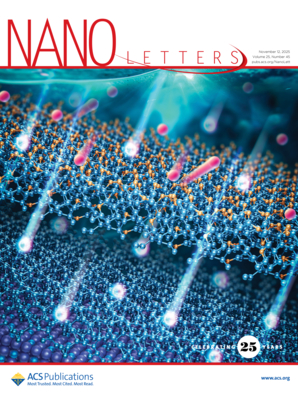
A nanoscale controllable oxidized amorphous carbon layer designed on the C/Ti coating via oxidizing engineering is confirmed to allow for passing electrons while repelling corrosive ions, attributed to reduced adsorption energy and optimized valence band structure. This approach achieves the balanced corrosion resistance and electronic conductivity.
View the article.Letters
Suppressing Continuous Zinc Epitaxial Growth in Rechargeable Zinc–Air Batteries via Plating–Stripping Balance of Ultra-Reversible Anodes
Weipeng Zhao - ,
Qicheng Zhang *- ,
Pengwei Zhao - ,
Bin Chen - ,
Wenchao Peng - ,
Yang Li - , and
Xiaobin Fan *
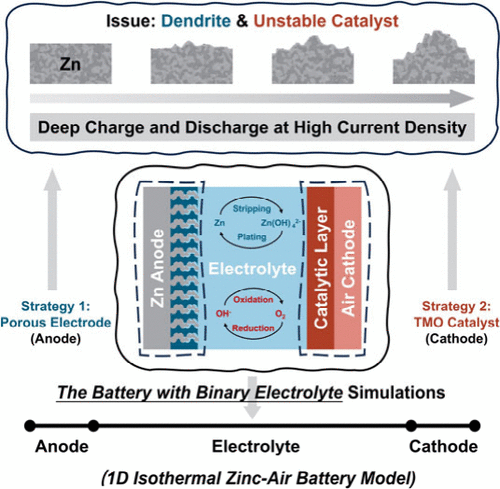
The formation of zinc dendrites under high current density charging/discharging is one of the key issues hindering the use of zinc–air batteries as fast-charging/discharging power batteries. In this study, a Ni foam-loaded Zn anode was strategically designed and integrated with a corrosion-resistant Ni-doped Co3O4 cathode catalyst to build a Zn-NF60|CoNiO cell. The cell achieves an unprecedented operating cycle life of over 160 h at 50 mA cm–2, an 8-fold extension over Zn|CoNiO. This study reveals the positive effects of the porous electrode strategy in optimizing the zinc plating and stripping process, providing new insights on addressing the issue of the continuous Zn anode epitaxial growth under high current density.
Topology Determines DNA Origami Diffusion in Intestinal Mucus
Matteo Tollemeto - ,
Lars J. M. M. Paffen - ,
Lasse H. E. Thamdrup - ,
Anja Boisen - ,
Jan van Hest - , and
Tania Patiño Padial *

This publication is Open Access under the license indicated. Learn More
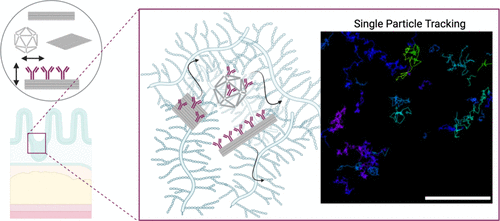
Efficient nanomedicine delivery across mucosal barriers remains a challenge due to the complex and poorly understood relationship between nanoparticle design and mucus transport. Here, we present DNA origami as a platform to investigate how the nanoparticle shape and ligand patterning influence diffusivity in mucus. By decoupling these parameters while maintaining identical material composition, we systematically evaluated the diffusion of rod, icosahedral, and rectangular nanostructures by using high-resolution single-particle tracking. Our results reveal that diffusivity in mucus is not solely determined by shape or functionalization alone but by their interplay: while unmodified rods diffused poorly, their mobility increased significantly upon antibody functionalization, reaching a maximum at an intermediate ligand density. In contrast, rods and icosahedra exhibited less pronounced and nonoptimal responses to surface modification. These findings highlight the importance of topology-specific optimization in nanoparticle design and demonstrate the utility of DNA nanotechnology to uncover design rules for next-generation mucus-penetrating drug delivery systems.
Self-Assembled Cellulose Nanocrystal–MXene Hybrid Film for Acceleration Sensing
Omer Shoseyov - ,
Daniel Voignac - ,
Shylee Belsey - ,
Danielle Sviri - ,
Shira Yochelis - ,
Maxim Sokol - ,
Oded Shoseyov *- , and
Yossi Paltiel *
This publication is Open Access under the license indicated. Learn More
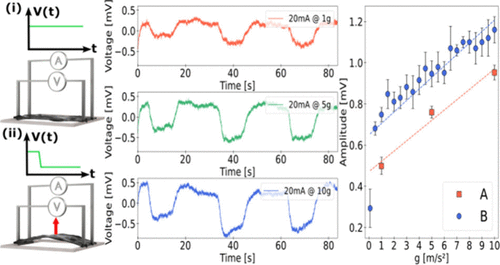
Advances in robotics and micromechanical systems demand miniaturized, low-cost electromechanical sensors. Conventional micro-electromechanical systems (MEMS) rely on complex, expensive top-down fabrication, limiting scalability. Here, we introduce a bottom-up approach for fabricating a flexible acceleration sensor using cellulose nanocrystal (CNC) films combined with conductive 2D MXene nanosheets. The self-assembled hybrid film exhibits sensitivity to acceleration, enabling precise three-axis motion detection. Functioning like a flexible field-effect transistor, the device uses acceleration-induced film deformation to generate charge separation in the chiral piezo films, producing a gating effect with measurable voltage shifts proportional to applied acceleration. This piezoelectric response allows real-time accurate motion tracking. Unlike conventional sensors, the device exhibits nonlinear behavior and is insensitive to the motion direction. Our approach offers a cost-effective solution for applications requiring dynamic motion detection and precise acceleration quantification, while simplifying fabrication and expanding the possibilities for next-generation nano and micro sensing technologies.
Dendritic Computing with Multigate Ferroelectric Field-Effect Transistors
A. N. M. Nafiul Islam - ,
Xuezhong Niu - ,
Jiahui Duan - ,
Shubham Kumar - ,
Kai Ni - , and
Abhronil Sengupta *
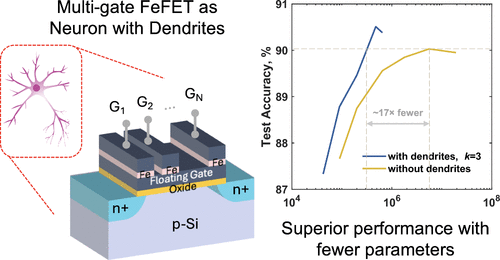
Although inspired by neuronal systems in the brain, artificial neural networks generally employ point-neurons, which offer computational complexity far less than that of their biological counterparts. Neurons have dendritic arbors that connect to different sets of synapses and offer local nonlinear accumulation – playing a pivotal role in processing and learning. Inspired by this, we propose a novel neuron design based on a multigate ferroelectric field-effect transistor that mimics dendrites. It leverages ferroelectric nonlinearity for local computations within dendritic branches while utilizing the transistor action to generate the neuronal output. The branched architecture enables smaller crossbar arrays in hardware integration, improving efficiency. Using an experimentally calibrated device-circuit-algorithm cosimulation framework, we demonstrate that networks incorporating our dendritic neurons achieve superior performance compared to much larger networks without dendrites (∼ 17× fewer trainable weight parameters). These findings suggest that dendritic hardware can significantly improve computational efficiency and learning capacity of neuromorphic systems optimized for edge applications.
Laser-Induced Spin Precession in Topological Insulator Devices
Esteban A. Rodríguez-Mena - ,
Matías Berdakin *- , and
Luis E. F. Foa Torres *
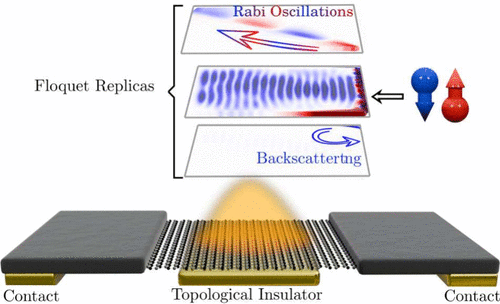
Controlling spin currents in topological insulators (TIs) is crucial for spintronics but challenged by the robustness of their chiral edge states, which impedes the spin manipulation required for devices such as spin-field effect transistors (SFETs). We theoretically demonstrate that this challenge can be overcome by synergistically applying circularly polarized light and gate-tunable Rashba spin–orbit coupling (rSOC) to a 2D TI. Laser irradiation provides access to Floquet sidebands where rSOC induces controllable spin precession, leading to the generation of one-way, switchable spin-polarized photocurrents, a non-equilibrium effect forbidden in TIs under time-reversal symmetric (equilibrium) conditions. This mechanism effectively realizes SFET functionality within a driven TI, specifically operating within a distinct Floquet replica, offering a new paradigm for light-based control in topological spintronics.
Electrostatic Control of Quantum Phases in KTaO3-Based Planar Constrictions
Jordan T. McCourt *- ,
Ethan G. Arnault - ,
Merve Baksi - ,
Samuel J. Poage - ,
Salva Salmani-Rezaie - ,
Kaveh Ahadi - ,
Divine Kumah - , and
Gleb Finkelstein *
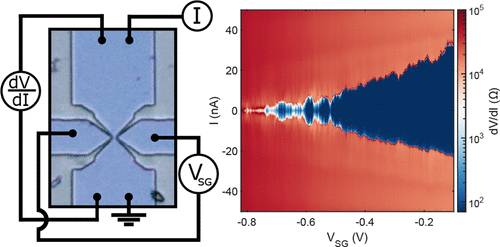
Two-dimensional electron gases (2DEGs) formed at complex oxide interfaces offer a unique platform to engineer quantum nanostructures. However, the scalable fabrication of devices in these materials remains challenging. Here, we demonstrate an efficient fabrication approach by patterning narrow constrictions in a superconducting KTaO3-based heterostructure which are individually tunable via coplanar side gates within the 2DEG plane. Leveraging the high dielectric permittivity of KTaO3, we achieve strong electrostatic modulation of the superconducting 2DEG. Within the superconducting state, we demonstrate efficient modulation of the critical current and Berezinskii–Kosterlitz–Thouless transition temperature at the weak link. Further tuning enables a transition to a dissipative state. All of these states are achievable with a side gate voltage ≲ 1 V. The fabrication process is scalable and versatile, enabling a platform for quantum devices and the study of a wide array of physical phenomena at complex oxide interfaces.

Strain Engineering in Graphene at the Nanometer Scale
Paula García-Mochales - and
Antonio J. Martínez-Galera *
This publication is Open Access under the license indicated. Learn More
The ability to induce and characterize strain in the atomic lattice of 2D materials, localized within only a few nanometers around specific positions, is a major challenge for the development of straintronics. In this work, the interaction between Si nanoparticles and the surface of graphene/Ru(0001) is employed to induce local strain in the latter. The strain field has been mapped at the nanoscale by scanning tunneling microscopy (STM), using the moiré pattern intrinsic to graphene/Ru(0001) surfaces as a magnifying lens. The induced strain is found to be confined within only a few nanometers around each nanoparticle. To achieve more accurate control, strain engineering at the nanometer scale was successfully performed by manipulating nanoparticles through the STM tip. This approach to controlled strain could provide a key tool for exploring new physics arising from strain in 2D materials.

Engineering of a Mantis-Forelimb-Inspired Bioabsorbable Lens-like Ocular Therapeutic (BLOT) Device for Effective Bacterial Keratitis Treatment
Yan Deng - ,
Rengui Xu - ,
Fenghua Chen - ,
Lifang Zhang - ,
Chunyu Wei - ,
Honglian Guo - ,
Zheng Wang *- ,
Wei Chen *- , and
Lin Wang *
Bacterial keratitis poses a significant global challenge due to rapid progression, antibiotic resistance, and corneal drug delivery difficulties. Facing the problems, we designed a mantis-forelimb-inspired bioabsorbable lens-like ocular therapeutic (BLOT) device with an oriented microneedle for treating bacterial keratitis. Microneedles arranged on the outer ring possess varying tilted angles, facilitating minimally invasive delivery of therapeutics to deeper corneal layers while reducing tissue damage. Additionally, sericin microspheres were engineered for in situ reduction of silver nanoparticles, which were then integrated in the oriented microneedles, demonstrating highly efficient antibacterial properties after penetrating the corneal epithelial layer. Notably, treatment with local BLOT produced a significantly thinner cornea (643.5 ± 5.3 μm) than levofloxacin eye drops (920.7 ± 5.7 μm) in a rabbit model of bacterial keratitis, demonstrating nearly 30% reduction in thickness. As a minimally invasive ocular drug delivery system, the BLOT device facilitates efficient and rapid corneal healing, offering a novel solution for bacterial keratitis treatment.
Self-Powered, Ultrathin, Flexible, and Scalable Ultraviolet Detector Utilizing a Diamond–MoS2 Heterojunction
Yicheng Wang - ,
Jixiang Jing - ,
Yumeng Luo - ,
Xiaomin Wang - ,
Kuan Liang - ,
Changsheng Chen - ,
Dong-Keun Ki - ,
Ye Zhu - ,
Zhongqiang Wang - ,
Qi Wang - ,
Keyou Yan - ,
Yuhao Zhang - ,
Han Wang - ,
Kwai Hei Li *- , and
Zhiqin Chu *
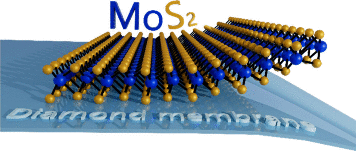
The escalating demand for ultraviolet (UV) sensing necessitates detectors that are both environmentally and mechanically resilient. Diamond emerges as a highly promising material for next-generation UV detection due to its unique properties. However, conventional diamond-based UV detectors are constrained by rigid bulk architectures and a reliance on external power supplies, hindering their integration and complicating device design. To tackle these challenges, herein, we first demonstrate a large-scale, self-powered, and flexible diamond UV detector by heterogeneously integrating a MoS2 monolayer with an ultrathin, freestanding diamond membrane. The fabricated device operates at zero external bias and exhibits high responsivity and detectivity. Notably, mechanical bending enables strain-induced bandgap modulation of the diamond membrane, allowing dynamically tunable photoresponse─a capability absent in rigid diamond counterparts. To validate its practicality and scalability, a proof-of-concept UV imager was demonstrated. This newly developed configuration will undoubtedly open new routes toward scalable, integrable, and flexible UV sensing.
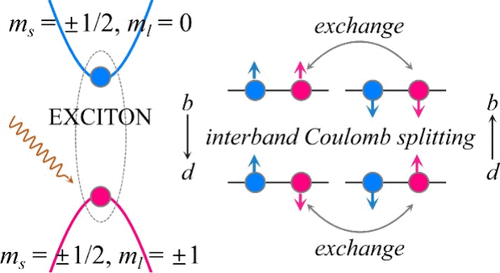
Quadrupolar Exciton and Excitonic Bose–Einstein Condensation in Layered Ga2Ge2X2 (X = S, Se)
Liang-An Qin - ,
Yuanyuan Wang *- ,
Yushuo Xu - ,
Dongyue Sun - ,
Ying Dai *- ,
Baibiao Huang - , and
Wei Wei *
In many-particle physics, excitonic Bose–Einstein condensation (BEC) reveals a long-sought macroscopic quantum coherent phase, which is scarce. In single-phase multilayer Ga2Ge2X2 (X = S, Se), we prove that a new kind of spatially indirect exciton, the quadrupolar exciton, can be optically generated, which is in stark contrast to the previous findings based exclusively on the artificial van der Waals layers of transition metal dichalcogenides (TMDCs). In particular, we verify the bright–dark exciton transition due to the fermion exchange interaction, indicative of excitonic BEC constituted by quadrupolar dark excitons with ultralong lifetimes. In light of long lifetimes, small effective mass, and large binding energy, theoretical critical temperature for the BEC in Ga2Ge2S2/Ga2Ge2Se2 achieves as high as 395.3/386.7 K and 98.8/96.7 K for the Berezinskii–Kosterlitz–Thouless (BKT) superfluid phase. In this work, results open new possibilities for the study of excitonic physics and correlated quantum phase.
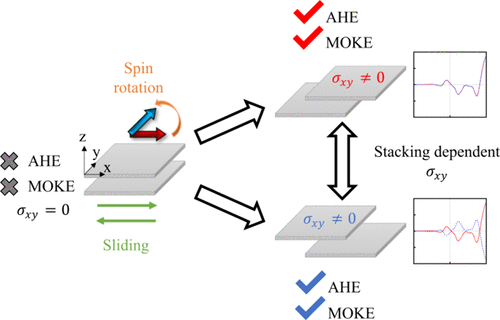
Tunable In-Plane Anomalous Hall and Magneto-Optical Kerr Effects via Stacking Engineering in Two-Dimensional Magnets
Yuantao Chen - ,
Wenxin Jiang - ,
M. Umar Farooq *- , and
Li Huang *
The in-plane anomalous Hall effect (IPAHE) and magneto-optical Kerr effect (MOKE) have emerged as crucial functionalities in spintronics, yet their realization and control in two-dimensional (2D) magnetic systems remain challenging due to stringent symmetry constraints. In this study, based on symmetry analysis and first-principles calculations, we explore a general framework to achieve and modulate IPAHE and MOKE in 2D magnetic bilayers via interlayer sliding and spin-orientation engineering. Using ferromagnetic (FM) CrPSe4 and antiferromagnetic (AFM) MPSe3 (M = Mn and Cr) as prototype systems, we demonstrate that the modification of the stacking order and spin orientation can selectively manipulate symmetries, controlling the presence and sign of IPAHE and MOKE. Our findings establish a symmetry-protected coupling between spin, stacking order, and electronic response, providing a practical approach to achieve tunable IPAHE/MOKE. This work opens promising avenues for the development of next-generation magneto-optical devices and spintronic memory applications with enhanced functionality.
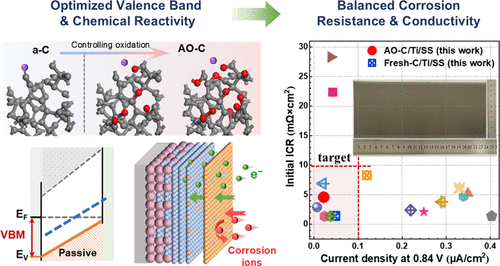
Balancing Corrosion Resistance and Electronic Conductivity in Nanoscale Amorphous Carbon Layers via Oxidizing Engineering
Qian Hu - ,
Xian-Zong Wang *- ,
Pengfei Guo *- ,
Long Wang *- , and
Hongqiang Wang
A commercially available amorphous carbon (a-C)-coated bipolar plate (BP) faces critical challenges of mitigating the rapid deterioration of electronic conductivity resulting from the corrosion at high potential in proton-exchange membrane fuel cells (PEMFCs). This work proposes then verifies that creating an oxidized a-C layer on C/Ti coating is able to mitigate corrosion while reserving available conductivity. Controllable oxygen incorporation in the a-C layer effectively lowers the adsorption energy of corrosive ions. Meanwhile, owing to a downward shift of the valence band maximum (VBM), the coating achieves a positive transpassivation potential of 1.36 V and mitigates continuous dissolution. Particularly, as a benefit from controllable oxidation states (∼30%) and the electron tunneling effect through nanoscale oxide layer (∼15 nm), this coating reserves a considerable conductivity, which remarkably outperforms those of BPs with conventional a-C coatings. This work highlights the importance of oxidation states of the a-C layer on BPs to achieve balanced corrosion resistance and conductivity.

Structural Insights and Functional Dynamics of β-Lactoglobulin Fibrils
Rebecca Sternke-Hoffmann - ,
David Rhyner - ,
Genki Terashi - ,
Bilal Muhammad Qureshi - ,
Roland Riek - ,
Jason Greenwald - ,
Daisuke Kihara - ,
Viviane Lutz-Bueno - , and
Jinghui Luo *
Amyloid fibrils from β-lactoglobulin (β-LG), a major whey protein, have attracted interest for nanotechnology due to their biocompatibility, tunable surface chemistry, and ability to bind functional molecules. They serve as scaffolds for metal nanoparticle synthesis, carriers for bioactive compounds, and building blocks for nanomaterials with tailored mechanical and optical properties. However, their dynamic architecture remains incompletely understood, limiting their rational design. Here, we combine cryo-electron microscopy (cryo-EM), small-angle X-ray scattering (SAXS), and molecular dynamics (MD) simulations to investigate β-LG fibrils formed under mildly denaturing conditions. Cryo-EM reveals a monomeric polymorph with a conserved core (Leu1–Ala34) and a disordered “fuzzy coat”. Flexible domains were modeled and evaluated by MD, identifying one stable conformation (Asn90–Thr97). The ionic strength reduced the coat flexibility and promoted iron binding, suggesting environmental responsiveness. These findings link fibril flexibility to functional potential, offering mechanistic insight into engineering β-LG-based nanomaterials.

Synergistic Nucleus-Targeting Photodynamic Therapy and DNA Repair Inhibition to Activate Innate and Adaptive Antitumor Immunity for Amplifying Photoimmunotherapy
Yunxue Xu - ,
Wenlong Zeng - ,
Renfa Liu *- ,
Zhifei Dai *- , and
Desheng Sun *
Photodynamic therapy (PDT) has received increasing attention because it can induce immunogenic cell death (ICD) and activate the STING pathway. However, the immune response induced by PDT is limited by its poor DNA damage, due to random intracellular distribution of the photosensitizer and the repair mechanism of cells. To this end, a liposomal nanophotosensitizer PNOR, modified with arginylglycylaspartic acid (RGD) peptide on the surface and coloaded with nucleus-targeting photosensitizer Ppa-Nuc and DNA repair inhibitor Olaparib (Ola), is developed to improve photoimmunotherapy. PNOR reveals exceptional nucleus-targeting capability, and nucleus-targeted PDT is demonstrated to induce substantial ICD and robust STING pathway activation in vitro. PNOR effectively enhances dendritic cell maturation and activation of cytotoxic T cells, thus exhibiting remarkable antitumor efficacy in both primary and distant tumors in a bilateral subcutaneous pancreatic tumor model. PNOR represents a promising strategy for improving photoimmunotherapy by inducing efficient DNA oxidative damage to simultaneously activate an innate and adaptive immune response.
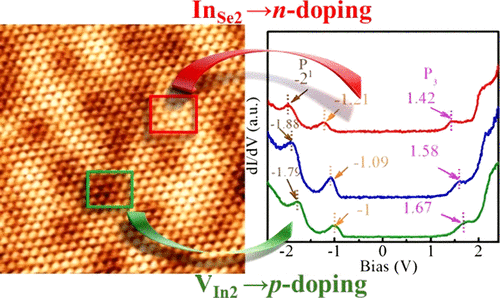
Scanning Tunneling Microscopy Characterization of Intrinsic Point Defects and Their Local Density of States in α-In2Se3
Wenhui Pang - ,
Zi Liu - ,
Jieying Li - ,
Desheng Cai - ,
Siyu Huo - ,
Yuzhou Liu - ,
Haoen Chi - ,
Gan Yu - ,
Xiaoying Shi - ,
Wenguang Zhu *- , and
Shengyong Qin *
Two-dimensional ferroelectric materials exhibit great potential for high-performance electronic devices. However, the impact of defects on the electronic behavior remains unclear. Here, we systematically characterized intrinsic point defects in bulk α-In2Se3, focusing on topographic configurations and localized electronic states, using high-resolution scanning tunneling microscopy and spectroscopy. Combined with first-principles calculations, we reveal that the defects in α-In2Se3 arise surprisingly from single indium vacancies instead of chalcogen vacancies that prevail in transition metal dichalcogenides. Additionally, we identify indium antisite defects as another common defect type. The scanning tunneling spectroscopy measurements further reveal that indium vacancies induce p-doping, whereas the indium antisite provide complementary n-doping, confirmed by first-principles calculations. Notably these defects induce bipolar doping in α-In2Se3 despite the intrinsic n-type character. Finally, this research fills the gap resulting from the absence of sufficient experimental data on the intrinsic defects in α-In2Se3 and provides critical insights for future design of In2Se3-based devices.

“Solid-in-Solid” Electrolyte via Scalable Melting Infiltration Method for High-Voltage Solid-State Lithium Metal Batteries
Tongtai Ji - ,
Huanyao Ge - ,
Nicole Rivera - ,
Luisa Gomes - ,
Ruizhi Dong - ,
Jochem Struppe - ,
Jason Guo - ,
Sanjeev Mukerjee *- , and
Huidong Dai *
This publication is Open Access under the license indicated. Learn More
Solid electrolytes are critical to enabling safe and high-energy-density batteries; yet, their practical deployment is impeded by poor electrochemical stability, inadequate interfacial contact, and challenging manufacturing processes. Here, we introduce a novel “solid-in-solid” electrolyte architecture comprising a porous Li zeolite electrolyte (LiX) infiltrated with a melt-processable plastic crystal electrolyte (PCE). This LiX–PCE electrolyte achieves an ionic conductivity of 0.55 mS/cm at 20 °C, alongside improved electrochemical stability over pure PCE. Solid-state nuclear magnetic resonance reveals three Li+ transport pathways: through LiX, through PCE, and via ion exchange at phase boundaries. Leveraging the melt-processability of the PCE, we proposed a roll-to-roll-compatible melt infiltration strategy for scalable solid-state battery (SSB) fabrication with the LiX–PCE electrolyte. The SSBs demonstrate excellent rate performance (up to 10 C), 93% capacity retention after 200 cycles at 2C, and 4.5 V compatibility. This work elucidates critical design principles for high-performance solid-state electrolytes and presents a viable path toward practical, fast-charging, high-power SSBs.
Graphene-Gated Control of Ag Nanowire Infrared Polaritons
Zhenxing Wang - ,
Zerui Wang - ,
Junbo Xu - ,
Lei Zhou - ,
Quan Li - ,
Baoning Wang - ,
Yongwei Pan - ,
Xueqing Gao - ,
Hongwei Jia - ,
Kyoung-Duck Park - ,
Di Huang - ,
Zhanshan Wang - ,
Markus B. Raschke - , and
Tao Jiang *
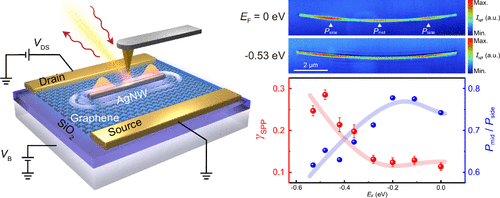
Surface plasmon polaritons (SPPs) at dielectric–metal interfaces are of significant interest in nanophotonic devices owing to their unique field localization behaviors. Low-dimensional metal structures like metal nanowires generate strong SPP modes, yet dynamic SPP modulation, particularly in the mid-infrared (IR) range, is still underdeveloped, hindering progress in reconfigurable SPP-based devices. Here, we demonstrate active control of mid-IR SPPs in silver nanowires (AgNWs) through electric field gating, taking advantage of a graphene monolayer substrate and its gate-tunable dielectric properties in the mid-IR range. Through IR near-field nanoimaging and numerical simulations, we explore the resulting range of the spectral tuning behavior of the AgNW SPP response. Furthermore, we identify a new gate-dependent decay channel in which SPPs in AgNWs directly dissipate into graphene SPPs. Our findings highlight the potential for utilizing the electrical characteristics of graphene for manipulating SPPs in metal nanowires, paving the way for the development of advanced nanophotonic devices.
Enabling Efficient Oxygen Reduction Reaction with Pt Single Atoms on Carbide: A Phosphorus-Doped Mo2C Interface Strategy
Changwei Shi - ,
Xingmao Jiang - ,
Xueqiang Qi - ,
Congcong Xing - ,
Xiaolei Fan - ,
Zhuo Chen - ,
Xiang Wang *- , and
Andreu Cabot *
This publication is Open Access under the license indicated. Learn More
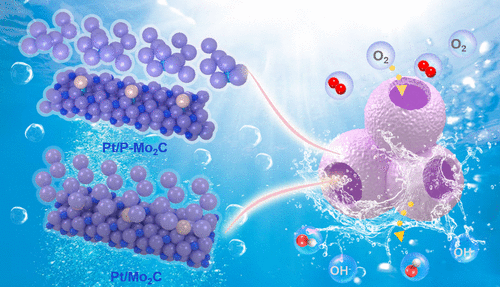
Developing efficient and cost-effective oxygen reduction reaction (ORR) catalysts is a critical process in electrochemical energy conversion technologies. Here, we report a new heterostructured electrocatalyst composed of phosphorus-doped Mo2C coupled with atomically dispersed Pt sites (Pt/P-Mo2C). This is realized through a confined polymerization approach using heteropolyacid–pyrrole complexes and subsequent covalent anchoring. Phosphorus doping plays a crucial role in enhancing the interfacial electron density and enabling strong electronic interactions with Pt atoms. The results showed that the interfacial electronic structure of Pt is significantly modulated, with a downshifted d-band center that optimizes the adsorption/desorption energetics of ORR intermediates. As a result, Pt/P-Mo2C demonstrates outstanding ORR activity in alkaline media, achieving a half-wave potential (E1/2) of 0.91 V along with excellent stability. This work presents a generic strategy for integrating single-atom noble metals with carbide supports and highlights the role of interfacial electron engineering in the design of next-generation ORR electrocatalysts.
Geometrically Ordered Triangular-Atom-Unit Zn-PtCo Intermetallic for Highly Efficient and Durable Fuel Cells
Liangbin Liu - ,
Yang Yang - ,
Changhong Zhan - ,
Zhongliang Huang - ,
Jing Xia - ,
Wei-Hsiang Huang - ,
Chih-Wen Pao - ,
Zhiwei Hu - ,
Wei Liu - ,
Nanjun Chen *- , and
Xiaoqing Huang *
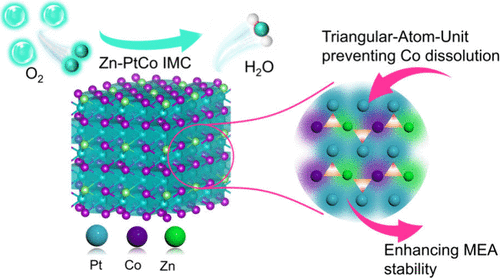
Developing highly efficient and stable Pt-type oxygen reduction reaction (ORR) catalysts is crucial for proton exchange membrane fuel cells (PEMFCs). PtCo intermetallic has exhibited excellent ORR stability and activity among the Pt family, while its applications remain significantly challenging due to intractable Co dissolution issue. Here, we present a partial geometrically ordered Zn-decorated PtCo intermetallic (Zn-PtCo IMC), where Zn atoms can enter into the lattice of PtCo and partially replace Co atoms to construct a stable triangular-atom-unit structure. Consequently, the Zn-PtCo IMC-based fuel cell delivers an exceptional power density of 1.98 W cm–2, significantly outperforming that of disordered Zn-PtCo and commercial Pt/C-based fuel cells. Importantly, Zn-PtCo IMC is capable of retaining 61.2% mass activity (MA) after undergoing a 120k-cycle accelerated durability test. Detailed mechanism investigations reveal that the presence of geometrically ordered triangular atoms can effectively weaken the O* adsorption capacity and enhance the Co atom diffusion energy barrier, thereby substantially enhancing activity and stability.
Singlet Fission Luminescent Solar Concentrators
Tomi K. Baikie - ,
Jesse Allardice - ,
Simon A. Dowland - ,
Pratyush Ghosh - ,
Aaron Li - ,
James Xiao - ,
Géraud Delport - ,
Ashish Sharma - ,
Neil C. Greenham *- , and
Akshay Rao *
This publication is Open Access under the license indicated. Learn More
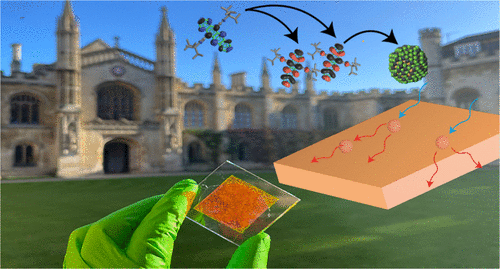
Luminescent solar concentrators (LSCs) present a promising avenue for solar energy harvesting, utilizing transparent matrices embedded with light-absorbing chromophores to concentrate incident solar radiation. Photon-multiplier luminescent solar concentrators (PM-LSCs) contain chromophores boasting over 100% photoluminescence quantum efficiency. Although PM-LSCs may bypass free energy losses observed in traditional LSC systems, experimental PM-LSCs have exhibited optical efficiency sensitivity to photon flux. Here, we demonstrate a PM-LSC utilizing singlet fission (SF), an exciton multiplication process. We apply large-area films of absorbing TIPS-tetracene mixed with tetracene-carboxylic acid-ligated PbS quantum dots and demonstrate they are suitable for solid-state LSC devices. We find that although SF-LSCs present pathways to mitigate fluence limitations observed in quantum cutting systems, challenges persist due to triplet–triplet annihilation (TTA) at higher photon fluxes. The potential of SF-LSCs to overcome fluence limitations in PM-LSCs suggests a promising avenue for future development.
Balancing Molecular Sensitization and Surface Passivation in Lanthanide-Doped Nanoparticle-Based Organic–Inorganic Nanohybrids
Zhao Jiang - ,
Alasdair Tew - ,
Xinjuan Li - ,
Huangtianzhi Zhu - ,
Yunzhou Deng - ,
Caterina Ducati - ,
Zhongzheng Yu *- , and
Akshay Rao *
This publication is Open Access under the license indicated. Learn More
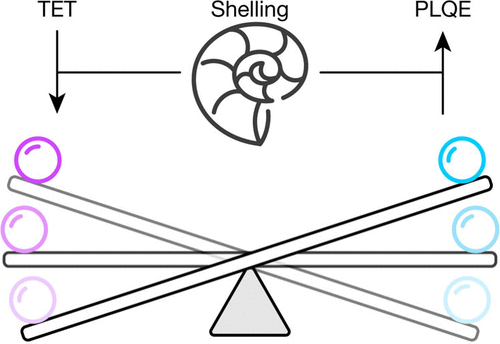
Lanthanide-doped nanoparticles (LnNPs) are promising for advanced photonic applications due to their unique optical properties. However, their practical implementation is hindered by surface quenching and weak absorption. Surface passivation through core–shell architectures is effective in mitigating quenching. However, it creates a fundamental trade-off by impeding molecular sensitization via energy transfer (ET) in the organic–inorganic hybrid systems. Here, we investigate this trade-off by fabricating core–shell LnNPs with precisely controlled shell thicknesses ranging from 0.8 to 3.0 nm. Surface passivation yields enhancements in 290-fold upconversion intensity and 25-fold downshifting intensity. Using 9-anthracenecarboxylic acid, we demonstrate that ET efficiency exhibits a nonmonotonic dependence on the shell thickness, with optimal performance achieved at a shell thickness of ∼0.8 nm. Through steady-state and time-resolved spectroscopic studies, we elucidate the complex ET dynamics. Our findings reveal the optimal shell thickness and answer whether no shell is the best in this nanohybrid system.
Harnessing Plateau–Rayleigh Instability in GeS Nanowires for Nanoscale Optoelectronic Heterojunctions
Seong Bin Park - ,
Yujin Kong - ,
Yu Chan Won - , and
Naechul Shin *

This publication is free to access through this site. Learn More

ACS Editors' Choice® is a collection designed to feature scientific articles of broad public interest. Read the latest articles
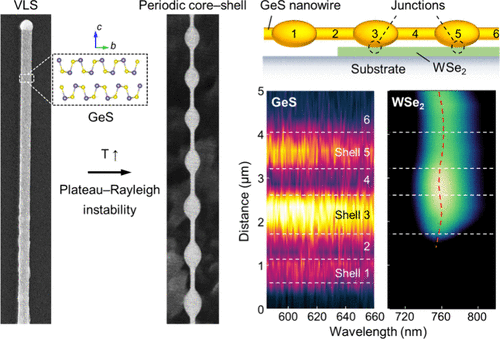
Periodic shell formation in one-dimensional structures is a classical outcome of the Plateau–Rayleigh (P-R) instability, yet its manifestation in van der Waals (vdW) crystals has remained unexplored. Here, we demonstrate P-R instability in GeS vdW nanowires, synthesized by vapor–liquid–solid growth. Under elevated temperatures and continuous precursor supply, GeS nanowires transition from smooth sidewalls to periodic core–shell architectures. A quasi-liquid amorphous surface layer reorganizes into sulfur-rich shells surrounding a crystalline core. By tuning growth duration, both shell diameters and intershell pitches can be systematically controlled, consistent with theoretical predictions. Furthermore, these nanowires define site-specific nanoscale junctions in mixed-dimensional heterostructures. When integrated with monolayer WSe2, GeS shells create localized heterojunctions that drive charge transfer and excitonic modulation. Photoluminescence mapping and spectral analysis reveal exciton redshifts, trion enhancement, and localized quenching. These findings extend P-R instability to vdW materials and establish periodic nanowires as a platform for optoelectronic patterning.

Boosting Cancer Chemotherapy through Targeted Akkermansia muciniphila Modulation by Tumor-Repopulating Cell-Derived Microparticles
Shiyu Li - ,
Nana Bie - ,
Xiaojuan Wang - ,
Jinzhao Huang - ,
Xiaoqiong Zhang - ,
Shiyi Xu - ,
Xiaojuan Zhang - ,
Haojie Liu - ,
Zixiang Xie - ,
Tuying Yong - ,
Zhi Liu *- ,
Xiangliang Yang *- , and
Lu Gan *
The complex relationship between gut microbiota and cancer therapy has received extensive attention, proposing gut microbiota modulation as a promising strategy for enhancing anticancer efficacy. In this work, tumor-repopulating cell-derived microparticles (3D-MPs) encapsulated with doxorubicin (DOX) are developed to improve cancer treatment outcomes through targeted interaction with gut microbiota, particularly Akkermansia muciniphila (AKK). This delivery system efficiently accumulates in the intestines via the integrin α5-fibronectin pathway, promoting AKK abundance through the pro-proliferative effects of 3D-MPs on AKK and the inhibitory action of DOX on competing gut bacteria, such as Helicobacter and Prevotella, for improved anticancer effects. Our findings demonstrate the potential of leveraging gut microbiota modulation to optimize therapeutic outcomes in cancer treatments, offering a novel approach to synergistic cancer therapy.
Ultrathin Single-Helix Rare Earth Nanowires: Inorganic Analogues of RNA Conformation with High Mechanical Flexibility
Hao Fu - ,
Jiali Shi - ,
Yong Jiang - ,
Di Qiu - ,
Ziyun Zhong - , and
Yaping Du *
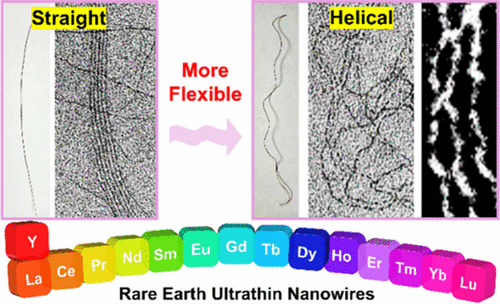
Chirality has always been fascinating, yet inorganic chiral structures, especially those with helical shapes, are underexplored due to synthesis challenges. Herein, we regulated the conformation of rare earth ultrathin nanowires (RE NWs) at the sub-nanometer scale, constructing single-helix NWs (HNWs) with RNA-like conformation. The formation of HNWs is attributed to chiral ligands influencing the directional growth via steric hindrance at low temperatures. Based on this, 15 types of RE HNWs with helical structures were synthesized, demonstrating the strategy’s universality. Notably, HNWs exhibit better flexibility than straight NWs, evidenced by their higher viscosity, lower glass transition temperature, shorter persistence length, and larger fractal dimension. This study provides a strategy for precise control of inorganic helical nanostructures and offers new insights into the chiral structure evolution.

Understanding the Roles of Double- and Triple-Phase Boundaries in High-Temperature CO2 Electrolysis
Xiwen Tan - ,
Tongbao Wang - ,
Quan Chen - ,
Yu Yang - ,
Minghao Sun - ,
Fengwang Li - , and
Yuhang Wang *
High-temperature solid oxide electrolysis cells are promising for CO2-to-CO conversion with high selectivity and energy efficiency. However, the correlation between the electrolysis performance and electrode interface structure remains poorly understood. Here, in a Ni/ceria system, we demonstrate that the segregation-free Ni-doped ceria forms double-phase boundaries (DPBs) with CO2, offering a CO outlet concentration of 83.0 ± 0.2%. By contrast, carbon deposition was seen in controls with triple-phase boundaries (TPBs) formed by segregated Ni and ceria interfacing with CO2. The electrochemical activity strongly correlates with oxygen vacancy (Ov) concentrations in Ni/ceria. The segregation-free Ni/ceria catalyst achieves 1.4 A cm–2 at 1.65 ± 0.01 V and operates stably at 600 mA cm–2 for 220 h without any decay in activity. The results indicate that enriching Ov at DPBs promotes high-temperature CO2 electrolysis, with a more influential role than TPBs for these ceria-based catalysts.
Ultralow-Iridium Oxygen Evolution Catalyst with Dual-Site Oxide Pathway for Proton Exchange Membrane Water Electrolysis
Xudong Mao - ,
Mingze Zhu - ,
Mengke Xie - ,
Gege Zou - ,
Yubin Kuang - ,
Shiying Guo - ,
Jingguo Hu - , and
Xiaoyong Xu *
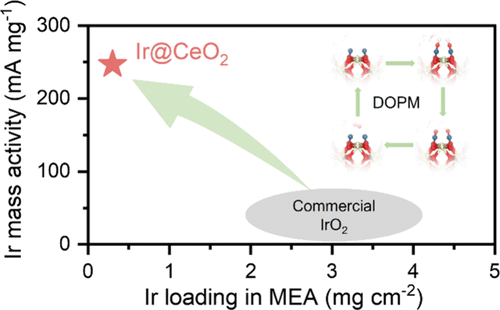
Developing cost-effective low-iridium catalysts for the acidic oxygen evolution reaction (OER) is essential for the advancement of proton exchange membrane (PEM) water electrolyzers. Here, we report a cerium oxide-supported iridium cluster catalyst (Ir@CeO2) that features ultrafine Ir clusters dispersed within a CeO2 matrix, achieving low noble metal loading and favorable activity–stability balance. The Ir@CeO2 exhibits a small overpotential of 197 mV at 10 mA cm–2 and a large mass activity of 247 A gIr–1 at 300 mV, surpassing commercial IrO2 by more than 38 times. The enhanced OER kinetics is attributed to the dual-site oxide pathway mechanism enabled by increased Ir–O covalency and a shortened Ir–Ir distance at chelation interfaces within Ir@CeO2. Utilizing the Ir@CeO2 catalyst in an actual PEM electrolyzer with a minimal Ir loading of 0.3 mg cm–1 demonstrated durable water electrolysis for over 1000 h at a current density of 1 A cm–2 under a cell voltage of 1.68 V.
Three-Gap High-Tc Topological Superconductivity in Lithium-Doped Bilayer Borophenes
Meng-hui Wang - ,
Zheng-xuan Wang - ,
Hao-lin Song - ,
Guang-tao Wang - , and
Zhong-hua Cui *
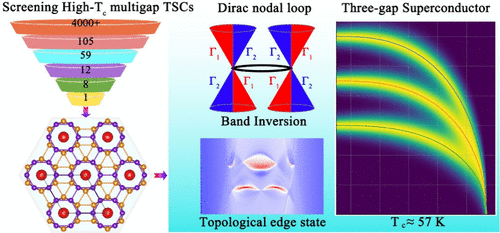
Realizing topological superconductors (TSCs) with high transition temperatures (high-Tc) remains a central challenge in the development of fault-tolerant quantum computation. Here, we propose a route for realizing high-Tc TSCs by integrating multigap superconductivity with nontrivial band topology in lithium-doped bilayer borophene. Extensive structural searches and high-throughput screening of over 4000 Li1–xBx nanosheets identify eight promising multigap TSC candidates. Among them, the LiB12 nanosheet is identified as a prototypical three-gap superconductor and simultaneously a topological metal with a symmetry-protected Dirac nodal loop. Fully anisotropic Migdal–Eliashberg calculations reveal cooperative couplings between σ↔in-plane and π↔out-of-plane phonon, which markedly enhance electron–phonon interactions and drive a high-Tc of 57 K. These findings underscore the potential of metal-doped bilayer borophenes as a cutting-edge material platform for achieving high-Tc multigap TSCs.
Small Strain-Induced Abrupt Drop in the Electrical Breakdown Strength of Polypropylene Insulation
Kangning Wu - ,
Haoran Sui - ,
Qi Qi - ,
Zichao Yang - ,
Peng Zhao - ,
Yawei Qin - ,
Kai Yang - ,
Benhong Ouyang - ,
Shengtao Li - , and
Jianying Li *
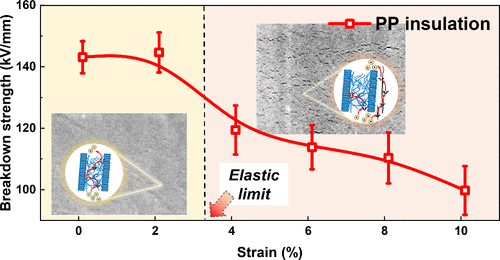
It is commonly acknowledged that the electrical properties of polymer dielectrics remain stable before yielding. However, in this Letter, an abrupt 17.4% decline in the electrical breakdown strength was observed at 4% tensile strain in polypropylene (PP) insulation, which is far below its yielding strain (εy, 16%). In situ scanning electron microscopy was conducted, and microvoids were unexpectedly found, forming at 4% strain, which is inconsistent with the understanding that cavitation only happens near εy. The microvoids lead to higher free volume, increased carrier mobility, and the abrupt decline in the breakdown strength. Furthermore, such critical strain was identified as the elastic limit strain (εe, 3.5%). On that basis, PP samples with suppressed yields and higher εe (5.4%) were prepared with more elastomers. Only a 5.1% decrease in the breakdown strength was observed at 6% strain. This work reveals that suppressing yield and increasing εe can improve the electrical performance stability of semicrystalline dielectrics under mechanical stress.
Mechanically Robust 2D Magnetic Semiconductor: Anisotropic Elasticity and Fatigue Resistance in CrSBr
Yafei Wang - ,
Guorui Wang *- ,
Xiqi Wu - ,
Jiahao Li - ,
Houbo Li - ,
Xinan Chen - ,
Zhao Zhang - ,
Yuxiang Zhao - , and
Zhong Zhang *
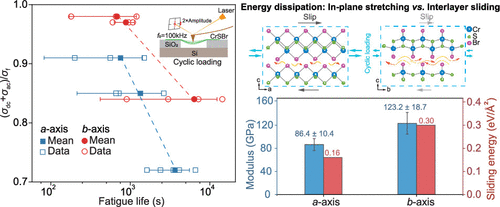
Two-dimensional (2D) materials with intrinsic anisotropy offer unique opportunities for direction-dependent functionality, yet their mechanical anisotropy and long-term reliability remain largely unexplored. Here, we systematically investigate the layered magnetic semiconductor CrSBr, revealing strong in-plane elastic anisotropy (Ea/Eb = 1.43) from angle-resolved atomic force microscopy (AFM) nanoindentation and an out-of-plane modulus of ∼54 GPa from contact resonance AFM, indicative of robust interlayer coupling. Dynamic AFM loading demonstrates pronounced anisotropic fatigue, with superior endurance along the b-axis attributed to enhanced interlayer energy dissipation, consistent with friction measurements and first-principles calculations of interlayer sliding energy. Remarkably, despite its lower fracture strength, CrSBr exhibits fatigue lifetimes comparable to graphene and CVD-grown MoS2 under normalized stress. These results establish CrSBr as a mechanically robust 2D magnetic semiconductor, where anisotropic bonding and interlayer coupling combined govern cyclic damage resistance.
Phase-Pure Quasi-Two-Dimensional Layered Perovskites Enable Efficient Blue Light-Emitting Diodes
Shuang-Qiao Sun - ,
Yanlin Xu - ,
Qi Sun - ,
Tieyuan Bian - ,
Wei-Zhi Liu - ,
Bo-Chen Liu - ,
Min Zhu - ,
Jing-Jing Bao - ,
Jun Yin *- ,
Liang-Sheng Liao - ,
Yue-Min Xie *- ,
Shuit-Tong Lee - , and
Man-Keung Fung *
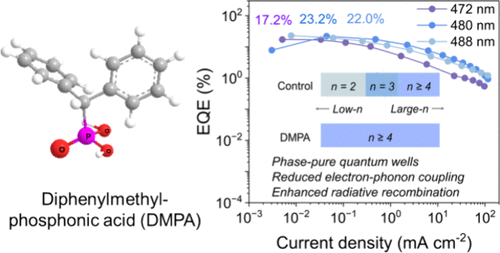
Quasi-two-dimensional (quasi-2D) layered perovskites are widely employed in blue perovskite light-emitting diodes (PeLEDs) due to their ability to modulate energy transfer processes. However, the disordered stacking of inorganic and organic layers in the perovskite film forms multiple quantum well (QW) structures with irregular well-width distributions, leading to severe nonradiative recombination and limiting device efficiency. Here, we develop a synergistic bonding strategy in which the incorporation of diphenylmethylphosphonic acid (DMPA) facilitates the formation of coordination bonds (P–O–Pb) with the inorganic framework and hydrogen bonds (O···H–N) with the organic spacers. These interactions enable the formation of perovskite films with well-regulated QW distributions. Additionally, DMPA induces an upward shift in the perovskite energy level, thereby reducing the hole-injection barrier within the device. As a result, we achieve efficient blue PeLEDs with peak external quantum efficiencies of 23.2%, 22.0%, and 17.2% at emission wavelengths of 488, 480, and 472 nm, respectively.

Straining Monolayer MoS2 Transistor on a Flat and Rigid SiO2 Substrate
Jinghui Gao - ,
Yunxin Li - ,
Kaixin Niu - ,
Yang Chen - ,
Xiao Liu - ,
Shuimei Ding - ,
Quanyang Tao - ,
Weiqi Gao - ,
Zikun Li - ,
Zehao Li - ,
Longbin Zhang - ,
Donglin Lu - ,
Yiliu Wang - , and
Yuan Liu *
Strain engineering has played a key role in modern silicon electronics since 90 nm technology. Achieving similar advances within two-dimensional (2D) semiconductors is essential for their lab-to-fab transition. However, adapting silicon-based strain techniques to 2D transistors presents significant challenges; hence, previous studies are largely based on using a flexible substrate or nanocurved substrate, intrinsically limiting the practical application of 2D circuits. Here, we report a new strain engineering approach for 2D transistors without relying on the substrate, hence realizing strained 2D transistors on a standard flat and rigid SiO2 substrate. Importantly, the device strain could be directly visualized by the channel length change through a microscope rather than by previous indirect characterization methods, such as Raman or photoluminescence. Furthermore, an in situ electrical measurement is also conducted for the same MoS2 transistor under different strain values, and the monolayer carrier mobility increases linearly with the applied tensional strain, reaching an enhancement factor of 118%.

Direct Imaging of Nanoscale Ferroelectric Domains and Polarization Reversal in Ferroelectric Capacitors
Megan O. Hill Landberg *- ,
Bixin Yan - ,
Huaiyu Chen - ,
Ipek Efe - ,
Morgan Trassin - , and
Jesper Wallentin
This publication is Open Access under the license indicated. Learn More
Ferroelectric thin films present a powerful platform for next-generation computing and memory applications. However, domain morphology and dynamics in buried ferroelectric stacks have remained underexplored, despite their importance for real device performance. Here, nanoprobe X-ray diffraction (nano-XRD) is used to image ferroelectric domains inside BiFeO3-based capacitors, revealing local disorder in domain architecture and partial polarization reorientation caused by the capacitor electrostatic boundary conditions and internal stress. We demonstrate sensitivity to ferroelectric reversal in poled capacitors, highlighting expansive/compressive (001) strain for up-/down-polarization using nano-XRD. We observe significant quantitative and qualitative differences between poling by piezoresponse force microscopy and in devices. Further, electrical poling induces lattice tilt at electrode edges, which may modify performance in downscaled devices. Our results establish nano-XRD as a noninvasive probe of buried ferroelectric domain morphologies and dynamics, opening avenues for operando characterization of energy-efficient nanoscale devices.
Mastheads
Issue Editorial Masthead
This publication is free to access through this site. Learn More
Issue Publication Information
This publication is free to access through this site. Learn More