


Machine Learning for Drug Discovery
Author(s):
- Marcelo C.R. MeloPostdoctoral FellowUniversity of PennsylvaniaEmail: [email protected]More by Marcelo C.R. Melo
- Jacqueline R. M. A. MaaschPhD studentCornell UniversityEmail: [email protected]More by Jacqueline R. M. A. Maasch
- Cesar de la Fuente-NunezPresidential Assistant ProfessorUniversity of PennsylvaniaEmail: [email protected]More by Cesar de la Fuente-Nunez
Publication Date:
March 11, 2022
Copyright ©
2022 American Chemical Society
eISBN:
9780841299238
DOI:
10.1021/acsinfocus.7e5017
Read Time:
eight hours
Collection:
1
Publisher:
American Chemical Society

Machine Learning for Drug Discovery is designed to suit the needs of graduate students, advanced undergraduates, chemists or biologists otherwise new to this research domain with minimal previous exposure to Machine Learning (ML) methods, or computational scientists with minimal exposure to medicinal chemistry. The e-book covers basic algorithmic theory, data representation methods, and generative modeling at a high level. The authors spotlight antibiotic discovery as a case study in ML for drug development and discuss diverse applications in drug-likeness prediction, antimicrobial resistance, and areas for future inquiry. For a more dynamic learning experience, open-source code demonstrations in Python are included.
This book is coming soon. In the meantime, please contact your library or ACS sales representative for purchase options.
Detailed Table of Contents
About the Series
Preface
Chapter 1
Pursuing New Models and Molecules
1.1
New Computational Insights for Old Problems
1.2
Shifting Approaches in Drug Development
1.3
Insider Q&A: Timothy Cernak
1.4
Key Focal Points
Chapter 2
Key Algorithms for Drug Discovery
2.1
Chapter Overview
2.2
Supervised versus Unsupervised
2.3
Clustering Techniques
2.4
Support Vector Machines
2.5
Tree-Based Methods
2.6
Neural Networks
2.7
Probabilistic Models
2.8
Model Selection
2.9
A Day in the Life
2.10
That’s a Wrap
2.11
Read These Next
Chapter 3
Data Representation in Computational Chemistry
3.1
Chapter Overview
3.2
Manual Feature Engineering
3.3
Dimensionality Reduction
3.3.1
Feature Selection
3.3.2
Manifold Learning
3.4
Deep Representation Learning
3.4.1
Autoencoders
3.4.2
Graph Neural Networks
3.5
Insider Q&A: Regina Barzilay
3.6
Assessing Data Representation Quality
3.7
A Day in the Life
3.8
That’s a Wrap
3.9
Read These Next
Chapter 4
Drug-likeness Prediction
4.1
Chapter Overview
4.2
Conceptualizing Drug-likeness
4.2.1
Drug-likeness Properties
4.2.2
Rule-Based Filters and Scoring Functions
4.2.3
The Challenge of Drug Optimization
4.3
Machine Learning Applications
4.3.1
Aqueous Solubility
4.3.2
Metabolic Stability
4.3.3
Mammalian Cytotoxicity
4.3.4
Industrial Considerations
4.3.5
Common Challenges
4.4
That’s a Wrap
4.5
Read These Next
Chapter 5
Antimicrobial Activity Prediction
5.1
Chapter Overview
5.2
Mechanisms of Action and Means of Measurement
5.2.1
Understanding Antibiotic Mechanisms of Action
5.2.1.1
Cell Membrane Permeability
5.2.1.2
Cell Wall Synthesis
5.2.1.3
DNA Synthesis
5.2.1.4
RNA Synthesis
5.2.1.5
Protein Synthesis
5.2.2
A Machine Learning Perspective
5.3
In Silico Prediction
5.3.1
Using Regression Models
5.3.2
Applying Clustering Models
5.3.3
Classifying and Predicting with Support Vector Machines
5.3.4
Predicting via Random Forests
5.3.5
Learning through Neural Network Models
5.4
A Day in the Life
5.5
That’s a Wrap
5.6
Read These Next
Chapter 6
Antimicrobial Resistance Prediction
6.1
Chapter Overview
6.2
Mechanisms of Resistance
6.3
Finding Resistance Markers in Genomes
6.4
Finding Low-Risk Antimicrobials
6.5
Insider Q&A: Artem Cherkasov
6.6
Random Search and Evolutionary Algorithms
6.7
A Day in the Life
6.8
That’s a Wrap
6.9
Read These Next
Chapter 7
Generative Deep Learning for Drug Discovery
7.1
Chapter Overview
7.2
Generative Deep Learning
7.2.1
Generating versus Discriminating
7.2.2
Common Generative Architectures
7.2.2.1
Variational Autoencoders
7.2.2.2
Generative Adversarial Networks
7.2.2.3
Additional Techniques
7.3
De Novo Drug Design
7.3.1
Current State of the Art
7.3.2
Common Challenges
7.4
Insider Q&A: Timothy Cernak
7.5
That’s a Wrap
7.6
Read These Next
Chapter 8
Future Directions
8.1
Insider Q&A: James J. Collins
Bibliography
Glossary
Footnotes
Index
Reviewer quotes
Recommended for anyone in drug discovery and for early grad students in applied math and machine learning with an aim at biotechnology
This book does an excellent job of providing a very comprehensive review of machine learning methods, models, and algorithms in the field of drug discovery.
Highly recommended for students interested in machine learning, computational chemistry, or pharmacology
The examples utilized throughout the book really helped to solidify the concepts and provide real-world applications of how Machine Learning can be successfully applied to antibiotic development. Students interested in pursuing academic or industry research in those areas will benefit from this introduction to a subject that will likely become even more prevalent and relevant in the coming years.
Marcelo C. R. Melo is a computational biologist focused on integrating multiple-scale experimental observations into computational models that improve our understanding of biological systems. His work ranges from atomistic and quantum-chemical simulations to whole-cell models of gene expression and metabolism, integrating machine learning to extract information from large-scale datasets. He obtained a bachelor’s and a master’s degree in Biophysics from the Federal University of Rio de Janeiro, Brazil, before joining the University of Illinois at Urbana-Champaign to pursue a Ph.D. in Biophysics and Computational Biology. During that time, he was awarded the CompGen Fellowship for research at the interface of Biology and High-Performance Computing, funded by the Institute for Genomic Biology and the National Center for Supercomputing Applications. He later joined the University of Pennsylvania as a Postdoctoral Researcher to lead the computational core of the Machine Biology Group. Marcelo is currently working on drug development to help reduce the impact of infectious and neurological conditions.

Jacqueline R. M. A. Maasch is a PhD student in the Department of Computer Science at Cornell University. They received their master’s degree in computer science from the University of Pennsylvania and their bachelor’s degree from Smith College. Their research investigates novel machine learning methods for biomedical discovery, with an emphasis in computational drug discovery. They are the recipient of the National Science Foundation Graduate Research Fellowship and the Cornell Presidential Life Science Fellowship.
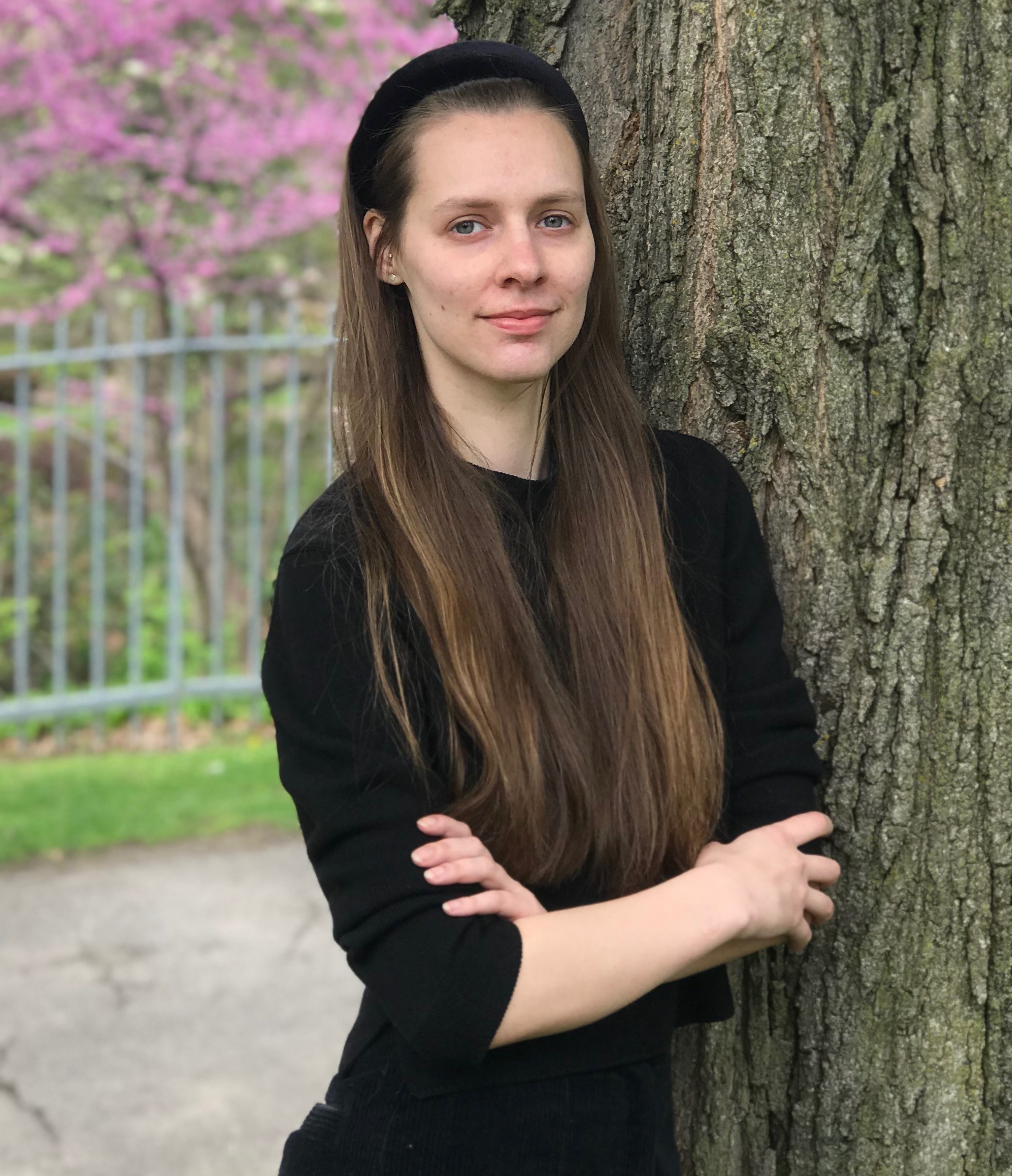
Cesar de la Fuente-Nunez is a Presidential Assistant Professor at the University of Pennsylvania. Prof. de la Fuente has received more than 50 awards. He was recognized by MIT Technology Review as one of the world’s top innovators, selected as the inaugural recipient of the Langer Prize, and received the ACS Infectious Diseases Young Investigator Award. In 2021, he received the prestigious Princess of Girona Prize for Scientific Research, the Thermo Fisher Award, and the EMBS Academic Early Career Achievement Award \for the pioneering development of novel antibiotics designed using principles from computation, engineering, and biology." Prof. de la Fuente has given more than 150 invited lectures, is an inventor on multiple patents, and has published around 100 publications, including papers in Nature Biomedical Engineering, Nature Communications, PNAS, and ACS Nano.