


Heterogeneous Catalysis
Book logo
Book series logo

Heterogeneous Catalysis

Author(s):
Publication Date:
March 11, 2022
Copyright © 2022 American Chemical Society
eISBN:
‍9780841299450
DOI:
10.1021/acsinfocus.7e5032
Read Time:
four to five hours
Collection:
1
Publisher:
American Chemical Society
Google Play Store

Heterogeneous catalysis is one of the pillars of chemical and energy industries. As research on this important topic advances, heterogeneous catalysis will be a central science in driving the transition to their eventual carbon neutral operation due to the ease of separation and reusability. Readers interested in understanding the basics as well as modern trends in heterogeneous catalysis will benefit from Heterogeneous Catalysis.

Book series logo
Detailed Table of Contents
About the Series
Preface
Chapter 1
Introduction to Catalysis
1.1
Definitions
1.2
Classification of Catalysis
1.3
Why Heterogeneous Catalysis?
1.4
Insider Q&A Dr. George Huber
1.5
Heterogeneous Catalysis in Industry
1.6
Introduction to Surface
1.7
Catalytic Activity and Selectivity
1.8
That’s a Wrap
Chapter 2
Catalyst Materials
2.1
Metal and Mixed Metal Oxides
2.2
Zeolites
2.3
Hydrotalcites
2.4
Metal-Supported Catalysts
2.5
Phosphates
2.6
Insider Q&A: Mario Pagliaro
2.7
Resins
2.8
Hydroxyapatites
2.9
Two-Dimensional (2D) Materials
2.10
Other Materials
2.11
That’s a Wrap
Chapter 3
Catalyst Materials: Methods of Preparation
3.1
Introduction
3.2
Methods of Preparation
3.2.1
Precipitation and Coprecipitation
3.2.2
Insider Q&A: Mario Pagliaro
3.2.3
Sol–Gel
3.2.4
Citrate Precursor
3.2.5
Hydrothermal
3.2.6
Chemical Vapor Deposition
3.2.7
Combustion
3.2.8
Incipient Wetness and Wet Impregnation
3.2.9
Insider Q&A: Prof. Dr. Christophe Len
3.2.10
Photodeposition
3.2.11
Microwave-Assisted Synthesis
3.2.12
Ultrasound-Assisted Synthesis
3.2.13
Mechanochemistry
3.2.14
Three-Dimensional Printing
3.2.15
Other Methods
3.3
That’s a Wrap
Chapter 4
Factors Influencing Catalysis
4.1
Surface Area
4.2
Dispersion
4.3
Porosity
4.4
Surface Defects
4.5
Heterojunctions
4.6
Role of Facets
4.7
Surface Acidity
4.8
Lattice Strain
4.8.1
Uniform Deformation Model (UDM)
4.9
That’s a Wrap
Chapter 5
Important Mechanisms
5.1
Langmuir–Hinshelwood Mechanism
5.2
Eley–Rideal Mechanism
5.3
Oxometal and Peroxometal Pathways
5.4
Mars–van Krevelen
5.5
Other Mechanisms
5.6
That’s a Wrap
Chapter 6
Catalyst Deactivation
6.1
Fouling
6.2
Coking
6.3
Sintering
6.4
Poisoning
6.5
Leaching
6.6
Effect of Solvent Additive
6.7
Reactivation and Regeneration
6.8
That’s a Wrap
Chapter 7
Trends in Heterogeneous Catalysis
7.1
Immobilized Homogeneous Catalysts
7.2
Insider Q&A: Dr. Jinlong Gong
7.3
Electrophilic Heterogeneous Catalysis
7.4
Subsurface Modification
7.5
Single-Atom Catalysis
7.6
Magnetic Nanoparticles
7.7
Flow Chemistry
7.8
Conclusion
7.9
That’s a Wrap
Bibliography
Glossary
Footnotes
Index
Reviewer quotes
Recommended for incoming graduate students or peers outside of the field of heterogeneous catalysis
Zisheng Zhang, PhD candidate, Department of Chemistry & Biochemistry, UCLA
Heterogeneous Catalysis is an extensive walkthrough of the experimental field of heterogeneous catalysis, with very detailed explanations on the typical catalysts and surface chemistry mechanisms. I was able to familiarize myself with many terms which I have seen before frequently but never learned about systematically.
Recommended to students without prior experience in heterogeneous catalysis
Professor Rongchao Jin, Carnegie Mellon
The authors of Heterogeneous Catalysis have captured the essence of the broad and highly interdisciplinary field of heterogeneous catalysis.
Author Info
Rafael Luque
Rafael Luque (Ph.D. in 2005 from Universidad de Cordoba, Spain) has significant experience on biomass and waste valorization practices to materials, fuels, and chemicals, as well as nanoscale chemistry (600+ publications, h-index 88, 35,000 citations, 7 patents, and 10 edited books). Prof. Luque is editor-in-chief of Molecular Catalysis and serves on the Advisory/Editorial Board of over 10 Q1 RSC, Wiley, ACS and Elsevier journals. Prof. Luque was named a 2018, 2019, 2020, and recently 2021 Highly Cited Researcher (Clarivate Analytics). He is Director of the Center for Molecular Design and Synthesis at RUDN University in Moscow, Russia, Distinguished Chair Professor from Xi’an Jiaotong University, and Distinguished Scientist from the Department of Chemistry at King Saud University (Saudi Arabia) under the DSFP Program.
author image
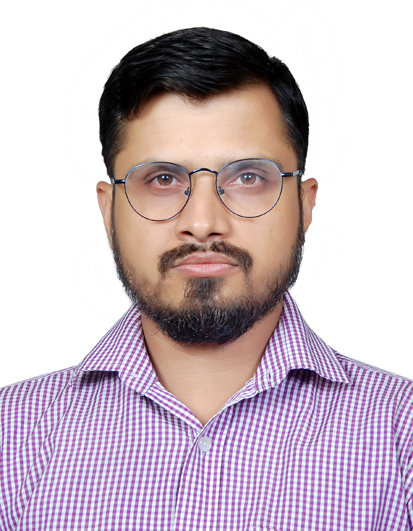
Anand S. Burange
Anand S. Burange completed his Ph.D. at the Institute of Chemical Technology, Mumbai, India in 2013. After his doctorate, he earned industrial experience in precious metal catalysis at Johnson Matthey Catalyst Company, Taloja, India, as an assistant manager in research and development. Later, he served at CSIR-National Chemical Laboratory, Pune, India, as a research associate and CSIR-Nehru postdoc. He is the recipient of prestigious CSIR-Research Associateship and CSIR-Nehru Postdoctoral Award conferred by the Council of Scientific and Industrial Research in 2015. Currently, he is an assistant professor at Wilson College, Mumbai. So far, he has published over 25 research articles, including book chapters. His research interests are surface science, nanocatalysis, waste valorization, and applications of new materials in catalysis.
author image
