


Microplastics in Aquatic Environments
Author(s):
- Sedat GündoğduAssociate Professor, Faculty of FisheriesÇukurova UniversitySabancı University, Istanbul Policy Center, İstanbul, TürkiyeEmail: [email protected]Email: [email protected]More by Sedat Gündoğdu
- Yahya TerziAssociate Professor, Faculty of Marine SciencesKaradeniz Technical UniversityEmail: [email protected]More by Yahya Terzi
Publication Date:
April 1, 2026
Copyright ©
2026 American Chemical Society
eISBN:
9780841295575
DOI:
10.1021/acsinfocus.7ea003
Read Time:
two to three hours
Collection:
5
Publisher:
American Chemical Society
This primer is for chemists who seek to move beyond descriptive inventories of microplastics toward a mechanistic understanding of their environmental fate and effects. Our primary audience includes undergraduate and graduate students, early career scientists, and professionals in environmental chemistry, aquatic sciences, materials science, and related disciplines who wish to understand why microplastics behave as they do in water, rather than simply where they are found. Throughout the primer, microplastics are treated not as passive particles but as dynamic chemical interfaces whose properties evolve in response to salinity, pH, dissolved organic matter, biofouling, and climatic forcing.
The primer is structured to reflect the life cycle of microplastics in aquatic systems. The opening chapters trace the discovery and definition of microplastics through seminal case studies, framing their emergence as a shift in how chemists and aquatic scientists conceptualize particulate pollution. Subsequent sections examine the environmental chemistry that governs transport, aggregation, vertical migration, and surface transformation, drawing on frameworks such as electrical double layer theory, DLVO interactions, and linear solvation energy relationships. These mechanistic tools provide the foundation for understanding why polymers distribute unevenly across water columns, sediments, and biota and why certain plastics act as particularly effective vectors for organic contaminants.
Later chapters focus on biological and molecular consequences, integrating particle toxicity, additive leaching, and vector-mediated pollutant transfer into a unified mechanistic narrative. Particular attention is given to the plastisphere, where microbial colonization transforms polymer surfaces into biologically active habitats with implications for pathogen transport and ecosystem health. The final sections explore remediation strategies, emphasizing how advances in surface chemistry, catalysis, and separation science can be leveraged to address microplastic contamination in real-world aquatic systems.
Rather than offering an exhaustive catalog of studies, this volume prioritizes conceptual clarity and chemical insight. Complex topics are intentionally retained and scaffolded—through focused explanations of key theories and mechanisms—to support readers without diluting scientific rigor. Our goal is to provide a framework that enables readers to interpret current research critically, design mechanistically informed experiments, and anticipate how microplastics will behave under future environmental and climatic conditions.
Microplastics now intersect with questions of water quality, food security, climate change, and environmental justice. By grounding their study in aquatic chemistry and molecular-scale processes, this primer aims to equip the reader with the tools needed to understand microplastics not merely as pollutants but as active participants in the chemistry of the Anthropocene.
This book is coming soon. In the meantime, please contact your library or ACS sales representative for purchase options.
Detailed Table of Contents
About the Series
Preface
Chapter 1
Defining Microplastics through Aquatic Chemistry: From Discovery to Mechanistic Insight
1.1
What Are Microplastics?
1.2
Plastics in the Sargasso Sea: The Beginning of Oceanic Forensics
1.3
Lost at Sea: A New Name for Invisible Polymers
1.4
Rivers as Chemical Arteries: Delivering MPs to the Sea
1.5
From Sea Spray to Skyfall: Oceans as Plastic Aerosol Sources
1.6
MPs on the Roof of the World: Glacial Reservoirs of Synthetic Debris
1.7
Climate Extremes as MP Accelerators
1.8
When Polymers Rival Plankton: Redefining Ocean Chemistry
1.9
MPs as Biogeochemical Disruptors and Evolutionary Traps in Aquatic Systems
1.10
Polymers as Pathogen Carriers: From Coral Health to Food Safety
1.11
That’s a Wrap
Chapter 2
The Environmental Chemistry and Fate of MPs in Aquatic Systems
2.1
Magnitude and Trends of Microplastic Inputs
2.2
Transport Pathways: From Land to Aquatic Environments
2.2.1
Chemical Dynamics of Riverine Transport
2.2.2
Wastewater Treatment Plants (WWTPs)
2.3
Sea-Based Sources
2.4
Atmospheric Deposition
2.5
Distribution and Accumulation in Water Bodies
2.5.1
Marine Systems and Oceans
2.5.2
Freshwater Systems
2.5.3
Biota
2.6
Physicochemical Transformations and Interfacial Chemistry
2.6.1
Biofouling and Sinking
2.6.2
Adsorption of Pollutants
2.7
That’s a Wrap
Chapter 3
Molecular Mechanisms of MP Impact in Aquatic Systems
3.1
Physical Particle Toxicity
3.2
Chemical Stressors from Additives
3.3
The Vector Effect: Pollutant Transfer
3.4
Integrated Molecular Pathways
3.5
That’s a Wrap
Chapter 4
The Science of MP Remediation
4.1
Context: Why Remediation Is Necessary
4.2
Advanced Separation and Filtration
4.2.1
Membrane Filtration: Materials Chemistry and Surface Interaction Engineering
4.2.2
Magnetic Separation: Surface Functionalization and Magnetic Field-Driven Aggregation
4.2.3
Flocculation and Coagulation: Surface Chemistry and Interparticle Forces
4.2.4
Cyclonic and Centrifugal Separation: Inertial and Hydrodynamic Principles
4.2.5
Micromachines and Active Remediation: Propulsion, Catalysis, and Surface Dynamics
4.3
Chemical Degradation Processes
4.3.1
Advanced Oxidation Processes (AOPs)
4.3.2
Photocatalysis
4.3.3
Electrochemical Oxidation
4.3.4
Sonochemical Degradation
4.4
Bioremediation and Enzymatic Pathways
4.4.1
Microbial Consortia and Colonization
4.4.2
Enzymatic Catalysis and Engineering
4.4.3
Metabolic Assimilation and Pathways
4.5
Future Perspectives: Toward Hybrid Remediation Systems
4.6
That’s a Wrap
Bibliography
Glossary
Index
Reviewer quotes
This is an excellent primer for graduate students in science or engineering departments interested in engineering solutions to the microplastics (MP) problem. It provides a big picture overview of the MP origin, cycling, and fate in the aquatic environment. I would recommend this primer to my graduate students in chemical and biological engineering. Chapters one and two provide a great overview of the origin, transport and fate of the MPs. These help the student understand the big picture of the MP problem. Chapters three and four are also useful for the students to get exposed to MP toxicity and possible remediation methods.
This primer provides a clear, step-by-step methodology for collecting, analyzing and reporting aquatic microplastics. It includes detailed checklists and quality control measures designed to support the efficient implementation of an effective workflow. As a graduate student, I recommend this resource for newcomers to microplastics research, laboratory teams establishing workflows, professionals in environmental monitoring or wastewater management, and instructors or journal clubs looking for a fast, practical overview.
Sedat Gündoğdu is a marine biologist whose research focuses on plastic and microplastic pollution in aquatic environments. Since 2009, he has been working as a researcher in the Faculty of Fisheries at Çukurova University, Türkiye, where he leads the Microplastics Research Group. He is also affiliated with Sabancı University, Türkiye studying the environmental and climate impacts of the global plastic waste trade. His research addresses the sources, distribution, ecological effects, and food-web transfer of microplastics, with particular emphasis on freshwater and marine systems. He has authored nearly 100 national and international publications, primarily on plastic pollution, and has contributed books and policy reports on plastic waste, environmental justice, and waste governance. He serves on editorial boards of several journals, is a member of the Scientific Advisory Board of the Plastic Pollution Coalition, and is a founding member of the Scientists’ Coalition for an Effective Plastics Treaty.
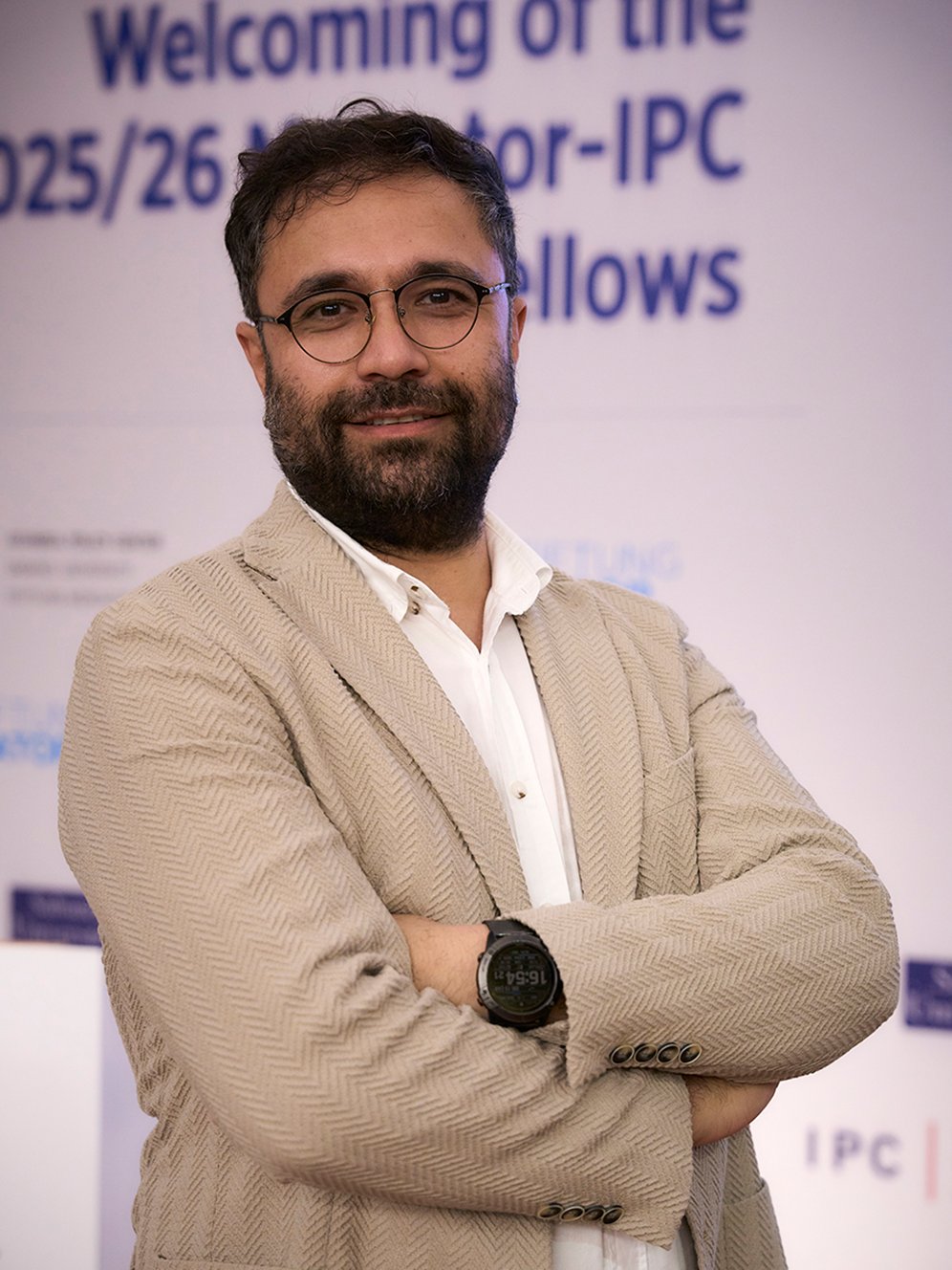
Yahya Terzi is an Associate Professor in the Department of Fisheries Technology Engineering at Karadeniz Technical University. He received his Ph.D. from Karadeniz Technical University and subsequently conducted postdoctoral research at Louisiana State University. His work focuses on identifying and characterizing pollution sources in marine and freshwater ecosystems, with particular expertise in microplastics, marine litter, and toxic metals. He has authored nearly 50 national and international publications and has served as a researcher in several international projects.