

Machine Learning in Electrocatalysis
Author(s):
- Wenbo MuPostgraduate StudentUniversity of California San DiegoEmail: [email protected]More by Wenbo Mu
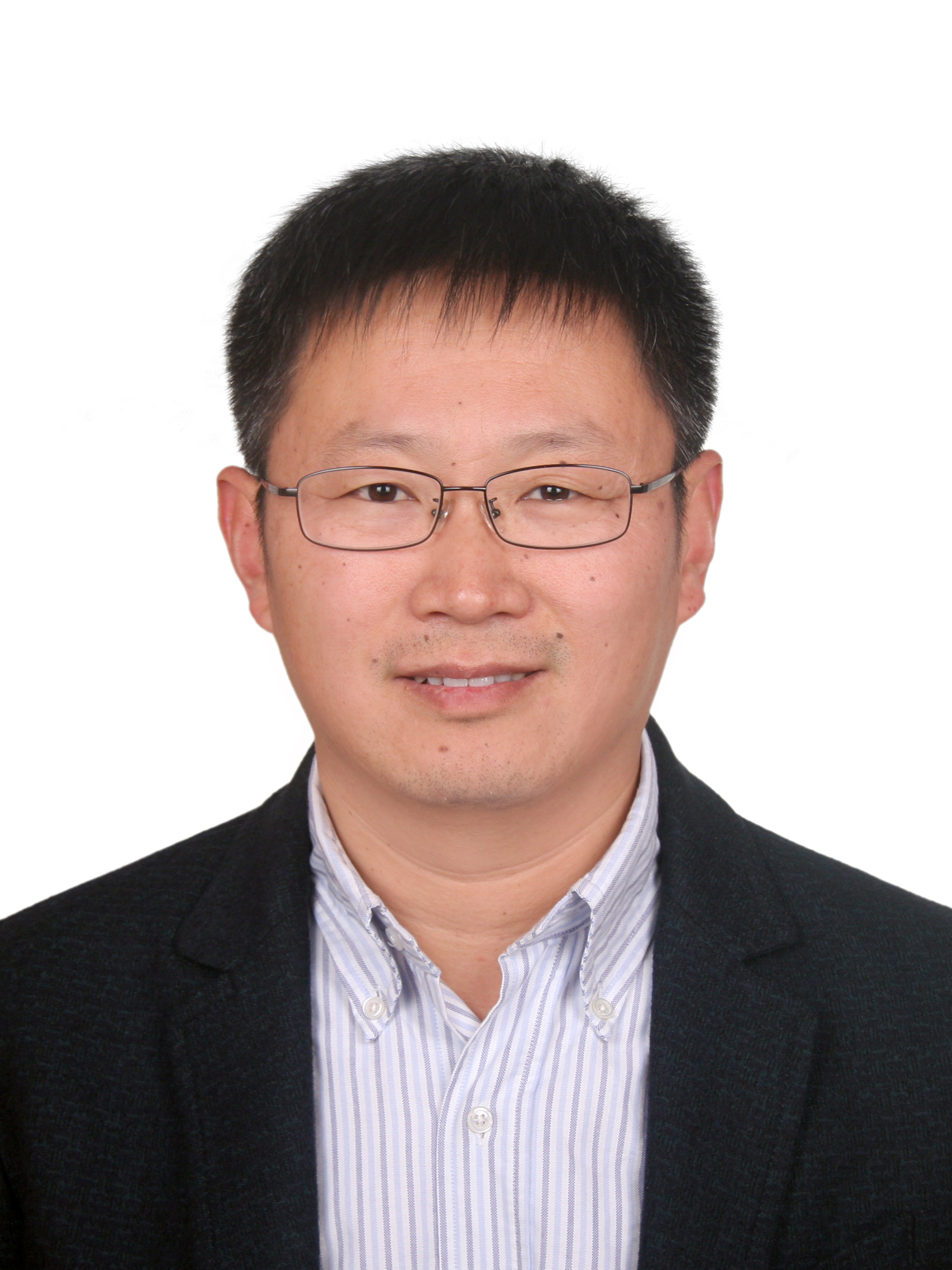
- Tiancheng MuProfessor, School of Chemistry and Life ResourcesRenmin University of ChinaEmail: [email protected]More by Tiancheng Mu
Publication Date:
April 7, 2026
Copyright ©
2026 American Chemical Society
eISBN:
9780841295872
DOI:
10.1021/acsinfocus.7ea004
Read Time:
three to four hours
Collection:
5
Publisher:
American Chemical Society
Electrocatalysis plays a vital role in shaping sustainable energy technologies, such as fuel cells, electrolyzers, and batteries. As energy conversion processes rely heavily on efficient catalysts, traditional methods of catalyst discovery, based on trial-and-error, are proving inefficient and time-consuming. Machine learning (ML) offers a promising alternative by analyzing vast datasets, predicting catalytic performance, and accelerating the discovery of new materials. This primer bridges the gap between the complex fields of ML and electrocatalysis, showing how ML can revolutionize catalyst design by enabling faster, more accurate predictions across numerous catalytic reactions.
ACS In Focus Machine Learning in Electrocatalysis is designed for newcomers, breaking down complex ideas into approachable concepts and offering practical examples to help readers understand how these technologies can be used in real-world research and applications. This primer does not aim to be an exhaustive technical manual; rather, it aims to provide accessible, actionable knowledge. The authors avoid overly complex mathematical formulas and instead focus on explaining concepts clearly with practical, relatable examples from electrocatalysis.
The authors recommend approaching this primer by following the chapters to build understanding progressively, especially if new to ML or electrocatalysis. If you are already familiar with one of these fields, jump ahead to the most relevant chapter. Along the way, keep the following guiding questions in mind: How can ML be used to optimize catalytic processes? What tools and methodologies can streamline material screening and synthesis?
This book is coming soon. In the meantime, please contact your library or ACS sales representative for purchase options.
Detailed Table of Contents
About the Series
Preface
Chapter 1
Why Machine Learning (ML) in Electrocatalysis Matters
1.1
Understanding the Domain: Key Electrocatalysis Metrics
1.2
Defining the Toolkit: Choosing the Right ML Category
1.3
The Core Workflow: A Step-by-Step ML Pipeline
1.3.1
Step 1: Collecting and Preprocessing Your Data
1.3.2
Step 2: Engineering and Selecting Features
1.3.3
Step 3: Selecting and Training the Model
1.3.4
Step 4: Tuning Hyperparameters and Evaluating Performance
1.3.5
Putting It Together: An End-to-End Pipeline Walkthrough
1.4
Chapter Conclusion
1.5
That’s a Wrap
Chapter 2
Descriptors for Electrocatalysts
2.1
Strategic Framework: How to Choose the Right Descriptor
2.2
Option 1: Using Electronic Structure for Electronic Mechanistic Insight
2.2.1
d-Band Characteristics
2.2.2
Band Gaps
2.2.3
Charge Distribution or Charge Difference
2.2.4
s-Electron Contributions
2.2.5
Valence Electron Count
2.2.6
Summary of Electronic Structure Descriptors
2.3
Option 2: Using Thermodynamic Descriptors for Reaction Energetics
2.4
Option 3: Using Geometric Descriptors for Structural Screening
2.4.1
Coordination Number
2.4.2
Bond Length
2.4.3
Lattice Constants
2.4.4
Surface Morphology and Facet Exposure
2.5
Option 4: Using Empirical Descriptors for Rapid Screening
2.5.1
Electronegativity
2.5.2
Atomic Radius
2.5.3
Ionization Energy and Electron Affinity
2.5.4
Additional Empirical and Statistical Descriptors
2.6
Advanced Options: System-Specific and ML-Generated Descriptors
2.6.1
System-Specific Descriptors: Octahedral and Tolerance Factors
2.6.2
Dynamic Active Sites
2.6.3
Advanced Descriptors from ML: GNN, Coulomb Matrix, and SOAP
2.7
Checklist: Avoiding Common Pitfalls
2.7.1
Do Not Rely on a Single Descriptor
2.7.2
Check for Highly Correlated Features
2.7.3
Do Not Use Expensive Descriptors for Initial Screening
2.7.4
Account for the Real-World Catalyst Environment
2.7.5
Balance Predictive Accuracy with Interpretability
2.8
Chapter Conclusion
2.9
That’s a Wrap
Chapter 3
Application Examples of Machine Learning for Electrocatalysis
3.1
Application 1: The Oxygen Evolution Reaction (OER)
3.1.1
The Challenge: Overcoming Sluggish Kinetics
3.1.2
Case Study: Discovering Spinel Oxides Using Center-Environment Features
3.2
Application 2: The Oxygen Reduction Reaction (ORR)
3.2.1
The Challenge: Managing Competitive Reaction Pathways
3.2.2
Case Studies: Balancing Activity and Durability in Pt-Alloys
3.3
Application 3: The CO2 Reduction Reaction (CO2RR)
3.3.1
The Challenge: Controlling Selectivity in Multistep Reactions
3.3.2
Case Study: Predicting Product Selectivity and Reaction Energetics
3.4
Application 4: Emerging Applications (HOR and NRR)
3.4.1
The Challenge: Activation Barriers and Active-Site Utilization
3.4.2
Case Study: Designing Complex Architectures: High-Entropy Alloys and Single Atoms
3.5
The Future of Data-Driven Catalysis
3.6
That’s a Wrap
Appendix A: Details on the ML Algorithms
A.1
SUPERVISED LEARNING
A.1.1
Linear Regression
A.1.2
Decision Trees
A.1.3
Support Vector Machines
A.1.4
Neural Networks
A.2
UNSUPERVISED LEARNING
A.3
K-Means Clustering
A.4
REINFORCEMENT LEARNING
A.5
RECOMMENDED OPEN SOURCE REPOSITORIES
Bibliography
Footnotes
Index
Reviewer quotes
This primer explains how machine learning is being used to assist the development of electrocatalysts for energy and environmental applications. It’s a solid bridge between traditional electrocatalysis and data-driven methods, ideal for chemists who want to use ML to support their studies without a computer science background.
This primer is well-suited for graduate students, early-career researchers in electrochemistry, and materials chemists looking to integrate machine learning into electrocatalysis workflows. It’s particularly helpful for those with limited coding experience but strong domain knowledge. It is a concise, approachable introduction to machine learning applications in electrocatalysis. It offers intuitive explanations and practical examples and enough depth to spark deeper understanding and exploration, great for graduate students to understand the correlations between machine learning and electrochemistry and for electrochemistry researchers to introduce machine learning into their current research.
Wenbo Mu obtained a bachelor’s degree in science from the Department of Computer Science at Ohio State University, earning Summa Cum Laude honors. He obtained a master’s degree in Computer Science from the Department of Computer Science at the University of California, San Diego. He has coauthored 10 peer-reviewed publications.

Tiancheng Mu is a professor at Renmin University of China. His main research interests cover green chemistry, electrocatalysis, and chemical engineering. He serves as an associate editor and board member for over ten journals. He has coauthored more than 220 papers and 6 book chapters, and holds 12 patents.